

Trimble Dimensions 2025 made one thing abundantly clear: AI and automation are no longer on the horizon: they’re here, embedded across the Trimble ecosystem, and already reshaping how organisations design, build, survey and manage assets.
For KOREC customers across the UK & Ireland, this year’s announcements demonstrate how Trimble is moving beyond individual tools and toward connected, automated workflows that reduce manual effort, eliminate data silos, and improve productivity across teams.
Below is our round-up of the most relevant news and innovations revealed at the event.
A Major Announcement: Trimble’s Agentic AI Platform
The headline news from this year’s conference was the introduction of Trimble’s agentic AI platform. This is a scalable, secure foundation for developing AI agents that can automate multi-step processes, analyse data across systems, and assist workers throughout the design-to-delivery lifecycle.
Mark Schwartz, Senior Vice President of AECO Software at Trimble, explained the rationale behind the platform:
“As agentic AI use cases multiply, there is a growing need for common infrastructure that allows creators to rapidly and responsibly develop, deploy, monitor, and maintain high-value AI agents at scale.”
The platform includes the new Trimble Agent Studio, now in pilot, which enables customers and partners to develop their own AI agents that sit on top of the Trimble ecosystem.
This open, future-proof approach reflects what Trimble CEO Rob Painter described as a natural next step in the company’s long-term data strategy:
“Our Connect and Scale strategy has brought us to this point. By embedding AI into our solutions and enabling improved data flow, we’re taking the next steps towards unlocking the power of connected data.”
For KOREC customers, this means that AI will increasingly power real-world workflows, not just isolated product features.
AI Embedded Across the Workflow
Trimble’s announcements demonstrated the breadth of where AI and automation are landing: from early design stages right through to site reporting and project delivery.
1. Design & Modelling Automation
Updates to the SketchUp ecosystem showed how AI will speed up modelling and conceptual work:
- Generate Object – create 3D objects by simply describing what you need
- AI Render – enhanced automated visualisation
- SketchUp Assistant – an upcoming agent to support common modelling tasks
For architects, surveyors and designers, this marks a shift toward faster iterations and fewer manual modelling steps.
2. Field-to-Office Automation
Dimensions featured several real-use examples of AI turning field data into structured, actionable information:
- Site voice notes automatically converted into formatted documents
- Auto-Submittals that prepare and route documentation
- AI Title Block Extraction that reads drawing metadata
- Automated daily reporting tools in ProjectSight
These tools are especially useful for construction and utilities teams where admin tasks consume valuable time that could be spent on delivery.
3. Reality Capture Meets AI: ProjectSight 360 Capture
One of the most practical innovations came in the form of ProjectSight 360 Capture, which automatically integrates 360° jobsite images into the ProjectSight environment.
AI processes each image to:
- Identify where it was taken
- Align it to site drawings
- Assess site progress
- Support remote walkthroughs
For project managers, QS teams, and off-site stakeholders across the UK & Ireland, this gives true “eyes on site” without needing to be physically present.
Connected, Open, Interoperable
A consistent theme across the conference was Trimble’s commitment to open, connected workflows. This is something that aligns strongly with KOREC’s own focus on integrated technology stacks.
Trimble’s ecosystem continues to expand through verified integrations and extensions within Trimble Marketplace, which Chris Peppler, Vice President of Platform at Trimble, described as:
“a trusted source of verified software integrations and extensions that enable customers to solve workflow gaps. Every solution goes through a certification process, making it simple for our customers to easily tailor their Trimble solutions to fit their technology ecosystems.”
For customers operating mixed fleets, multi-discipline teams, or hybrid software stacks, this interoperability is essential.
Why It Matters for Organisations in the UK & Ireland
Across all sessions, Trimble addressed a reality familiar to many of our customers: rising project complexity, data fragmentation and margin pressures.
This year’s announcements directly target those challenges by delivering:
- Faster design and modelling cycles
- Reduced admin and reporting workload
- Improved accuracy in jobsite documentation
- Better coordination between teams
- More accessible adoption of AI via the Agent Studio platform
KOREC will continue to track, test and support these innovations as they move from early access into wider availability.
TRUST KOREC
Trust KOREC to help you measure, map and manage
At KOREC, it’s our business to empower your business. We do this through enabling you to measure, map and manage the natural and built environment with confidence and clarity.
Consistent success demands accuracy, safety and speed, whilst reducing costs and environmental impact. By combining innovative geospatial technologies from global partners such as Trimble, with the skills and deep expertise of our regional specialists, KOREC is trusted to deliver the results that transform your business outcomes.
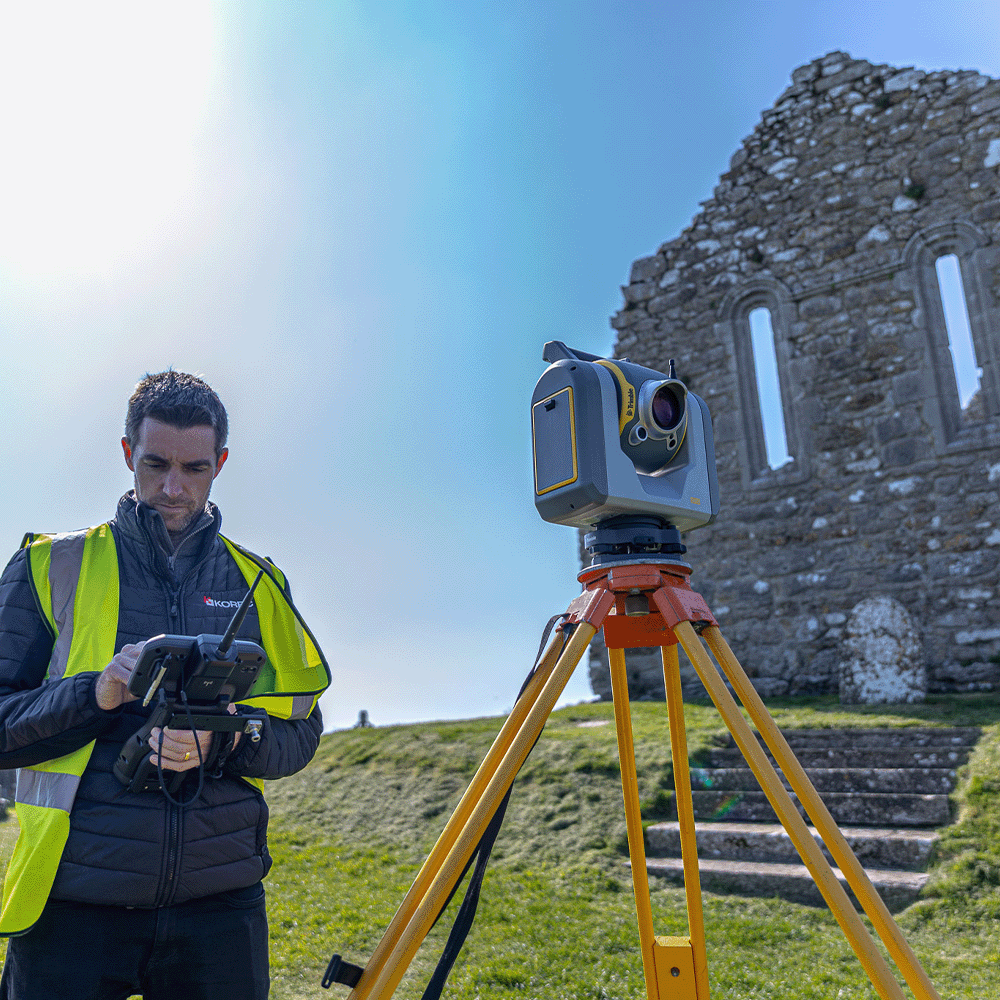


In the beautiful Staffordshire countryside lies 16.9km of preserved, standard gauge heritage railway better known as the Churnet Valley Railway. Noted for its nostalgic steam train rides and themed days out, it’s also now the destination for many KOREC customers keen to see the latest Trimble GEDO technology demonstrated on a track.
Following the restrictions imposed by lockdown on our usual demonstration area, we were delighted to have permission to base ourselves so centrally at the railway’s Kingsley and Froghall station where, over the course of the year, we have held many demonstrations for customers as well as training days for the KOREC rail team.
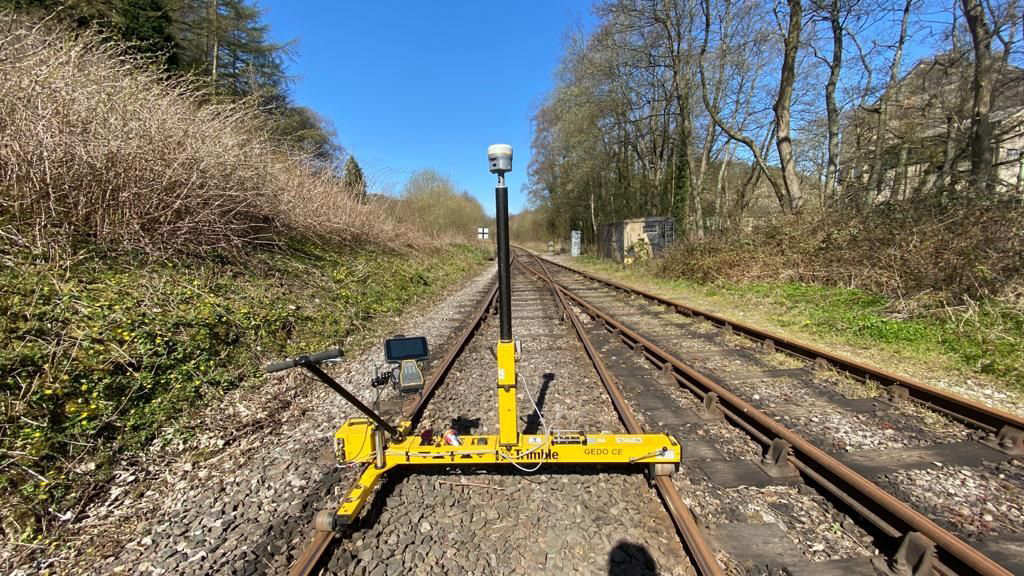
Of course, one good turn deserves another so we’re in the process of surveying the entire track to provide Churnet Valley Railway with a full survey, including 3D geometry, that will be particularly useful for any future maintenance work.
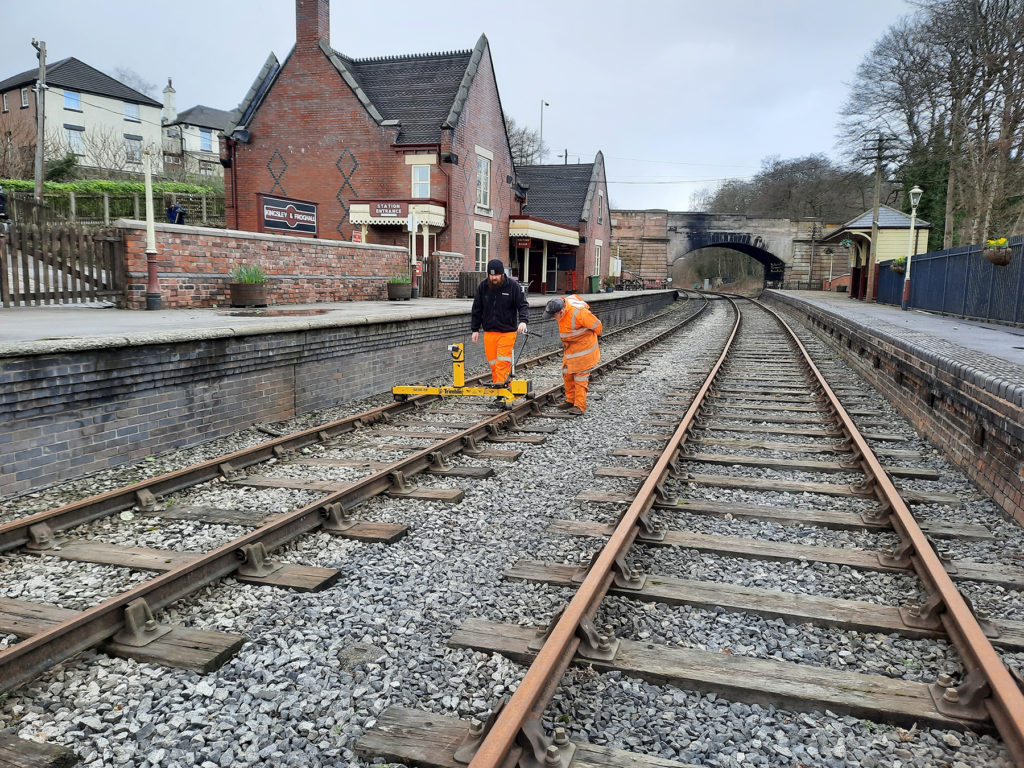
Whilst previously the Churnet Valley team undertook ad hoc surveys using traditional methods, KOREC’s Matt Barwell and Trimble’s Matt Moss decided that with the pick of the Trimble portfolio, by far the most time efficient method would be to use Trimble’s GEDO IMS + GNSS system which enables track survey and subsequent track design based on absolute coordinates with valid alignment elements. The R-series GNSS receiver was operated in conjunction with the GEDO IMU allowing them to shoot in control via the GEDO Profiler, which was used to measure distance and height offsets between the track and any reference point/object adjacent to the track.
The two Matts were extremely appreciative of the system’s time efficiencies having already surveyed around 8km of track (4km in each direction) in just 5 hours.
KOREC then processed this data and turned it into a DXF CAD ready drawing should Churnet Valley need it for any future maintenance.
We are delighted that our most recent visit to this scenic site resulted in a GEDO sale to Volker Rail for use on the Transpennine Route Upgrade East. More details soon!
Maps – they’re made to show us where we are, where we’re going, and how to get there. Right? Well, partly. Here at KOREC, we’re self-confessed mapping addicts, and we know that maps are so much more than this.
So, to celebrate the arrival of KOREC Mapping in May, we asked our colleagues to send us their absolute favourite map, and to tell us why they love it so.
From the sheer range of entries received, we see that maps can educate, inform, inspire – make us laugh, make us nostalgic, and yes, even occasionally let us lose ourselves.
Journeys through Space…
An ‘absolutely mad’ 115ha area of Russia was the choice of Harriet Brewitt. Known locally as ‘Saatse Boot’, the small area of Russia cuts a boot shape into Estonian territory, meaning the Estonian road 178 crosses the border twice and passes through Russian territory for around 1km. Whilst driving the road is allowed, stopping is not, and neither are pedestrians – as the signs on Google streetview attest!

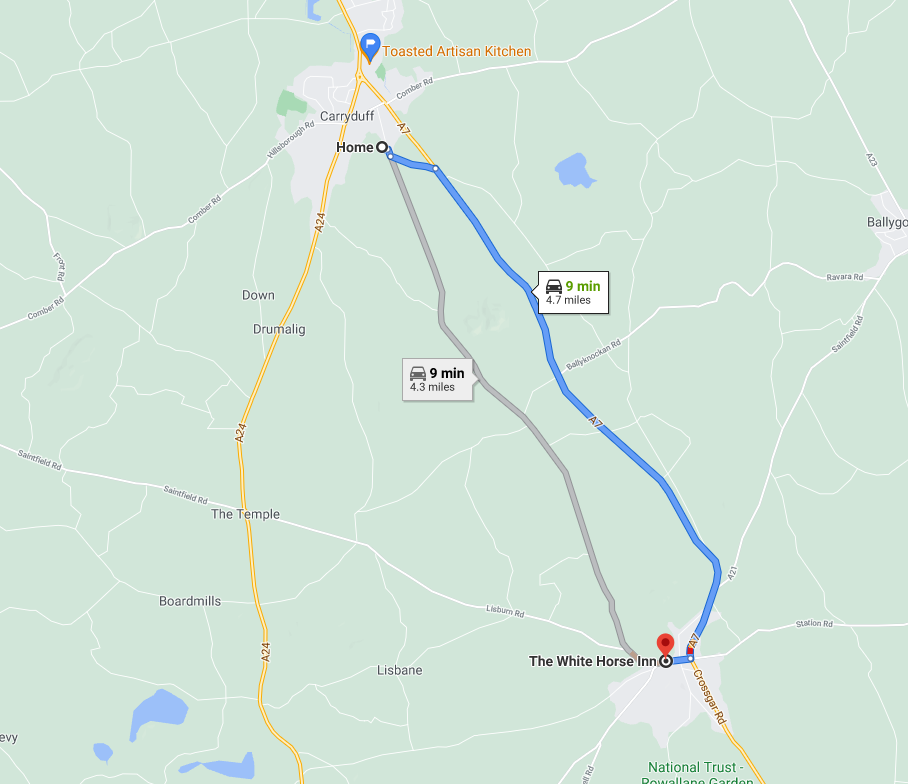
Speaking of driving, Jim McEwan’s map shows us that in just 9 minutes he can be in his favourite pub, the White Horse! But don’t worry – his wife is very kindly doing the driving, or in Jim’s words – “she literally drives me to drink…and then home again”
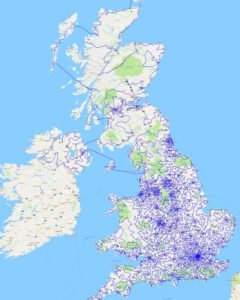
And speaking of pub crawls, how’s this? Philip McCarten’s favourite map combines his passions of map-making, GIS data and a cheeky tipple to highlight all 24,727 pubs in the UK – and the shortest route between them! And before you ask – if you travelled on foot, it would take you 3 years to visit every single one of them.

…And Time
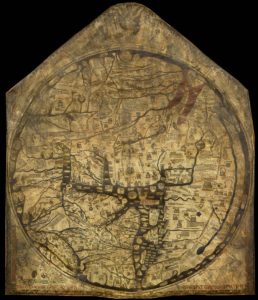
For Rob Judge, a classic map from the medieval world was his choice. The Mappa Mundi, made in around 1300, shows the world as it was understood by Christian Europe – with Jerusalem at its heart. Why is it such a marvel? For Rob, it’s the achievement of “producing a map with very limited technology, communications and the ability to travel long distances. A wonderful bit of history”.
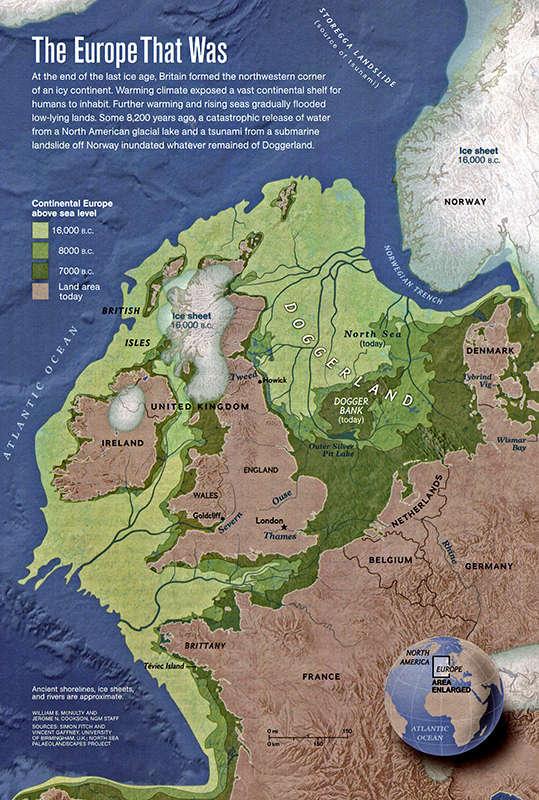
Going further back, Simon Evans’ map shows a time when the United Kingdom was intimately connected to mainland Europe. No, not 2016, rather 16,000BC, when sea levels were much lower and a vast area of land known as ‘Doggerland’ occupied much of the present-day North Sea.
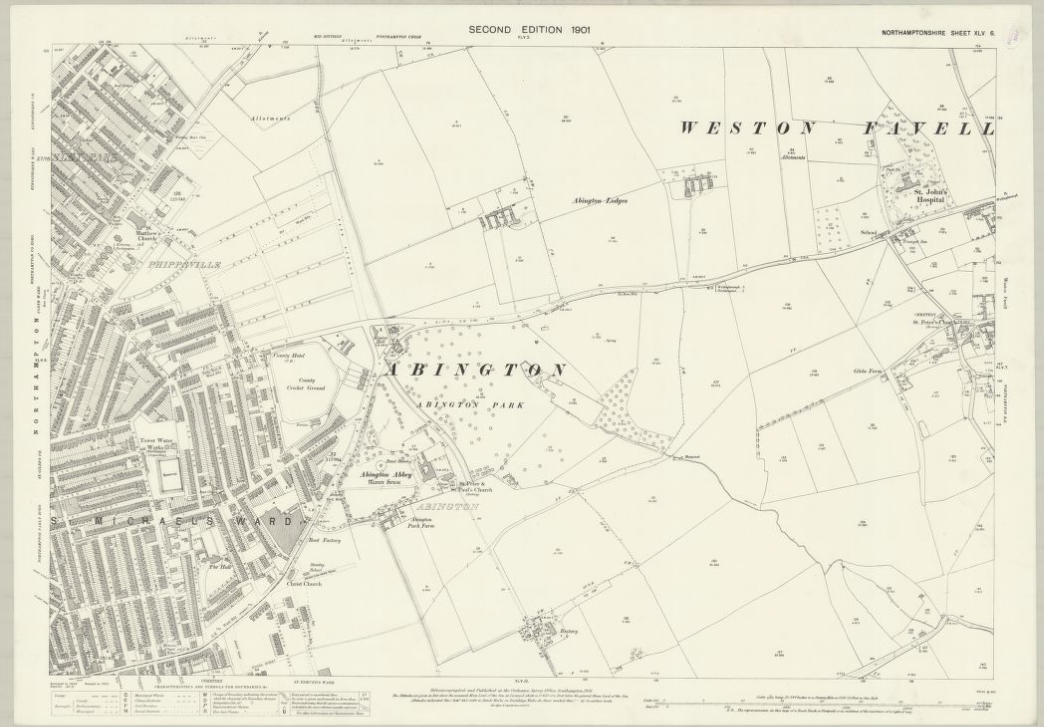
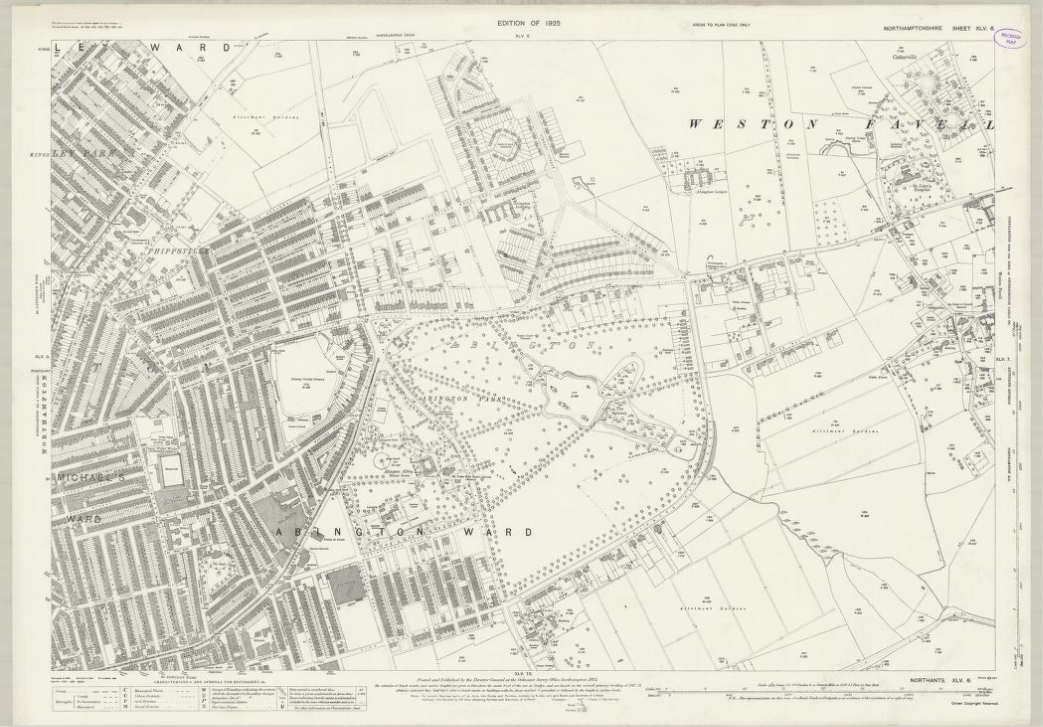
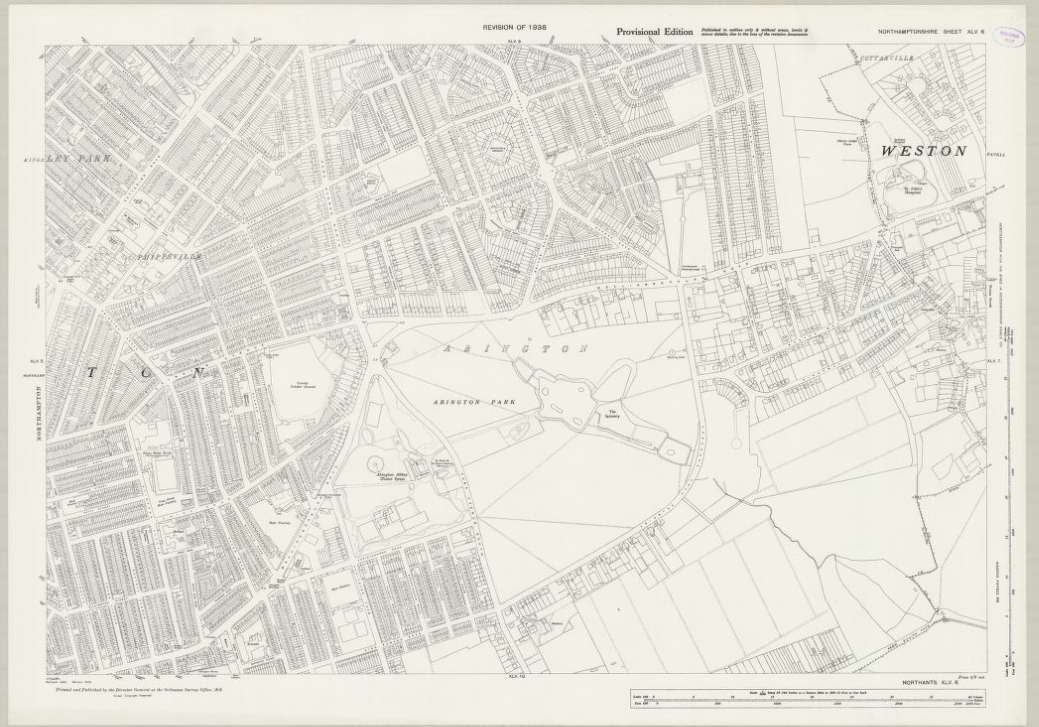
Coming back into the near-present, Lloyd Wilkinson submitted not 1 but 3 maps from the excellent collection at the National Library of Scotland of the same area – his hometown of Northampton. The series of maps from 1900 to 1935 show the rate of change and growth as the town experienced rapid industrialisation, a cause close to Lloyd’s heart as he studied urban industrial growth at university.
Up High….
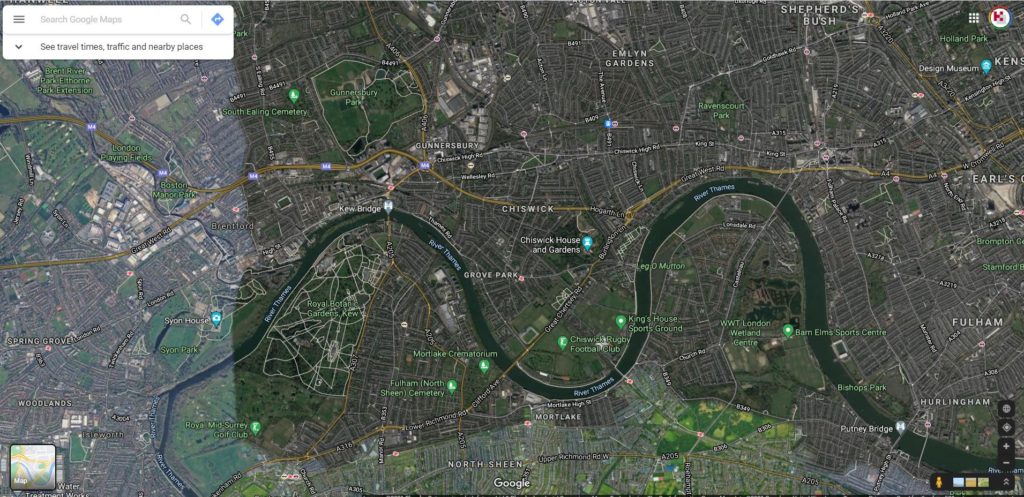
Satellite imagery and remote sensing has transformed our understanding of the world and our sense of place. For Tracy Critcher, a Google satellite map of her childhood home of Chiswick brings back many happy memories of her Dad rowing down the ‘mighty river Thames’, summer days outside the pub, and of course, the biggest ice cream shop EVER. Couldn’t be put better than Tracy herself ‘ “the map looks busy because it is filled with life”
And down low…
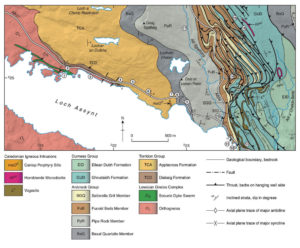
From London to the remote north-west Highlands of Scotland, Laura Harper has chosen this geological map of Loch Assynt. Laura spent a happy six weeks mapping the shore of the loch for her Geology dissertation – despite almost constant rain and the dreaded Scottish flesh-eating midges!
This map combines the geological data of some of the oldest rock formations in the UK, whilst also being a work of art in its’ own right.
Maps as works of Art

And speaking of art, Karen Wentworth has chosen Stephen Walter’s Map of Liverpool (2008-09), a vast, beautiful hand-drawn and insanely detailed map of the city. As a proud Scouser, Karen loves this map due to the sheer amount of local history, knowledge, and local scouse lingo featured – not to mention the two famous football clubs, and of course Crosby, home of KOREC’s Liverpool office!
Literary Maps
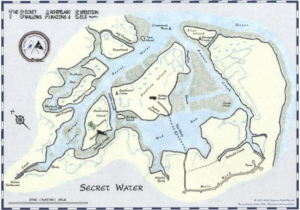
Another Liverpool colleague, Richard Selby has chosen the map from the novel ‘Secret Water’ – from the Swallows and Amazons series of books by Arthur Ransome. In the story, the Swallows’ father maroons the children on the island with just the outline map of the area – leaving the gang to survey the land and fill in the gaps! Perhaps reading the novel as a 10-year old inspired Richard for a career in surveying?!
Maps as Nostalgia
To complete our tour through this world of maps, we look at three maps that create or inspire happy memories.
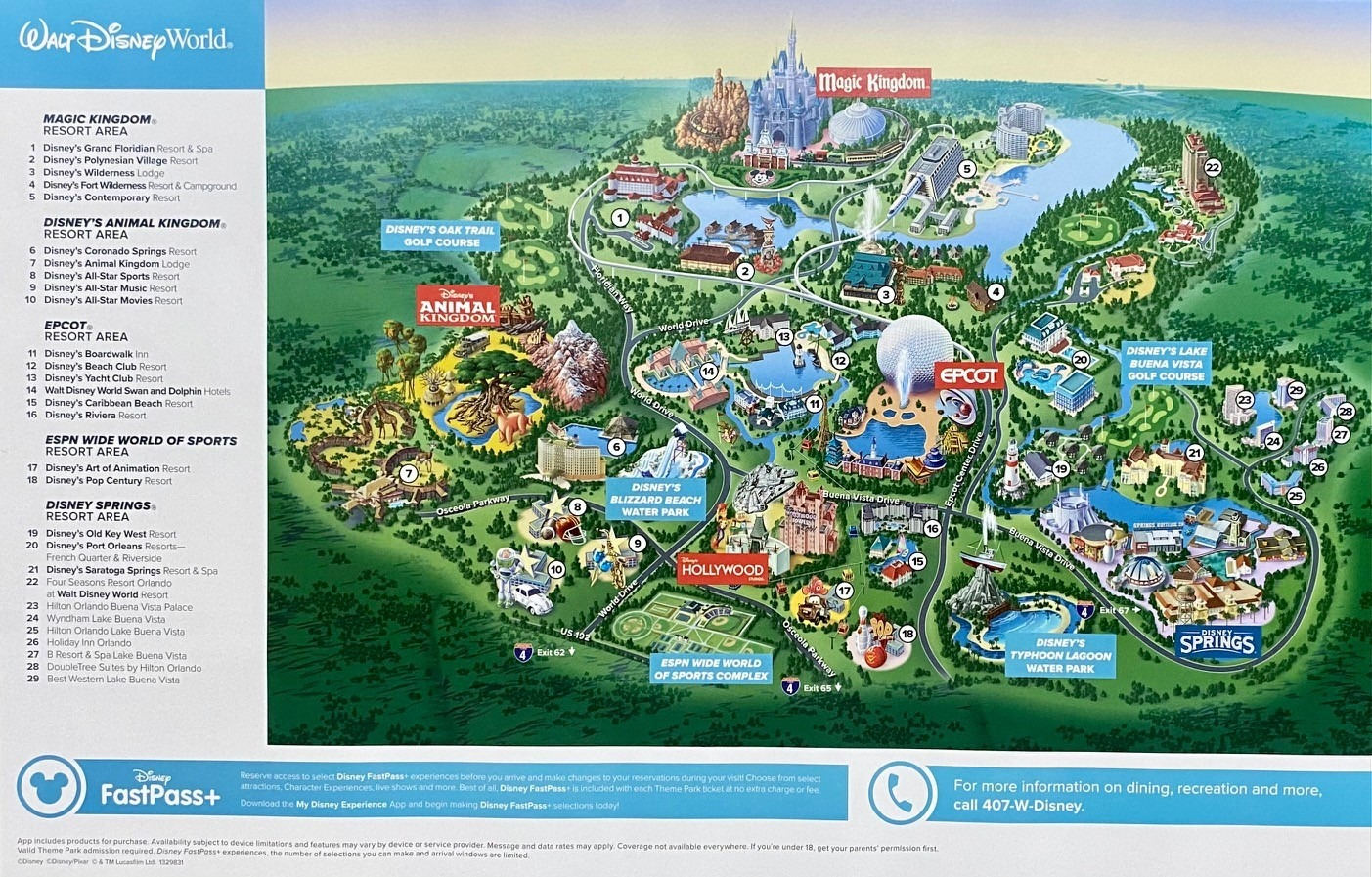
Graham Sharp’s map of Walt Disney World reminds him of the many smiles that this place has brought him and his family, young and old, over the years.
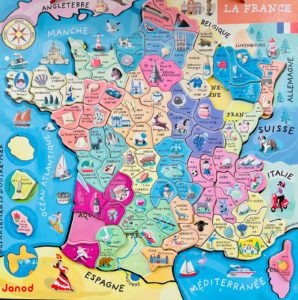
For Kirsten Moss, this jigsaw map of France, purchased when her daughter was 3 years old, brings back many happy memories of French family holidays over the years. Daughter Ruby would love pointing out all the places she’d been, as well as all the different regional birds, animals and foods! So much so, the jigsaw map still hangs on her bedroom wall to this day.
Our final map, another bedroom wall classic, comes from Melvin Penwill. Melvin has unashamedly passed his love of maps onto his son Jacob – who loves to point out all the places his Daddy has visited, as well as discovering the animals and where in the world they live. Jacob’s favourite place on the map? The UK, because this is home.

Thank you to all our map contributors, we had such a great time poring over all your entries.
- Find out more about KOREC Mapping
- Watch the Mad about Maps video on our YouTube channel
KOREC’s Liverpool office has reopened for business and that includes in-person training.
We’re delighted to announce that as things return to normal, our KOREC Liverpool office is back up and running. One of the advantages that this brings is that we are again in a position to offer socially distanced in-person training. KOREC training packages can be bespoke, at a location of your choice or remote, but to get things started in Liverpool we’ve set up the following scheduled courses:
Intro to Topo Survey: June 8th – 10th
Intro to TBC: June 15th – 17th
The course calendar can be viewed here: https://www.korecgroup.com/training/
Taking these courses will be Richard Selby, KOREC’s Training and Technical Support Manager and Ian Hall, our Technical Support Office Team Leader, both hugely experienced in delivering high quality learning.
Of course we appreciate that things aren’t entirely back to normal so these courses will be run with a maximum number of 4 participants and in a large ventilated training room. In the rest of the office a one-way system is in place and social distancing maintained.
However, for those that prefer a more flexible approach, our successful KOREC GEOSCHOOL, on-line learning platform continues to offer a range of paid for and free of charge high quality training courses. These courses have all been designed to allow you to choose, where, when and at what pace you’d like to complete your training as well as providing lots of opportunity for questions and feedback from our qualified trainers.
Courses include our highly popular ‘Measured Building’ course a useful guide on measured building survey drawing from point cloud data using Trimble RealWorks and CAD software which will enable you to produce architect specified deliverables from point cloud data. If you have a scanner, or are planning to invest in one, or have an interest in Trimble RealWorks then this course is a must.
Expect around 6 hours of video tuition that combined with your assignments and assessments gives a course of around 2 days for you to dip into as you please. You can view the course details here or view the introductory video below.
“KOREC is firmly behind all the success I’ve achieved in the last 20 years at the Northern Ireland Forest Service. The right hardware, smart data capture software development and a great working relationship enabled us to revolutionise our data collection and management capabilities.”
At the end of 2020, former Information Systems Manager with the Northern Ireland Forest Service, Jim McEwan, joined the KOREC Mapping team as Customer Success Manager. In short, he liked the product so much, he joined the company!
Over the years, Jim has clocked up extensive experience in the forestry sector spending many of them working closely with KOREC and in particular, with our KOREC Mapping Lead, Paul Brodin. Jim tells us that an old dog can certainly bring some new tricks and here at KOREC we’re delighted to have him and his extensive experience as a high calibre resource for KOREC customers.
Experience counts
As Information Systems Manager with the Northern Ireland Forest Service (an Agency of the Department of Agriculture) Jim certainly has a wealth of experience to draw on, managing and implementing many projects from the development of his own real time data reporting systems using Trimble hardware and KOREC mapping software to introducing the first senseFly drones in the UK. Working in a sector as challenging as forestry, Jim has a clear idea of what really worked for him, as a customer, from the KOREC portfolio:
- Trimble data collectors – rugged and with a strong history of achieving a good signal even under tree canopies. Having the right hardware, that works first time, every time, in challenging forestry conditions was the initial step in building web-based reporting systems that put real time data, captured with KOREC software, directly into the hands of the forest manager.
- KOREC Capture software (that became Canopy) – the seamless integration of data from the field to the database and then to the GIS, allowed me to develop my own customised applications and for the first time, managers didn’t have to spend days pouring over data collected on paper forms.
- A good working relationship with KOREC that enabled me to talk directly to developers and turn my ideas into workable solutions that revolutionised the way we collected and managed our data.
…but it’s all about the end result
During his time at the Northern Ireland Forest Service, Jim developed a suite of bespoke forestry management systems, with the KOREC Capture portal at the centre. He looked at areas such as forest inventory, asset inspection, tree safety and a wide range of other forestry management issues and produced apps that gave users the data they needed with all calculations performed and maps added as required.
But it’s all about the end result and Jim was rightly pleased with what was achieved. “The results were amazing. In one example, pre-harvesting assessment plots, the data from forest plots was collected on paper and brought into the local office at the end of the week. Previously, the forester would spend two days a week inputting this data into excel to produce the stocking, volume and timber availability reports required. Now, the data is collected in the forest using Trimble’s Geo 7X ruggedised handheld and KOREC Canopy software. Once the data is sent back, the forester has the full pre-sales breakdown available immediately on a phone, tablet or laptop. The Forest Service has gone from 6 data loggers in 2009 to 120 today revolutionising surveying and data collection across the Agency.”
Jim’s success took him further afield within the Department. He worked with the Plant Health Inspection Branch and the Veterinary Service to produce real time reporting systems for Horticulture Marketing and Plant Health Inspections and developed the reporting system for a five-year project to monitor TB in badgers.
Talking Canopy
Now, Jim brings this experience to the latest KOREC Canopy software. “In terms of British Standard Tree Inspections and Tree Safety Management, we now have the solutions to allow you to collect, record and manage data quickly and easily. Combine that, with a full suite of reporting facilities and KOREC Canopy becomes the leading solution to the collection, management and reporting of tree data.”
Make no mistake, Jim understands the job from both sides of the fence!
If you’d like to learn more about KOREC Canopy from someone who knows the industry and the software inside out, please contact Jim at: jim.mcewan@korecgroup.com or call him on 07435 986865.

Jim McEwan at the Trimble Dimensions event in Las Vegas where he presented with KOREC’s Paul Brodin
Thanks to all the industry publications that continue to showcase KOREC supplied technology in our articles, columns and case studies. Here’s a round-up of where we’ve been in the last couple of months:

GeoConnexion UK (May/June)
The only way is up! Mark Poveda’s column is a must read for anyone who’s interested in the latest technology, opinion and developments in our industry. In his most recent piece, he takes a closer look at why the drone business is burgeoning and consequently, with so many choices on the market and new developments, why it’s never been a better time to invest.
Read his column here.
In the same, issue there’s also a great piece by Jodie Hartnell featuring the Trimble X7 which asks ‘Are laser scanners evolving into cobots?’
Civil Engineering Surveyor (April)
You may have noticed that we’ve just launched KOREC Mapping, in a move to consolidate and expand the KOREC offering of field to office data collection and handling solutions available across the UK and Ireland. It therefore seemed the perfect time for our KOREC Mapping Business Area Manager, Richard Gauchwin, to highlight a very important aspect of the digital data capture industry, namely ‘How technology can make a safer place for workers in the field.’
Read the full piece here.
Civil Engineering Surveyor (May)
For the May issue of CES, we revisited our popular case study format with a look at automated tunnel monitoring through a remote set up. Entitled ‘Whilst you were sleeping’ all the information for this piece was supplied by Mark Anderson, Director of Academy Geomatics. It’s proved a popular story with Trimble featuring it on their website and it will also appear in GIS Resources in June as part of their infrastructure/geomatics feature.
Read the full piece here.
Virtual reality, 3D Laser scanning, robotics, AI, reality data capture, data analytics….today’s careers in the geospatial industry offer numerous possibilities and are a perfect fit for the tech savvy, early adopters of Generation Z who have grown up immersed in technology.
Fuelled by technological developments, the collection and processing of spatial data is now a far cry from the days of just muddy boots and making maps and reflecting these advances is the Technological University Dublin which has recently adapted its BSC in Geospatial Surveying. Changes include a modular approach, updated content and opportunities to combine working with a relevant company whilst completing a degree.
Hands-on with technology
A vital part of any course is for students to be fully aware of developments within the industry. KOREC Ireland’s Mark Poveda, Niall Hand and Fran Mullally (geomatics graduates of the university), along with KOREC colleague Kevin Kinahan, were therefore delighted to have the opportunity to present some new ideas to the University’s 1st and 2nd year students. This was achieved through an on-line presentation and then a day of socially distanced hands-on experience with some of the world’s most advanced Trimble survey technology.
Bringing with them a selection of Trimble instruments including Trimble’s SiteVision Augmented Reality system, the X7 3D Laser Scanner and an R12i GNSS, Mark, Fran and Kevin also had KOREC sponsored hoodies for all the students involved, which was extremely fortunate given the rainy conditions!

Great weather for a new KOREC sponsored hoody!
Whilst the students enjoyed the hands-on session, KOREC’s Mark Poveda hopes that the on-line presentation provided a useful source of information on how far reaching and exciting the geospatial industry has become. Particularly well received was the ‘Spot the dog’ Trimble robot video which can be viewed here.
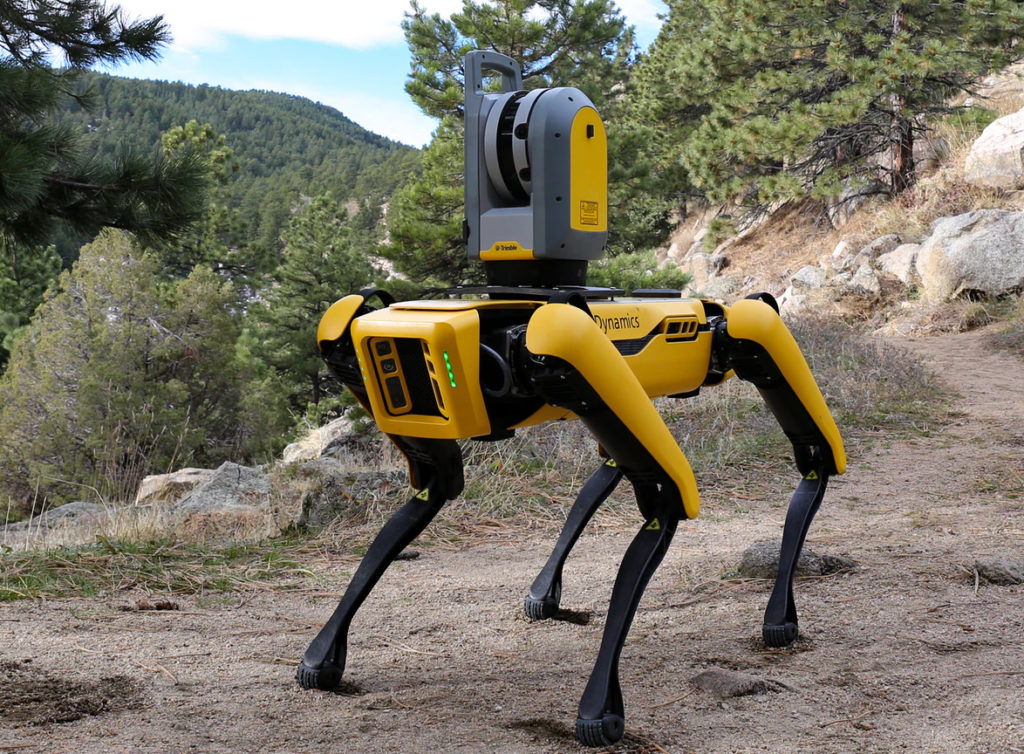
Spot the Dog
“The demonstration day was a great way to finish off my college experience in the BSc of Geographic Science. The Korec team talked us through the operating system of the latest Trimble survey equipment and offered us the opportunity to try out the instruments ourselves. The weather behaved in typical Irish fashion and rain showers were frequent. I was especially impressed with the quality of deliverables produced by the Trimble X7 Laser Scanner and accompanying touch screen under these conditions. The seamless workflow of this machine really highlighted the modern advances in technology enabling us, as surveyors of the future, to carry out surveys to the highest standard regardless of what the Irish climate throws at us. Advances such as these in technology makes me excited for my future career as a surveyor and I can only wait in eager anticipation of what else Trimble will release onto the market in the coming years. “
Rose Pearson, final year student, TU Dublin
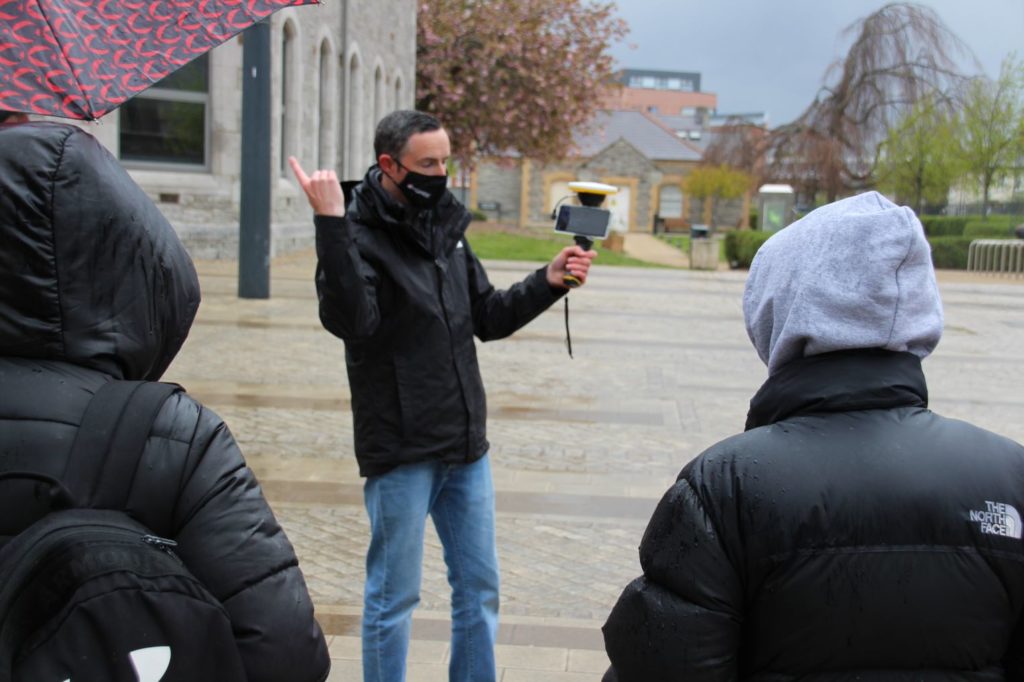
Augmented reality with Trimble SiteVision
“…..the technology demonstrated was very sleek, it was extremely easy to use and makes quick work of any of the tasks given to them. The scanning technology particularly was great, especially being able to view scans right after taking them.”
“The day spent with members of KOREC was extremely insightful and enjoyable. The demonstrations they showed us offered an exciting look into the advancements of this industry and their equipment as well as the broadness of its opportunities.”
1st/2nd year students (TU Dublin)
Our thanks to Dr Audrey Martin, Senior Lecturer, Chair BSc Geographic Science (TU Dublin) and of course to the students who attended and were kind enough to provide some great feedback.
It was only a few weeks ago that we caught up with Sky Revolutions Company Director, Ben Gorham when Sky Revolutions became the first KOREC customer to invest in the newly launched senseFly eBee GEO. This time we’re back with Ben talking about a particularly successful week the company’s had with the Trimble X7.
Whilst picking up the new eBee from the KOREC Huntingdon office, members of the Sky Revolutions team took the time to take a closer look at a Trimble X7 3D Laser Scanner that was on site that day and immediately saw how it could contribute across the business and in particular, to an upcoming measured building survey project.
With over 20 years’ experience in construction surveying, Sky Revolutions undertakes a wide range of work and until recently carried out its measured building surveys using the traditional method of a Trimble S7 Robotic Total Station. However, already familiar with 3D laser scanning technology, they were keen to see what the X7 could deliver on the planned job of 25 measured building surveys on structures ranging in size from as small as a shed sized sports pavilion to as large as an office block with everything in between.
When we caught up with Ben, the Sky Revolutions team had successfully completed eighteen of the scans in just four days and expected to be finished in five. Ben explained, “Our aim is to deliver projects promptly and to supply our clients with data of the highest quality. The X7 has been exemplary in helping us achieve those aims. The scan speed alone has really assisted on this project as did the smart auto-calibration. We’ve had laser scanners before but the X7 is a step ahead. The argument for not buying one doesn’t really exist!”
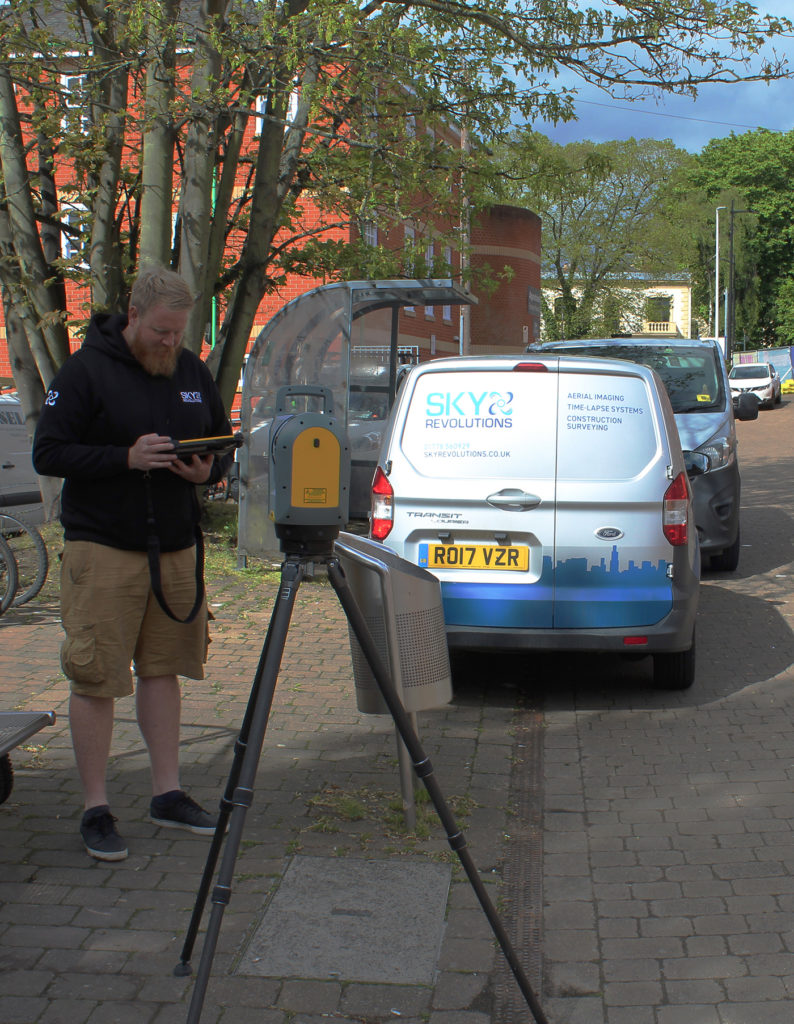
Sky Revolutions surveyor Dave Gaffney puts the Trimble X7 through its paces
Definitely not when it comes to examining why the Trimble X7 3D Laser Scanner lends itself to the pressures of crime and collision scene investigation!
We round up the top ten reasons why the X7 delivers on key requirements.
Over the years, KOREC has enjoyed a long and informative relationship with the UK’s police forces supplying a range of survey instruments from integrated GNSS and Total Station Systems to more recently, 3D Laser Scanning technology including the groundbreaking Trimble SX10 Laser Scanning Total Station.
Crime scene and collision evidence gathering is a discipline that brings its own set of challenges. The pressure to work quickly and capture every detail of a scene, often with no chance to revisit the site later, means that the emergency services need to have 100% confidence in the reliability of their data. They need to be able to gather that information quickly and it needs to be accurate, all encompassing and sufficiently robust to stand up in a court of law. Consequently, we’ve seen a shift towards 3D Laser Scanning as the best methodology for capturing a scene as quickly and completely as possible. Additionally, this can often be done from the side of a site reducing the chances of contaminating evidence.
The latest Trimble X7 3D Laser Scanner lends itself to the unique set of challenges faced by the police in a number of ways:
- Ease of use – the learning curve for the X7 is the shortest of any scanner we’ve ever seen with our training department estimating that even a non-surveyor can be efficient in data collection within hours. This gives it a far wider range of use. Thanks to its intuitive Perspective software running on a tablet, crime and collision scene investigators can reliably collect scan data even if they have not used the instrument for several weeks.
- Fit in with your existing workflow – export formats supported include Trimble and non-Trimble software through the instrument’s new Trimble Perspective software. For example, the open .E57 format for easy importing of data straight into Leica’s Cyclone software.
- Verification of information on site – the X7’s automatic on-site registration means that officers can check that all the information they need has been collected. Often there is no chance to revisit a scene, so this feature is vital for ensuring a full and detailed survey has been completed before leaving the site.
- Survey completed and sent from the site – with registration carried out on site, the finished scan data can be sent from the field for immediate analysis. This ensures a smooth flow of information in an environment where shift work and office processing time can delay the final deliverable by days.
- Fast set up and use – the X7 can be up and running in minutes thanks to the quick release mechanism and automated survey grade self-levelling – just put the scanner down and it’s ready to go.
- Night-time benefits with easy moving and set up around the site – an IMU has been included in the X7 which calculates the new station orientation and will import new data with this orientation already applied. The registration process which follows is then much faster due to the scan already having the correct orientation- just pick it up, hold it as you wish, walk where you want and put it down. This also makes it great for night-time working because unlike other manufacturer’s scanners it is not subject to the dark/low-light condition caveats that optically based solutions are.
- ROI – auto calibration brings reliability, cost-savings and no downtime – not only is the X7 priced competitively, but users are calculating that the auto-calibration feature alone can save in excess of £3k – £4k a year because unlike other manufacturer’s scanners, the X7 does not need to be sent abroad for this process. Instead it’s done automatically, every time it’s used, with the option of a printable certificate.
- The calibration of some instruments can take up to 2-3 months requiring the hire of a replacement instrument. The X7 eliminates the need for this.
- Rain never stops play – Trimble instruments have a proven record in the rain and with its IP55 rating, the X7 is no exception.
- Highly portable – the X7 weighs just 5.8kg and can be carried easily in a backpack.
- Excellent data quality – fast data collection plus the option of a high sensitivity mode for scanning dark vehicles etc.
- Images and annotations – Trimble Perspective software on a tablet drives the X7 and allows users to annotate, add images, tags, notes etc.
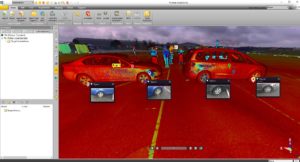
Scan data from the Trimble X7
For further information on the Trimble X7:
Call UK Sales: 0345 603 1214
Call Ireland Sales: 01 456 4702
For anything else, view our contact page.
KOREC is delighted to announce that following extensive behind the scenes work demonstrating our ongoing commitment to support the Esri user community, we have been recognised officially as an Esri Silver Tier Business Partner.

This new status will further strengthen the KOREC/Esri relationship allowing KOREC to offer Esri’s ArcGIS software as part of its mapping portfolio to new and existing KOREC customers.
Silver Tier status will also provide Esri UK’s customers with access to KOREC’s in-house software development team and its specialist knowledge on the integration of Trimble GNSS into Esri mobile data capture software.
Potential development for Esri clients will include everything from small tweaks to bespoke workflows based on the ArcGIS system, bringing all the power of their existing software but with customisation options for specific data capture workflows.
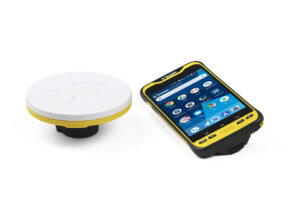
The Trimble Catalyst solution with a TDC600
The KOREC mapping team will also be available to assist Esri users with the integration of GNSS into their workflows with up to centimetre positional accuracy. Esri users will now have access to the most cost-effective method possible for cm accuracy by means of Trimble’s subscription based, low cost Catalyst solution.
To discuss all development requirements please contact KOREC Business Area Manager – Mapping & GIS, Richard Gauchwin on 07786 118436 or at richard.gauchwin@korecgroup.com
Or visit www.korecgroup.com/mapping