

KOREC is proud to announce that we support both serving and former military personnel – by signing up to the Armed Forces Covenant.
Established over a decade ago by the UK Government, the Covenant is a pledge from the nation to our armed forces, that they will be respected, supported and treated fairly.
We’re in good company – joining over 10,000 other businesses and organisations of all sizes who have pledged their support.
KOREC has an existing military connection through one of our own –Philip McCarten, who joined KOREC in 2020 as a member of our geospatial technical support team.
Prior to this, Phil was a member of the 42 Engineer Regiment (Geographic) as a Field Surveyor and Geographic Technician for almost a quarter of a century. The specialist unit is made up of both regulars and reservists, and provides geographic information, survey capabilities and mapping products for the Armed Forces. During his time in the unit, Phil travelled the globe conducting surveys, training and advising personnel in all manner of geographic matters. He even won the prestigious Queen’s Commendation for Bravery for his actions in West Africa in 1998.
Of the news that KOREC has signed up to the Covenant, Phil said;
“I’m delighted that KOREC have signed up, and wanted to say thanks and well done. KOREC is a great place to work and emulates the same values that are at the core of the Armed Forces. I am looking forward to seeing how we, as an organization, implement the covenant in our day to day working, especially as our Huntingdon office is only 3 miles away from my old regiment’s base!”
What is the Covenant?
The Covenant supports current serving members, reservists, veterans, family members, and those who have been injured during their service lifetime.
For reservists in particular, the pledge allows them to balance their civilian work with their Armed Forces role – by providing additional paid leave for them to complete necessary training.
The Covenant opens up a wide variety of support, including;
- Help with purchasing a home
- Enhanced access to physical and mental healthcare
- Financial advice and support
- Support for Veterans via Veterans UK
Discover more about the Armed Forces Covenant, including the complete list of pledging organisations, via their website; https://www.armedforcescovenant.gov.uk/
We are delighted to share that we have been awarded the prestigious Investors In People & Investors In Wellbeing accreditation – with over 96% of employees agreeing that KOREC is a great place to work!
Launched 30 years ago, the Investors in People programme certifies organisations that perform against a wide range of criteria – including workplace culture, employee engagement, leadership, communication and working practices.
More recently, in 2019, they added the Investors in Wellbeing initiative – which measures an organisation’s commitment to physical & mental wellbeing.
Following a series of employee surveys and focus groups at the latter end of 2022, we were delighted to receive our accreditation at the first time of asking.
The report highlights a high level of satisfaction and engagement across the board – with our people feeling supported, appreciated – and that their achievements are recognised and their ideas listened to.
Amongst the top headlines, over 95% of our colleagues agreed that they felt supported by their manager, and that they trust the leaders of KOREC. Considering the KOREC Values (to be happy, profitable & respected) – we were also delighted to learn that 95% of colleagues agree that we have created a culture where everyone feels respected.
Feeling good – inside and out
Our Wellbeing report also makes for very positive reading – confirming that we have ‘a clear and effective commitment to consider and protect the wellbeing of staff’.
We recognise the importance of maintaining robust physical and mental health – and have a wealth of resources in place to support this. These include our 5-strong Mental Health First Aid team, regular physical challenges, our two yearly parties, our provision of the Plumm mental health portal, an annual Wellbeing Survey, and in-person Wellness Days.
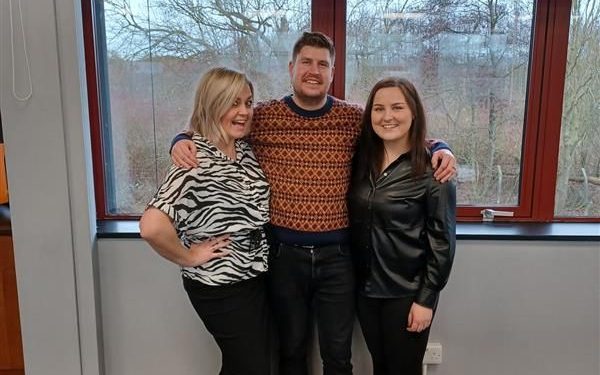
It’s a delight to hear that these initiatives are paying dividends – with several people commenting that ‘the corporate approach to wellbeing is one of the key things that will keep them working for KOREC’.
Despite all the positive news, we’re not resting on our laurels. We’ve committed to the 3-year accreditation, which means we’ll continue to work on improving the standard of life at KOREC – so that we can make it an even better place to work, for all our people.
We’d like to take this opportunity to thank all our colleagues who took part in the surveys and focus groups.
Why not join in the fun?
99% of our colleagues agree that their work is interesting – so, if you’re looking for a new role within a welcoming, nurturing, exciting and supportive environment – why not check out our Careers page?
This Monday may be a bank holiday, but this year another holiday is taking place on the same day. Eid al-Fitr (festival of breaking the fast) will be celebrated by Muslims all around the world as the month of Ramadan comes to an end.
But what is Ramadan? Here, KOREC’s Digital Marketing Apprentice Ikra Taj educates us on Ramadan, and what it means to her.
Ramadan is the ninth month in the Islamic calendar and every year the start date varies and is decided at the sighting of the moon. It is a religious ceremony that marks the 30 days in which the Quran (Holy book of Islam) was revealed to our last prophet. This month is possibly the most anticipated month of the Islamic calendar; a month that Muslims across the globe yearn and crave to see again. During Ramadan Muslims spend an entire month fasting from sunset to sunrise, this means we cannot eat or drink anything from sunset to sunrise. Aside from fasting Ramadan is a time for spiritual reflection, to help those in need and to spend time with loved ones.
Every year I often get asked the same questions around fasting. There’s always the interest of how we observe this sacred month and then there’s the shock of how intense the requirements of fasting are:
“So you can’t eat anything from sunset to sunrise?!”
“Not even water?!”
“I could never do that!”
I understand it does sound pretty full on but the reality is Ramadan is doable and so rewarding. It is even scientifically proven that intermittent fasting has multiple health benefits. However, we don’t fast because God wants us to starve, instead it’s a time to empty our stomachs and feed our souls.
Fasting is compulsory for all Muslims although there are some exemptions, some are exempt from fasting due to illnesses, pregnancy or old age. In these cases, If the individual is not able to make up these fasts at a later date, they must feed one poor person for each fast missed.
Ramadan is something I’ve always observed since a young age. For me it is a time of quiet reflection and self-discipline; I like to pray, recite the Quran and give extra charity during this month to better myself and improve my character. It’s also a time where I am conscious of my actions more so than on a typical day as I want to be rewarded by God for the good I do in this month.
In my younger years Ramadan for me often used to be a challenge, all I thought about was food and often I spent my days counting down the hours to sunset so I could eat. Luckily this has changed! As I’ve grown older I normally overcome the effects of fasting within the first few days, the body does adjust fairly fast and although I miss my guilty pleasures the feeling of fasting makes me so much happier.
Instead of having food on my mind I make the effort to spend more time with my family, prepare meals for my loved ones and increase my remembrance of God. Working from home also has its benefits as I am able to preserve my energy by not traveling or walking around much. It also helps when working in an environment where those around you care and help you through this month, the little things like getting checked up on by work colleagues during my working day always brings a smile to my face and makes this month that much more amazing. So a special thank you to Stuart and Harriet who have looked after me well and been so understanding, I appreciate you!
As a small cake business owner my days are always busy with a high influx of orders coming in, from everyone wanting to gift their friends and family edible gifts to celebrate Ramadan. I love this part, as my spare time is spent doing what I love and bringing smiles to faces.
So the question remains why do we fast in Ramadan?
Firstly, it is one of the pillars of Islam (obligatory acts Muslims must carry out). The Quran also states those who believe must fast. Fasting has been a way of those way before us and its intention is to make us more conscious of our Lord. When we see our physical intake of blessings i.e. food being taken away from us we instantly become more mindful of who bestowed those blessings upon us. This makes us grateful and In turn helps us live positively and do good. As well as withholding food we must stay away from using bad language, smoking, immoral acts and anger.
When a Muslim predecessor once asked “why is fasting instituted?” It was replied by “so that the rich will taste hunger and thus will not forget the hungry”. Through the experience of fasting we gain a greater depth of understanding for those who have little or no food, this helps us to have more empathy. Therefore, during Ramadan Muslims push to be charitable by donating to charities and feeding the less fortunate.
What may surprise some is that Muslims enjoy Ramadan so much that they grieve when it comes to an end. We come to the realisation that true happiness is in feeding the soul and being satisfied with your sustenance, that prayer is better than sleep and that charity is better than consumption.

Last month we said goodbye to one of our longest-serving employees – and in doing so closed a chapter of KOREC’s history.
When Group Financial Controller Helen Palmer (nee Walsh) decided to ‘hang up her abacus’ after 22 years in the business, there ended the last connection to the original founders of Survey Supplies.
A Little History Lesson
Survey Supplies was founded in Liverpool by father and son, George and Graham Walsh in 1967. As with many family enterprises, Helen Walsh, Graham’s daughter and George’s granddaughter, was roped in to assist – working in the finance department as a teenager during her summer holidays.
Helen clearly caught the bug – heading to university to study Maths with statistics, and then training as a Chartered Accountant with a firm in Liverpool.

In 1999 Helen returned to the finance department at Survey Supplies. When Survey Supplies Ireland was established– a brand new enterprise for the company, Helen was tasked with the accounting functions.
One of the most significant changes came in 2005 when current CEO Alan Browne purchased Survey Supplies, and rebranded the organisation to KOREC. Although clearly a significant change for Helen, she confesses that these later years have been the ones she will look back on most fondly.
A Fond Farewell
Never one to miss out on a party, Helen made the decision to retire at the tail end of 2021 – giving the KOREC team plenty of time to plan her farewell party.
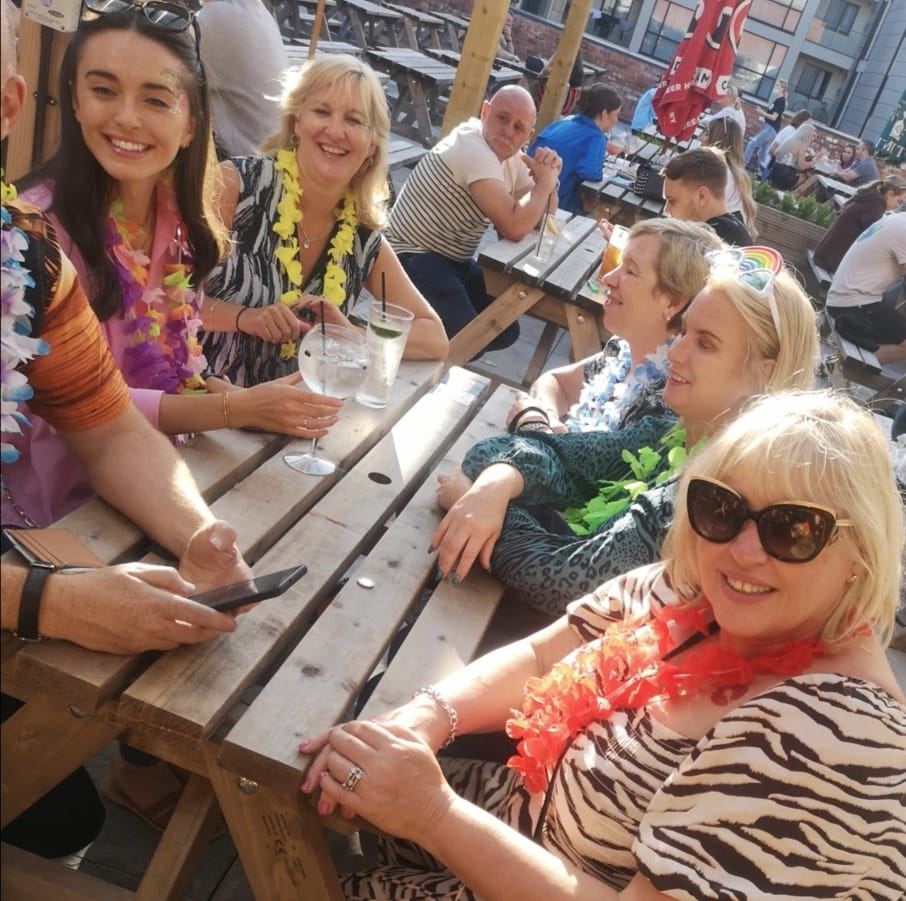
The team didn’t disappoint. A night out at Bongo’s Bingo (bingo – but not as you know it!) was enjoyed by the Liverpool office team, although Helen was gutted not to take home the glitterball helmet…
A rather more sedate party was held in the Liverpool office, where the team enjoyed a buffet feast (thank you Rachel!) and an absolutely giant cake, which Helen ceremoniously cut.
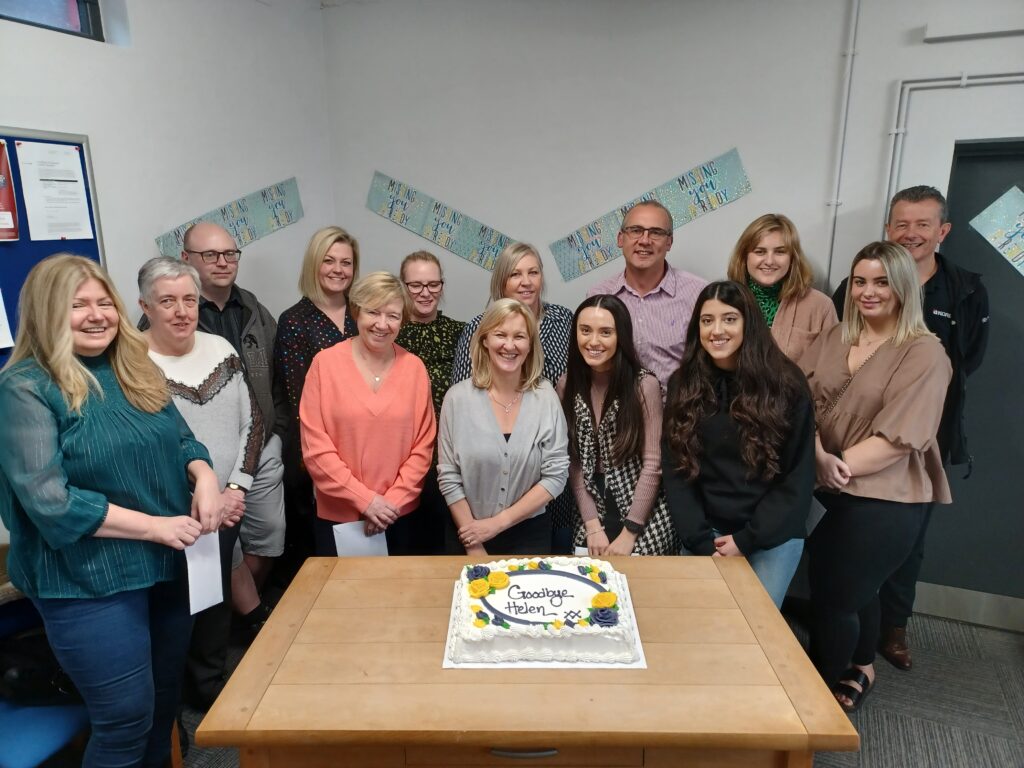
Helen will be greatly missed by all who worked with her – not least Finance Director David Hodkinson who singled out her ‘fantastic work and dedication’ during their 16 years as colleagues.
Happily, Helen is based just up the road from the Crosby office, so we expect to be seeing Helen and getting regular updates on her latest golf handicap / caravan holiday escapades!
From all of us at KOREC, we thank you Helen and wish you many happy years on the golf course!
Trust is a funny thing. It can take years to build, yet can be destroyed in days.
All and any relationships, may they be business or personal, ultimately succeed or fail due to trust.
In the era of fake news, accusations of green-washing, and with faith in our political systems at an all time low (in a recent Ipsos Mori poll, politicians finished in last place in the trust race), we thought it was high time to establish why we think KOREC stands out from the rest.
So we’re launched our 6 pillars of trust – 6 reasons why we think KOREC is an organisation that you can rely on;
We’re Committed!
Tracing our roots back to 1967, KOREC has been in the geospatial business for over 50 years. That sort of longevity doesn’t come easily – and we think proves our commitment to, and expertise of, the industries that we serve.
This longevity is bolstered by geographical spread of KOREC’s regional consultant and technical support teams. In short – we’re located where you are. So whether it’s Enda Fox in Belfast, Leigh Rowell in Northumberland, or Abel Varela Abelleira in London – you know there’s a KOREC-er who knows your area.
Sincerely, Yours
We understand that trust is built from the inside out. The separation caused by COVID and home-working only served to reinforce this fact. Over the past few years, we’ve been working hard on improving our internal company communications. We launched Lunch ‘n’ Learns in 2020, and we introduced Yammer in 2022. Both platforms seek to improve the flow of information around our organisation, ensuring that all colleagues are well-informed and up to date.

We’ve also worked hard on the clarity of our public messaging. After all – you’re busy, we’re busy – so let’s simplify our message and get straight to the point. Our marketing team’s ethos is to get you connected to the right information, or the right person, as quickly as we can.
You Can Lean On Us
We think this one goes without saying, but we are proud to supply the most reliable, robust and trustworthy kit in the geospatial industry.
In just the last few years alone, Trimble has released some extraordinary solutions onto the market – the tilting R12i, wunderkid X7 scanner, Catalyst DA2 and MX50 mobile mapping system to name a few.
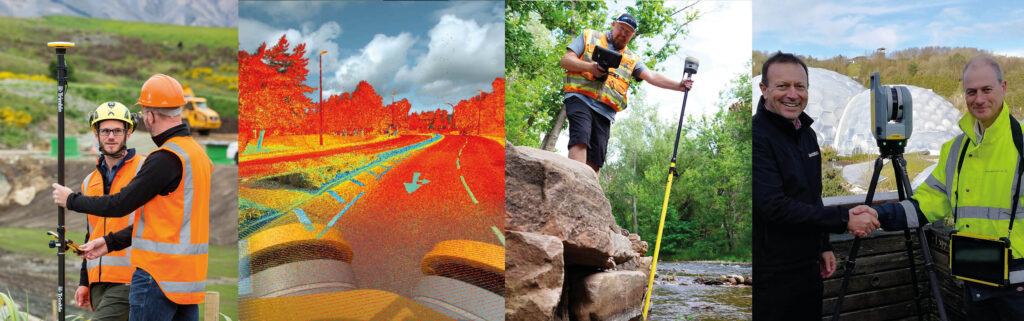
As many surveyors will know, not all survey equipment is created equal, and it pains us to see surveyors suffering with kit that fails in the lightest of rain showers. It’s very much a part of our mission to connect you with the right kit for the job – in order to make your life easier.
Integrity – it’s Integral to Us
Forgive us the wordplay. Rather than selling you a one-off bit of kit, we strive to provide end-to-end solutions that solve your complete problem – not just a part of it. It’s our belief that employing one solution from one provider increases your efficiencies and smoothens your workflow – not to mention just one port of call if you need help or assistance!
Core Competency
A section of the business that brings us pride are our office-based and regional technical support teams. In annual surveys and feedback forms, these guys are usually voted the top of the bunch (much to the chagrin of other departments!)

But this is no accident. Both our sales and support teams undergo rigorous training – both at the beginning of the job, and throughout. With the majority of our team being trained surveyors and engineers in their own right, they certainly understand the pain points that you experience.
A Lovely Consistency
Taking all of the above into account, whether it be training, education, equipment or messaging, we aim to be consistent in all that we do. With a growing organisation operating across 2 nations, this is a constant challenge that needs constant work. How do we do it?
Regular, clear and constructive communication is encouraged throughout KOREC from the top-down – whether it’s CEO Alan’s video updates, our regular, informative Lunch ‘n’ Learns, or our bi-annual get togethers.
Transparency
Okay we said 6, but here’s 1 more for luck. We aim to be as transparent as we can. Not only do we regularly ask you, our customers, for your opinion – we also publish the results and share them with you.
So in the spirit of transparency, what do you make of our 6 pillars? Anything we missed out? What else could KOREC be doing to increase your trust?
Why not let us know via this feedback form?
The onset of the COVID-19 pandemic two years ago really brought home to us the importance of maintaining and improving our health – both inside and out.
Maintaining our physical health could mean the difference between a mild or a severe case of covid, and the impact of multiple lockdowns, separation from our loved ones, and working from home, all took their toll on our mental health, too.
Combined with the distressing and upsetting news coming out of Ukraine on an almost daily basis, it does seem a challenge to keep ourselves upbeat and positive.
As a responsible employer, KOREC understands the importance of ensuring a happy, healthy and supported workforce – and takes action to ensure it.
To mark this International Day of Happiness, here’s just some of the initiatives we’re undertaking to bolster the health, happiness and prosperity of our people;
Perks of the Job
The company now proudly boasts 5 physical first aiders, including Steven Sreeves who just completed his Emergency First Aid at Work training, provided by St John Ambulance
- We’re also proud to have two mental health first aiders, in the shape of Rachel Caddick and Stuart Guthrie-Cadge, both of whom recently completed the Mental Health First Aid England course.
- Rachel and Stuart recently held a Lunch ‘n’ Learn on the difficult but important subject of depression, anxiety and suicide – and offered advice and tips for those who may be struggling.

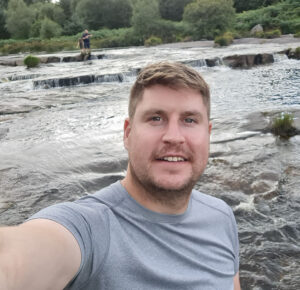
Meet the KOREC mental health first aiders! Rachel Caddick and Stuart Guthrie-Cadge
- We’ve signed up to Plumm – a dedicated online platform that offers free and confidential chat therapy, online courses and meditation
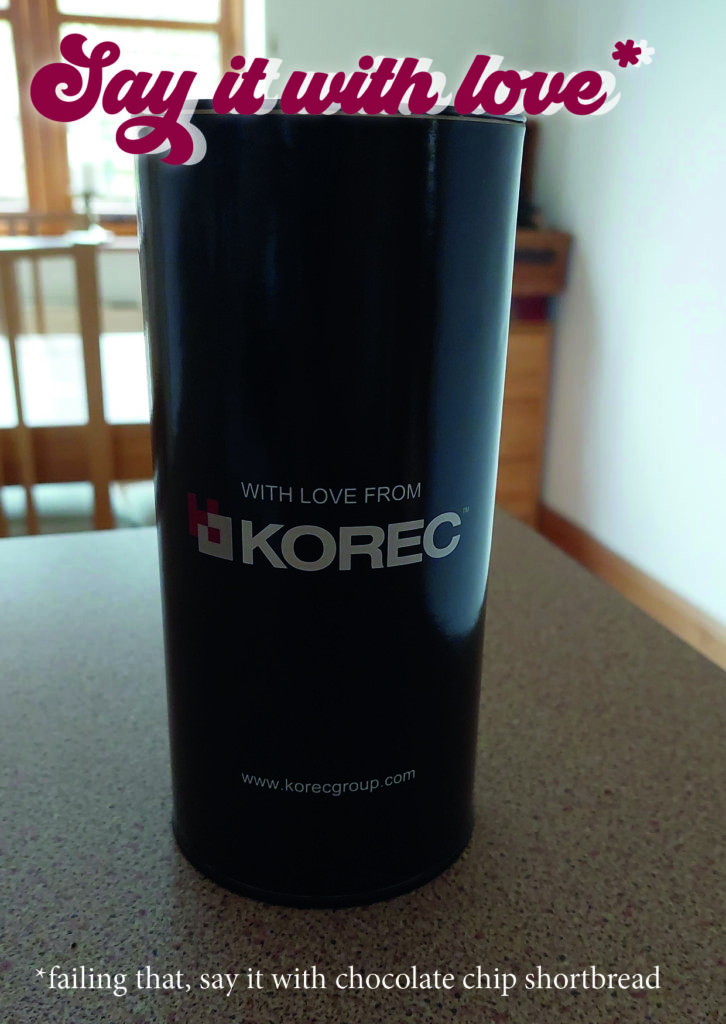
- We recognise the importance of small gestures, which is why we send every single employee a small Valentine’s gift each year, just to let them know we appreciate them.
- Speaking of small gestures, who doesn’t love a wee perk? For a few years now KOREC has invested in Perkbox, an online portal chock full of freebies and discounts on everything from free cinema tickets to cheaper gym discounts. This also includes access to the Employee Assistance Program – providing 24/7 support for those struggling with legal issues, debt, anxiety, bereavement or relationship issues.
- We also love to party! Which is why we have not one, but two KOREC parties – a summer and a Christmas event! The KOREC gang love nothing more than getting together and having a knees up. During COVID, we thought this was more important than ever, so we held our first ever ‘virtual’ Christmas party, and smaller, socially-distanced summer events.
On this International Day of Happiness, why not take a few moments out of your day to do something that makes you feel good?
Wishing you health, happiness and prosperity – from the whole KOREC team!
Maps – they’re made to show us where we are, where we’re going, and how to get there. Right? Well, partly. Here at KOREC, we’re self-confessed mapping addicts, and we know that maps are so much more than this.
So, to celebrate the arrival of KOREC Mapping in May, we asked our colleagues to send us their absolute favourite map, and to tell us why they love it so.
From the sheer range of entries received, we see that maps can educate, inform, inspire – make us laugh, make us nostalgic, and yes, even occasionally let us lose ourselves.
Journeys through Space…
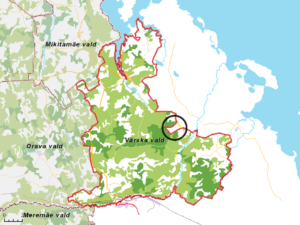
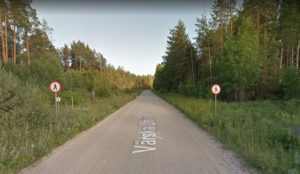
An ‘absolutely mad’ 115ha area of Russia was the choice of Harriet Brewitt. Known locally as ‘Saatse Boot’, the small area of Russia cuts a boot shape into Estonian territory, meaning the Estonian road 178 crosses the border twice and passes through Russian territory for around 1km. Whilst driving the road is allowed, stopping is not, and neither are pedestrians – as the signs on Google streetview attest!
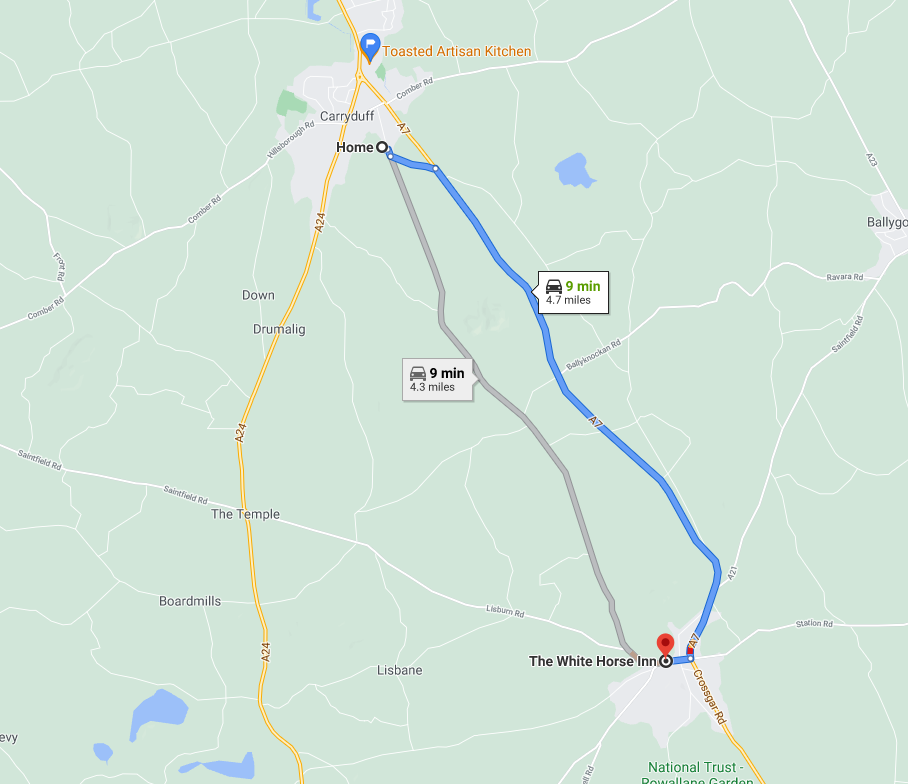
Speaking of driving, Jim McEwan’s map shows us that in just 9 minutes he can be in his favourite pub, the White Horse! But don’t worry – his wife is very kindly doing the driving, or in Jim’s words – “she literally drives me to drink…and then home again”
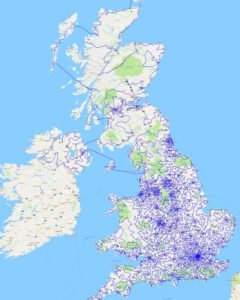
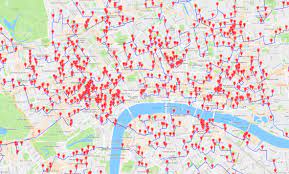
And speaking of pub crawls, how’s this? Philip McCarten’s favourite map combines his passions of map-making, GIS data and a cheeky tipple to highlight all 24,727 pubs in the UK – and the shortest route between them! And before you ask – if you travelled on foot, it would take you 3 years to visit every single one of them.
…And Time
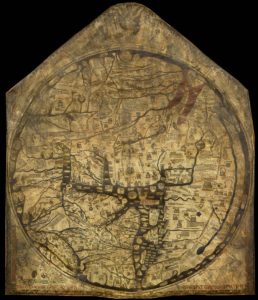
For Rob Judge, a classic map from the medieval world was his choice. The Mappa Mundi, made in around 1300, shows the world as it was understood by Christian Europe – with Jerusalem at its heart. Why is it such a marvel? For Rob, it’s the achievement of “producing a map with very limited technology, communications and the ability to travel long distances. A wonderful bit of history”.
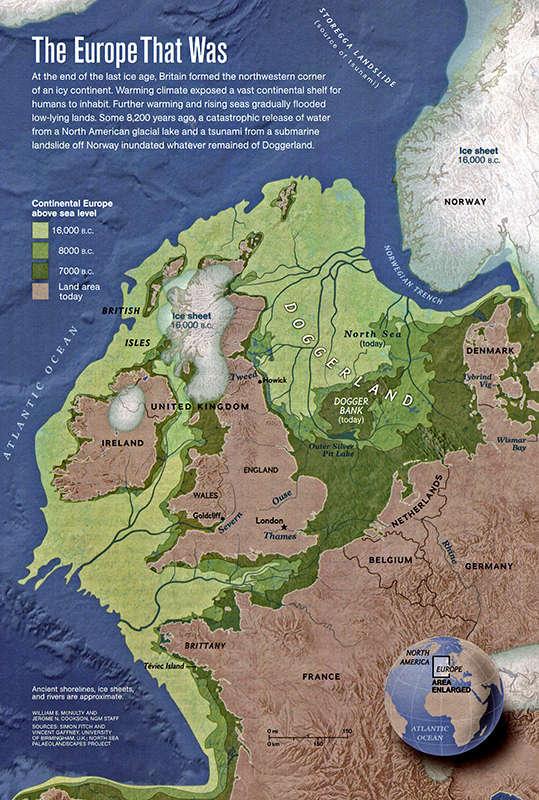
Going further back, Simon Evans’ map shows a time when the United Kingdom was intimately connected to mainland Europe. No, not 2016, rather 16,000BC, when sea levels were much lower and a vast area of land known as ‘Doggerland’ occupied much of the present-day North Sea.
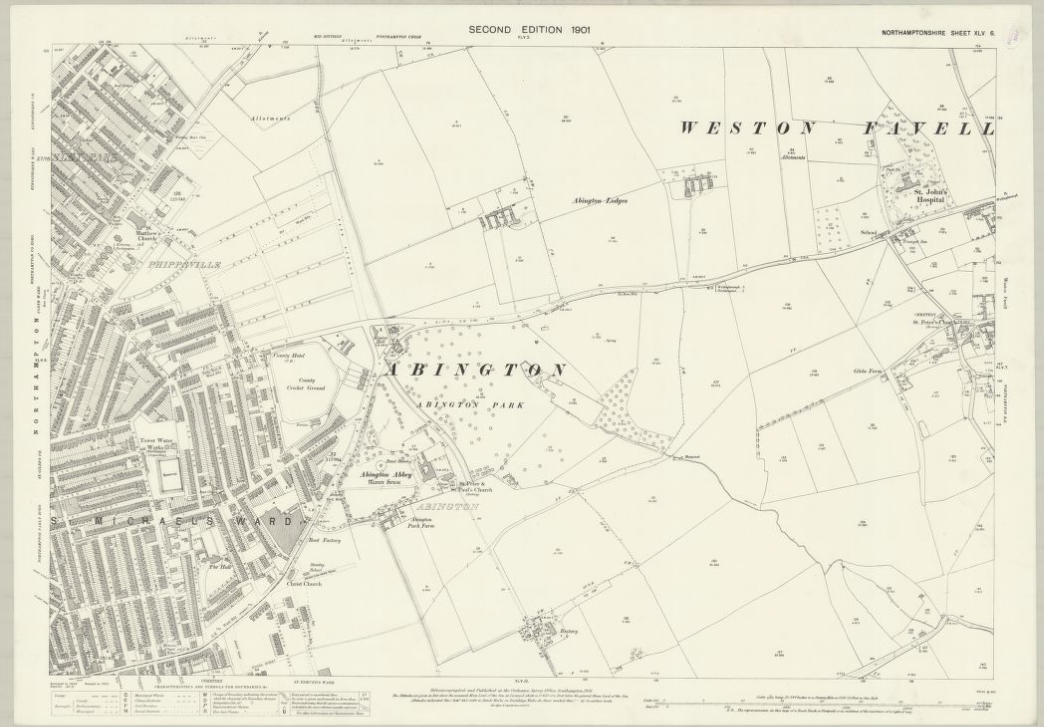
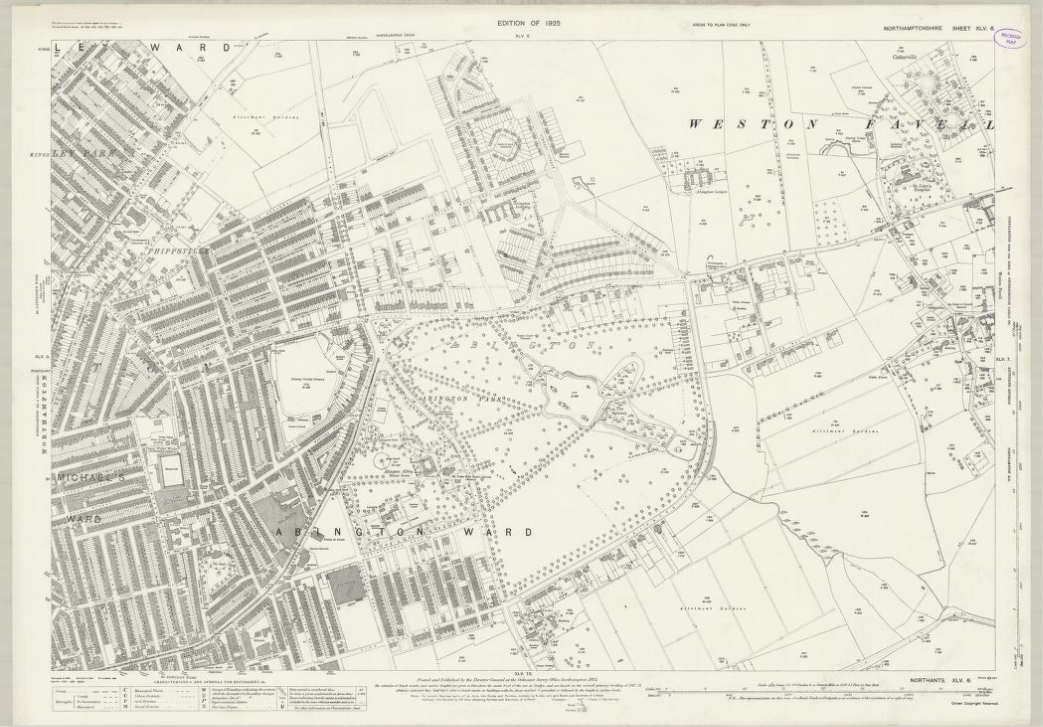
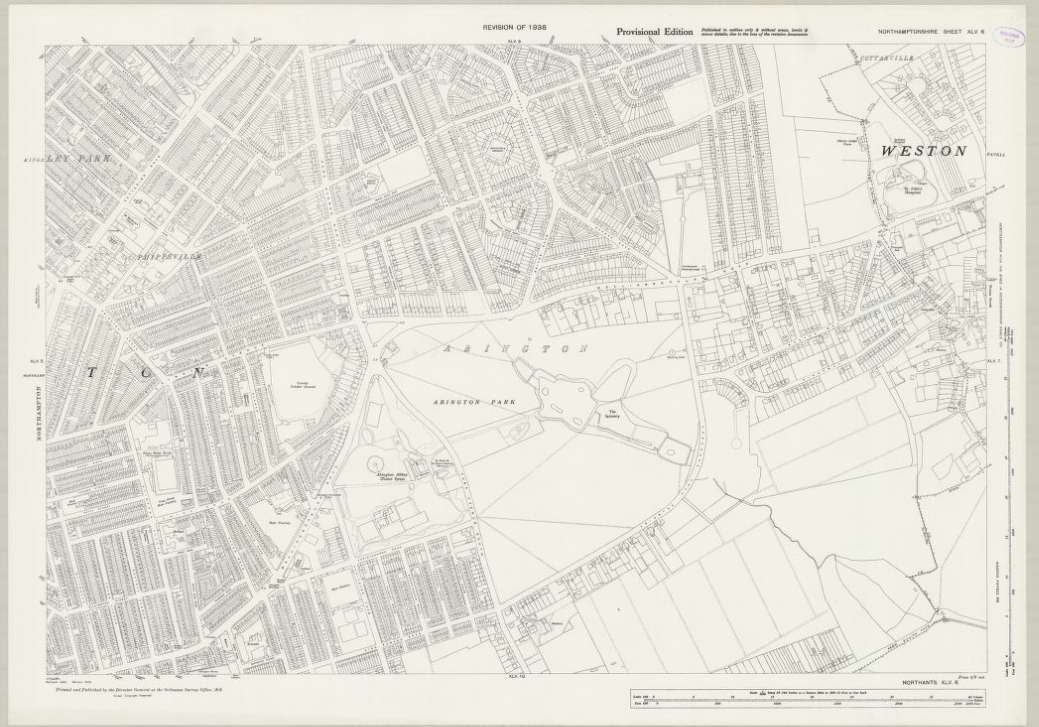
Coming back into the near-present, Lloyd Wilkinson submitted not 1 but 3 maps from the excellent collection at the National Library of Scotland of the same area – his hometown of Northampton. The series of maps from 1900 to 1935 show the rate of change and growth as the town experienced rapid industrialisation, a cause close to Lloyd’s heart as he studied urban industrial growth at university.
Up High….
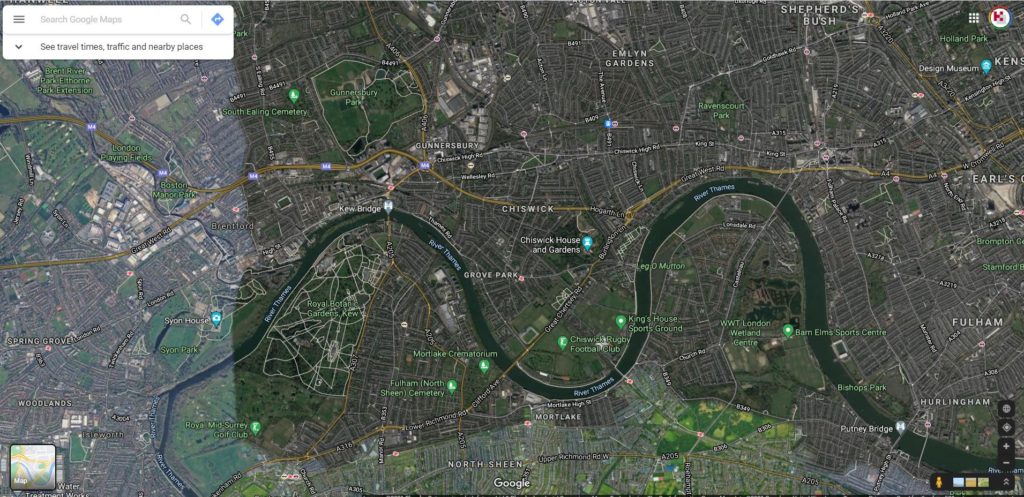
Satellite imagery and remote sensing has transformed our understanding of the world and our sense of place. For Tracy Critcher, a Google satellite map of her childhood home of Chiswick brings back many happy memories of her Dad rowing down the ‘mighty river Thames’, summer days outside the pub, and of course, the biggest ice cream shop EVER. Couldn’t be put better than Tracy herself ‘ “the map looks busy because it is filled with life”
And down low…
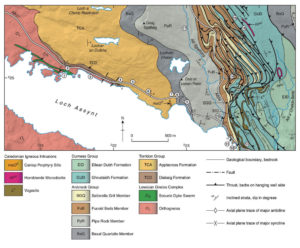
From London to the remote north-west Highlands of Scotland, Laura Harper has chosen this geological map of Loch Assynt. Laura spent a happy six weeks mapping the shore of the loch for her Geology dissertation – despite almost constant rain and the dreaded Scottish flesh-eating midges!
This map combines the geological data of some of the oldest rock formations in the UK, whilst also being a work of art in its’ own right.
Maps as works of Art

And speaking of art, Karen Wentworth has chosen Stephen Walter’s Map of Liverpool (2008-09), a vast, beautiful hand-drawn and insanely detailed map of the city. As a proud Scouser, Karen loves this map due to the sheer amount of local history, knowledge, and local scouse lingo featured – not to mention the two famous football clubs, and of course Crosby, home of KOREC’s Liverpool office!
Literary Maps
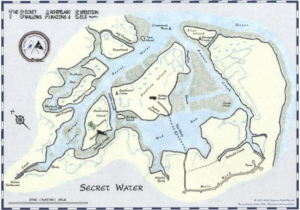
Another Liverpool colleague, Richard Selby has chosen the map from the novel ‘Secret Water’ – from the Swallows and Amazons series of books by Arthur Ransome. In the story, the Swallows’ father maroons the children on the island with just the outline map of the area – leaving the gang to survey the land and fill in the gaps! Perhaps reading the novel as a 10-year old inspired Richard for a career in surveying?!
Maps as Nostalgia
To complete our tour through this world of maps, we look at three maps that create or inspire happy memories.
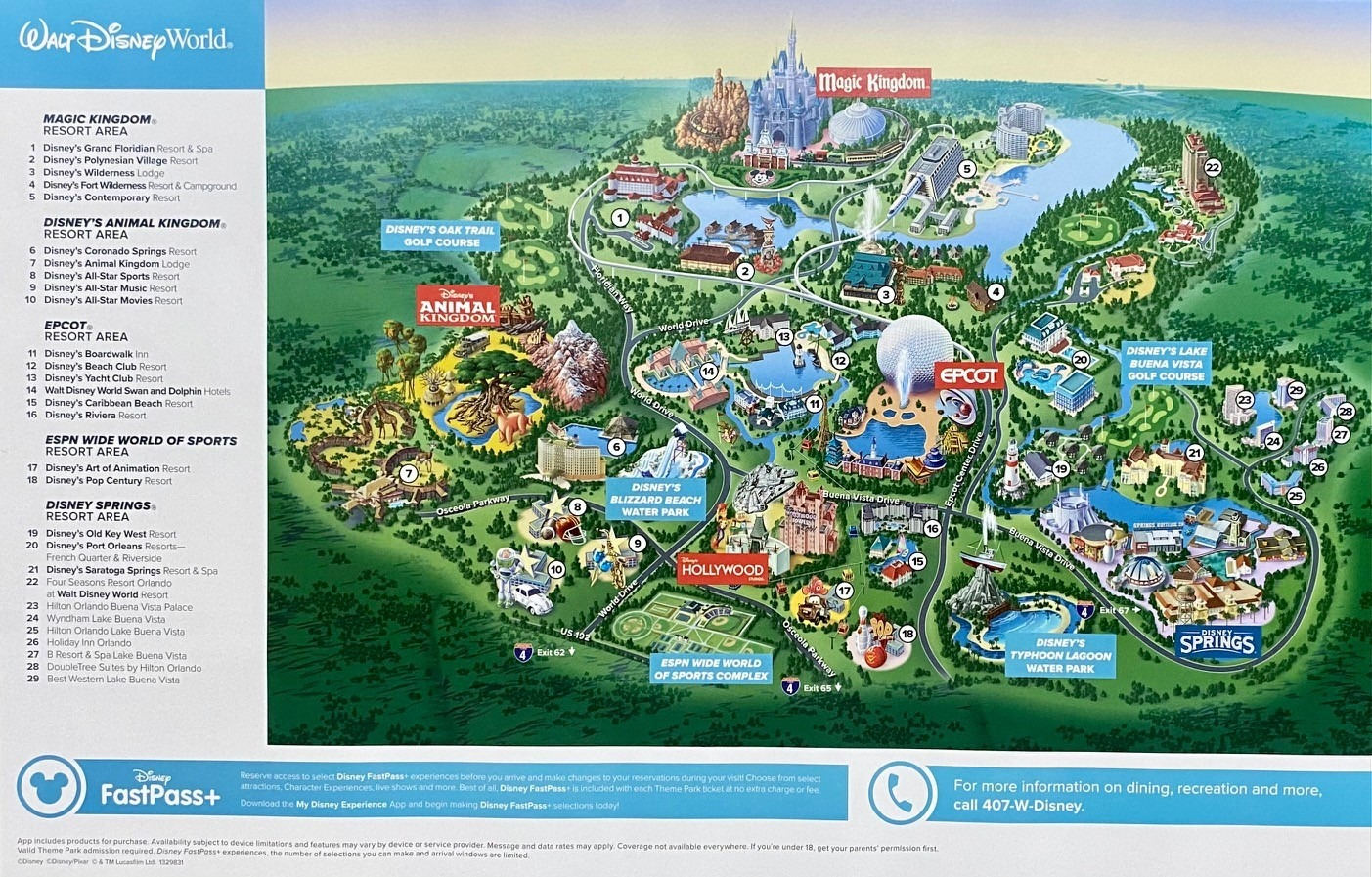
Graham Sharp’s map of Walt Disney World reminds him of the many smiles that this place has brought him and his family, young and old, over the years.
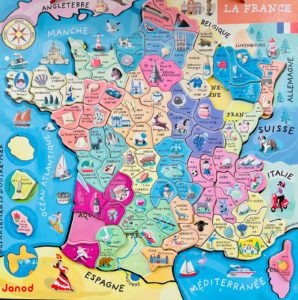
For Kirsten Moss, this jigsaw map of France, purchased when her daughter was 3 years old, brings back many happy memories of French family holidays over the years. Daughter Ruby would love pointing out all the places she’d been, as well as all the different regional birds, animals and foods! So much so, the jigsaw map still hangs on her bedroom wall to this day.
Our final map, another bedroom wall classic, comes from Melvin Penwill. Melvin has unashamedly passed his love of maps onto his son Jacob – who loves to point out all the places his Daddy has visited, as well as discovering the animals and where in the world they live. Jacob’s favourite place on the map? The UK, because this is home.
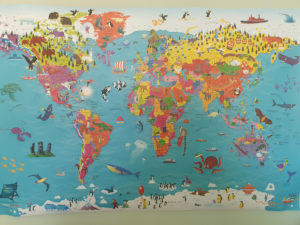
Thank you to all our map contributors, we had such a great time poring over all your entries.
- Find out more about KOREC Mapping
- Watch the Mad about Maps video on our YouTube channel
KOREC is marking Mental Health Awareness Week with a series of initiatives aimed at supporting our network of staff and mental health organisations.
The last twelve months have been extremely challenging for us all, and even though the worst of the pandemic is (hopefully) behind us, the potential for a mental health pandemic is still very much present.
Inspired by colleague Aisling Griffin, this year the company is supporting Irish charity Pieta – which offers free, therapeutic advice and support for those struggling with suicidal thoughts, or those who have been bereaved by suicide.
Aisling took part in ‘Darkness into Light’ – usually a group walk beginning in the wee small hours and culminating with the sunrise. This year due to COVID restrictions, participants were encouraged to do so individually with a walk, cycle or even swim before sunrise.
After a 4.15am start in the pouring rain, Aisling headed to a local beauty spot, on the cliffs overlooking the beach outside of Cork.
“Even though the walk couldn’t take place this year, I was determined to take part in the event. I walked up to the headland overlooking the sea, it’s a very peaceful spot and at that time of day, you feel like the only person in the world. On the way back I chatted to some other people doing the same as me – some even swimming in the sea. There was a real sense of comradery between us”

As a nod to Aisling’s determination and early start, KOREC staff have been encouraged to share ‘Darkness into Light’ Teams backgrounds and to make a donation to the cause – generously matched by the company.
Other activities throughout the week include reminders to staff that a range of health and well-being resources, including a confidential support helpline, healthy eating plans, gym discounts and wellness treatments are available, and an invitation to take part in June’s ‘Bike Month Challenge’ to encourage staff to get on their bikes, and get more active this summer.
Useful Links;