

A trio of news stories celebrating the support that both KOREC and Trimble are providing to the education sector across the UK
There isn’t much that’s more important than ensuring the next generation are informed, enthused and inspired to join us in the exciting world of engineering, construction and the built environment.
In how many other industries can you make such a direct and positive change in how we design, build and maintain the spaces in which we live, work and play?
That’s why we’re delighted to highlight 3 recent stories that do just that;
KOREC & National Highways make a Big impact
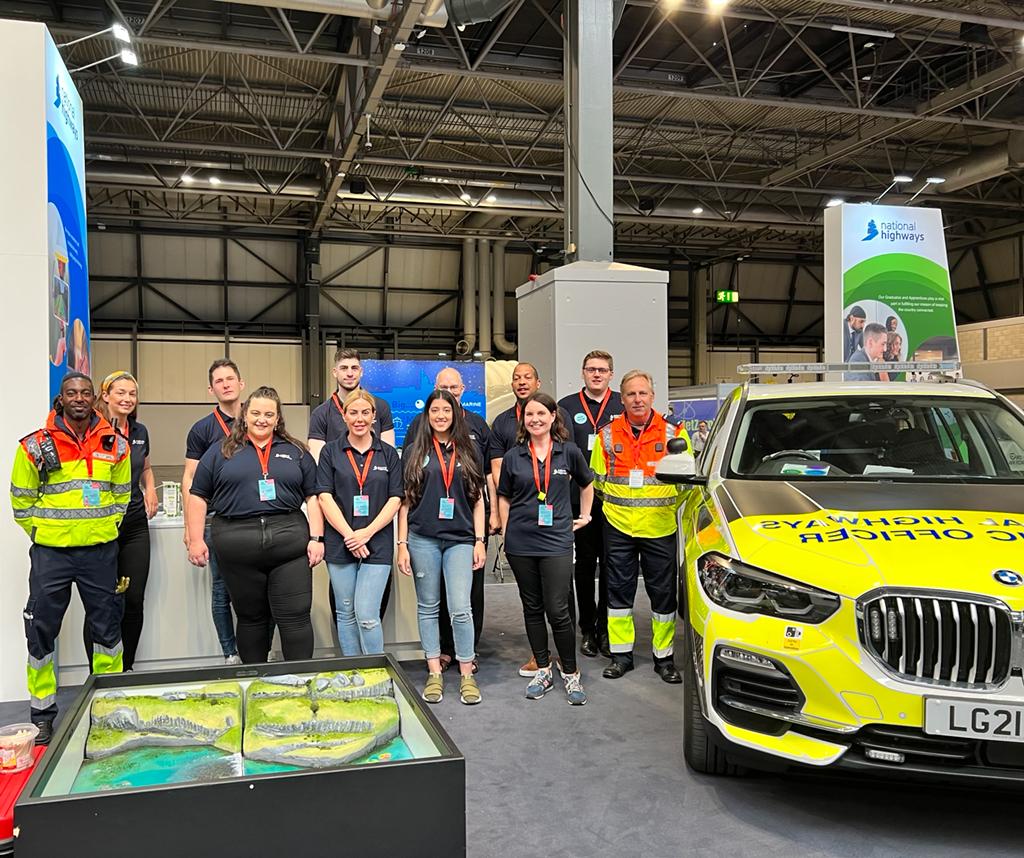
Our team were delighted to support National Highways at the recent Big Bang Fair in Birmingham.
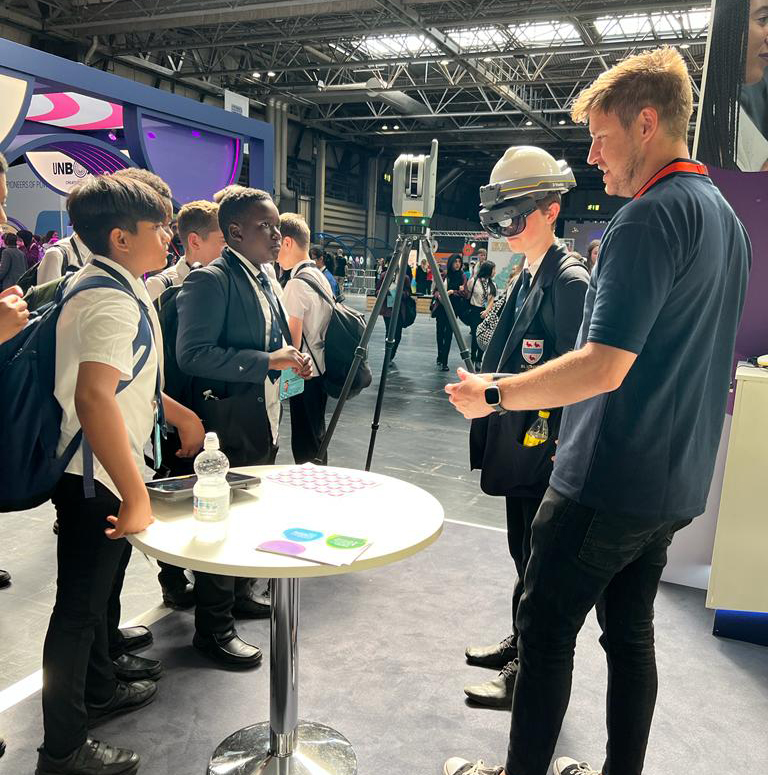
The 3-day event saw tens of thousands of children aged 11-14 descend on the NEC to get involved in all things STEM (science, technology, engineering and maths).
The KOREC team were on hand to showcase the very cool technologies that are being utilised to made the collection, sharing and understanding of spatial data easier and more intuitive. The star of the show was most certainly the Trimble XR10 headset. The team loaded various digital models including dinosaurs, robots and an airplane into the device, which the kids could then view and explore!
Check out more photos of the event and the team, here!
Trimble Technology lab expands in Edinburgh
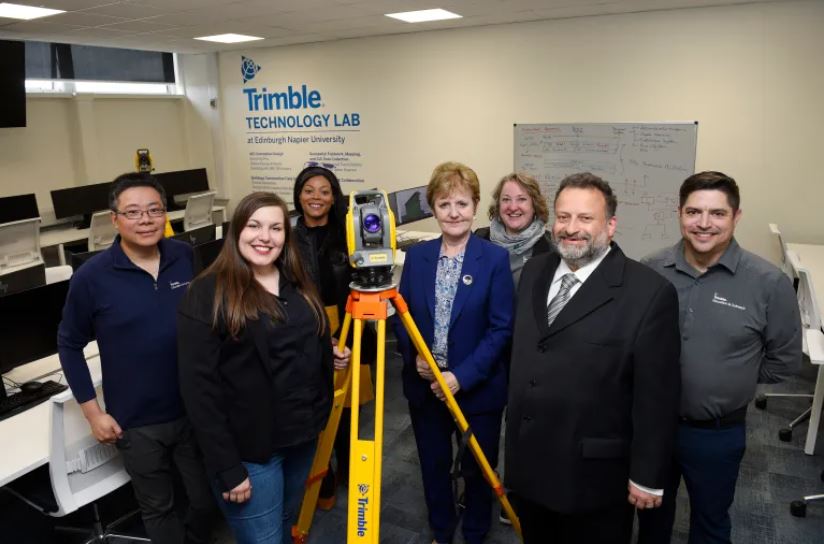
Trimble and Edinburgh Napier University are celebrating the expansion of the Trimble Technology lab – the first of its kind in the UK.
Click here or the link below to read the complete story over on the North Edinburgh News site.
SMB College Group invest in Trimble Technology
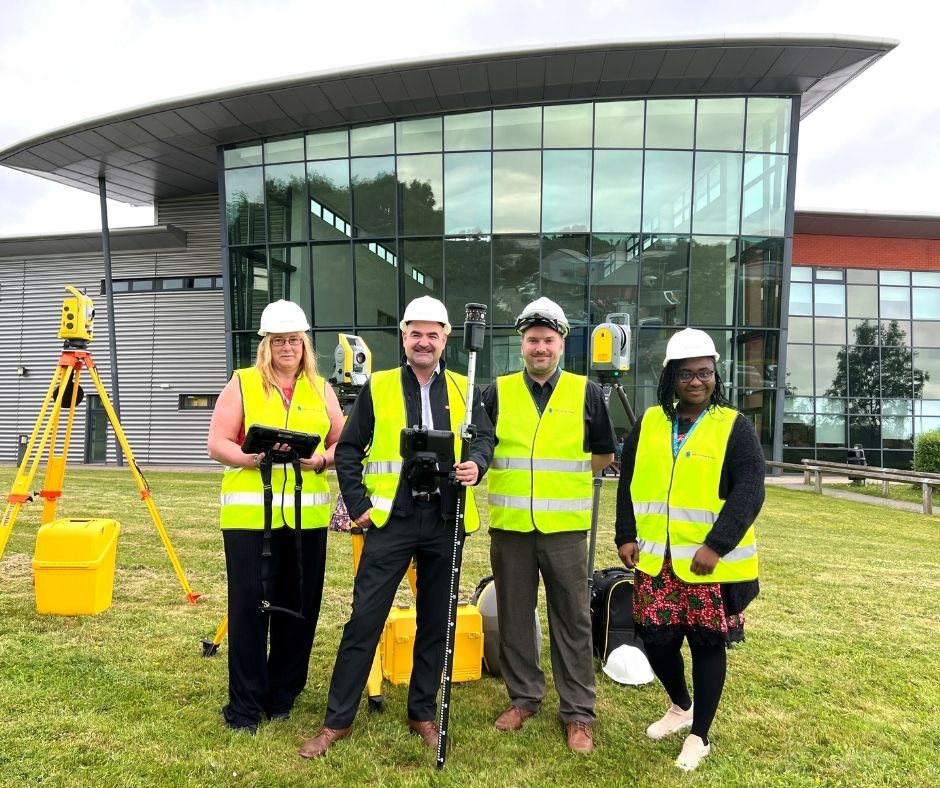
Leicestershire-based SMB College Group has recently invested over £80,000 in Trimble technology, supplied by KOREC Group.
The college is a leader in Construction T level courses – preparing its students for work in the construction and engineering sectors including quantity surveying, civil engineering, project management and architecture.
The equipment includes some of Trimble’s most cutting-edge digital construction solutions, including the X7 laser scanner, the XR10 mixed reality headset, and the S5 robotic total station.
Read the full press release on the SMB College Group site
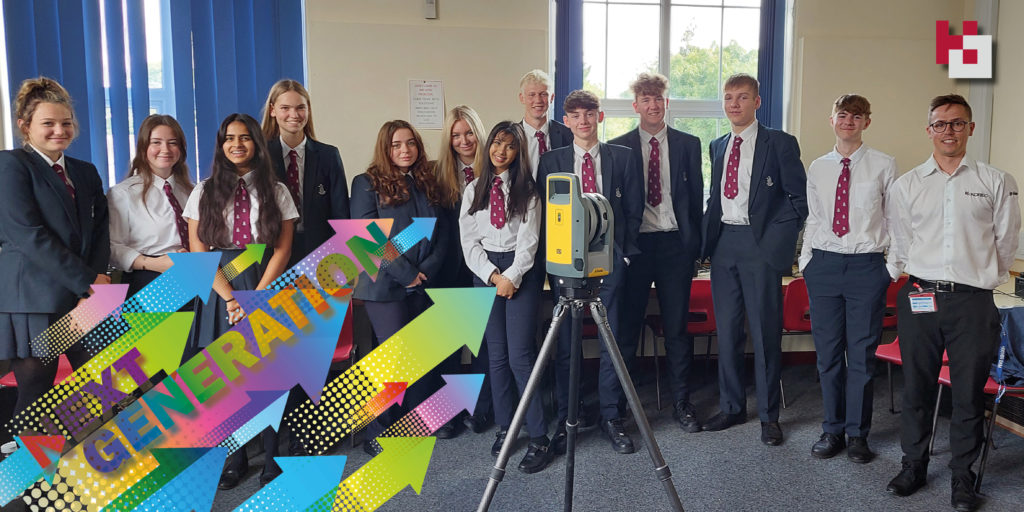
Next Generation is KOREC’s higher education strand – it’s how we inspire, support and train the institutions and the students who are the future workforce of our industry.
If you’d like to know more about Next Generation, or how we can help you, why not get in touch?
Ahead of next week’s COP26 climate summit, how KOREC are playing their part by investing in the future – not just of our planet, but the next generation of geospatial experts, too
Next week, virtually every world leader will descend on Glasgow for possibly the most important climate summit since Paris in 2015. By the time the summit wraps on 12th November, it is hoped they will have committed to limiting global temperature rise to the vital 1.5C to avoid the most catastrophic effects of climate change.
Since COP26 takes so close to home, and with KOREC in attendance, what better time than to make some commitments of our own?
This week, KOREC Group signed up to the SME Climate Commitment, where we as an organisation have committed to halving our emissions by the year 2030, and going carbon-neutral by 2040 – a full decade ahead of the UK government’s target.
We have been working to reduce emissions across our vehicle fleet for several years with most of our vehicles now hybrid electric models – but we recognise there is work to do when it comes to our offices, our staff travel, and our supply chain.
But it’s not just the climate that we’ve committed to. KOREC was also recently confirmed as a partner of Geospatial UK. Based at Newcastle University, the organisation was formed to counteract the widely-publicised skills shortage in our geospatial industry. Their key aim is thus to engage and inspire the next generation of geospatial experts – by educating and informing them about the exciting, fast-changing and varied industry that we love. As well as being a key sponsor, KOREC will be supporting this great work in a much more hands-on way – more on this to come!
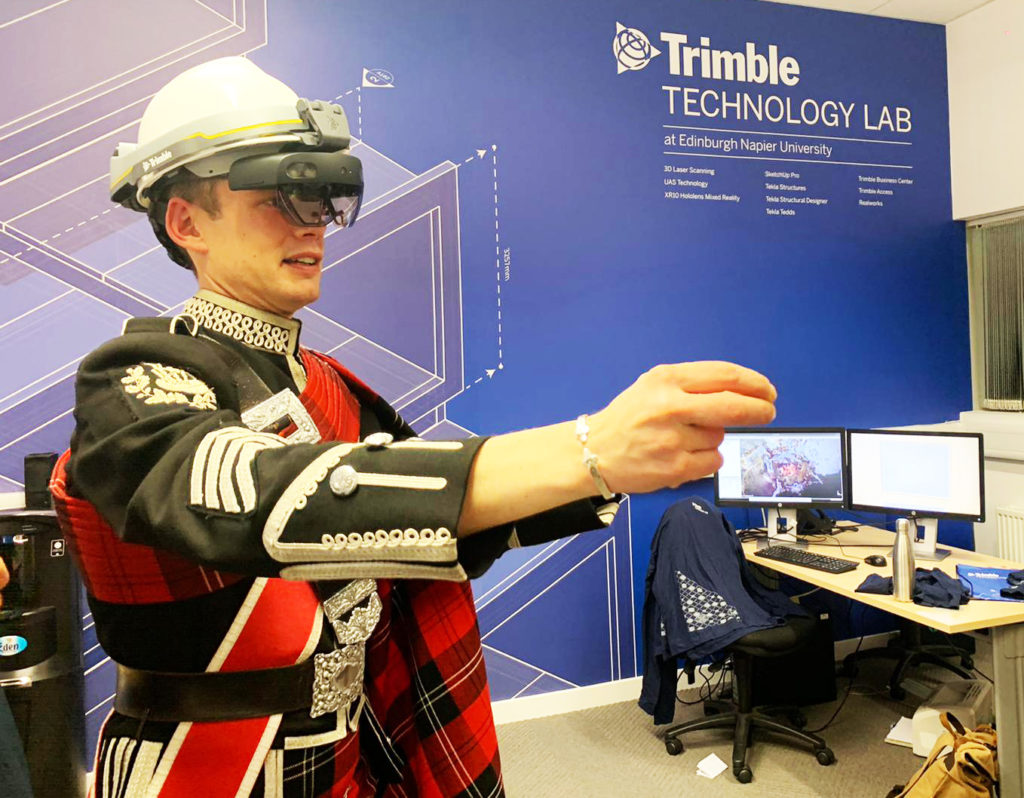
This focus on the climate and future generations will converge beautifully at next week’s COP event, which we are delighted to be attending. Our partners at Edinburgh Napier University (home to a Trimble Technology lab which is helping to expand the University’s leadership in training and research in 3D building design, digital fabrication and the sustainable built environment) have invited us to take part in their #GetOnWithIt event in Glasgow.
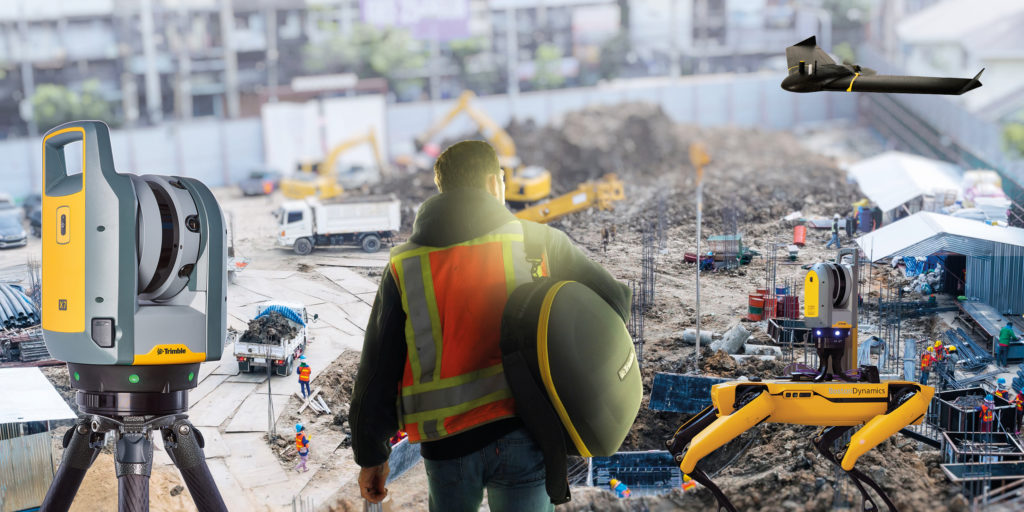
Sam and Stuart from KOREC will be in attendance, showcasing key digital construction tools such as the X7 laser scanner, SiteVision augmented reality and XR10 mixed reality headset, to the student body and public alike. Besides being excellent tools to showcase to a live audience, these solutions are excellent examples of ‘connected construction’ – efficient, effective digital tools that allow online collaboration (cutting down unnecessary trips to site) and as well as reducing construction site waste and rework.
We’ll be sure to be sharing pictures and clips from the event – so keep your eyes peeled on our social channels next week!
Marking the second in our ‘Hidden Figures’ series is a look at the woman who has just topped the 2022 Powerlist – Microsoft CDO Jacky Wright
First published in 2007, The Powerlist is a list of the top 100 most influential people of African or African Caribbean heritage working in the UK. Famous recent winners have included the author Malorie Blackman, Brexit activist Gina Miller, and last year’s winner, Formula 1 driver Sir Lewis Hamilton.
2022’s winner is admittedly less of a household name – Microsoft Chief Digital Officer Jacky Wright.
We did a little research to find out more about Jacky and her background – and how she explains her business philosophy in her own words.
Jacky was born in Jamaica, her parents part of the Windrush generation that came to the UK in search of a better quality of life for their families. Her father served in the Royal Air Force and distilled in Jacky the belief that, through striving and hard work, she could truly be and do anything she wished.
Hear Jacky in her own words in this BBC interview:
Jacky has spent much of her working life in the US, with senior positions at major multinationals such as BP, General Electric and Anderson Consulting. But she returned to the UK in 2017 for a two-year stint overseeing the transformation of HMRC to a truly modern, digital organisation.
Clearly, Jacky does not shy away from a challenge. The ongoing transformation of the UK’s tax body is fundamental shift – involving the relocation of 65,000+ employees into 13 regional UK hubs by 2025.
At the same time, the government had set itself the challenge of becoming the UK’s most diverse employer by 2020. For Jacky, these two challenges, at first seemingly separate, are at the heart one and the same.
“Becoming a more diverse environment is not just about making government a better workplace. It is also about enabling government to work better: you can more effectively serve the breadth of the citizenry if your workforce is composed of a similarly broad cross-section”
For Jacky, if organisations such as HMRC are to truly modernise, decentralise and better reflect contemporary working practices, it is vital that the people making the decisions best represent UK society as a whole.
“I want my team to be an inclusive team from all walks of life, because then we can best address problems. Diversity informs me like it should inform anything that anyone does…We’ve got to understand the citizens, because we have to make sure they are able to interact with us – no matter who they are, what walks of life they are from, or whether they have disabilities. And, in order to do that, I’ve got to think broadly.”
We think we can learn a lot from Jacky’s ethos, in how we continue to build modern, forward-thinking and inclusive organisations.
Congratulations to Jacky on topping the Powerlist – we don’t think we’ve heard the last of her!

Sources for this blog;
https://www.bbc.co.uk/news/av/business-58890913
It’s a topic of great concern to many in our industry – how do we attract the next generation of geospatial professionals?
It’s also a question that we’ve addressed in a column for GeoConnexion magazine based on the experiences of KOREC Director, Mark Poveda, who recently returned to his Dublin College with two colleagues to talk to final year students studying Geospatial/Surveying. However, college students are already engaged with our industry having actively chosen a relevant course and maybe we should be talking to students earlier.
A visit with value
For KOREC Operations Technical Support, Liam Hartley, the 450th Anniversary of his old school, Queen Elizabeth’s Grammar School, Horncastle (QEGS), set him thinking as to what sort of career information he’d have valued as a sixth former living in a rural part of the country just starting to consider future job prospects, apprenticeships, or degree courses.
As a QEGS alumni, he’d seen invites to assist students in CV preparation or interview techniques but felt that this could be the perfect opportunity to offer some time to share his thoughts on geospatial careers with an age group just starting to think about their own futures.
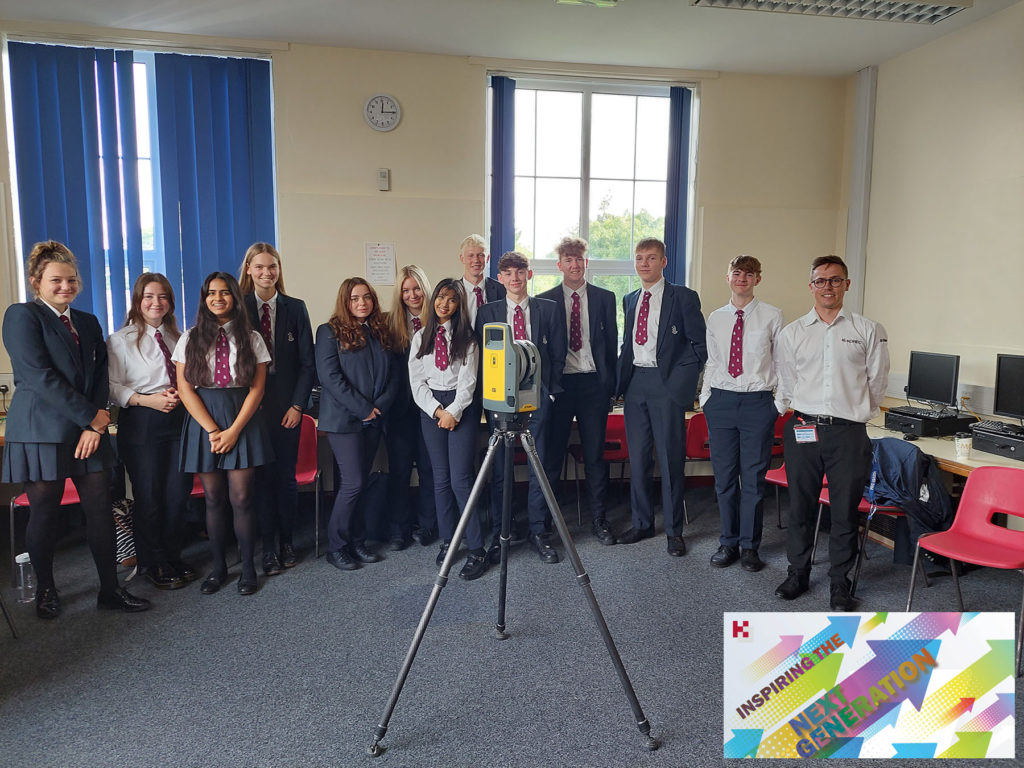
At the invitation of the school’s careers lead, Sarah Holmes, Liam was able to spend a couple of days at the school chatting about the geospatial industry to teachers and students alike.
Great technology and engaging examples
Equipped with a Trimble X7 3D Laser Scanner and plenty of examples of what our industry has to offer, Liam reports that he spent a very rewarding 50 minute Development Class with the mixed group of students. Drawing on relevant examples such as 3D data (used in the gaming and film world) he outlined how F1 tracks are surveyed with Mobile Mapping, how sports events measure distance with total stations, how music festivals are set out with GPS mapping systems and how spatial data is everywhere and in everything we do, from using Google Maps to creating smart cities.
Liam feels that at least three quarters of the class seemed very engaged with four or five particularly responsive to the geospatial world. He reports, “I had a really rewarding two days at QEGS sharing my enthusiasm for an industry that has so much to offer as a career. Interestingly, very few of the students were familiar with the term ‘geospatial’ and of course, this highlights the problem we have in promoting a career where our key audience has very little understanding of what we do. If we’re to overcome this, then it’s vital that we are actively promoting our industry to this age group. Here at KOREC, we want to be a supplier that does just that and we’re perfectly positioned to do so from a unique perspective because we see everything that the industry has to offer technology wise. I very much want us to step forward and lead from the front.”
What next?
Liam used his two days at QEGS to plan for a future event for next year that he hopes can be rolled out to similar age groups in different schools. Watch this space!
To learn about KOREC’s Next Generation initiative (aiming to encourage a new generation to the geospatial industry) please contact marketing@korecgroup.com
Got a question? Want to find out more about the X7? Why not submit an inquiry with our friendly team?
The 1960 Rome Olympics introduced the world to a boxing superstar named Cassius Clay, better known perhaps as Muhammad Ali. But it’s a lesser known gold medal winner from that games who’s the star of our first ‘Hidden Figures’
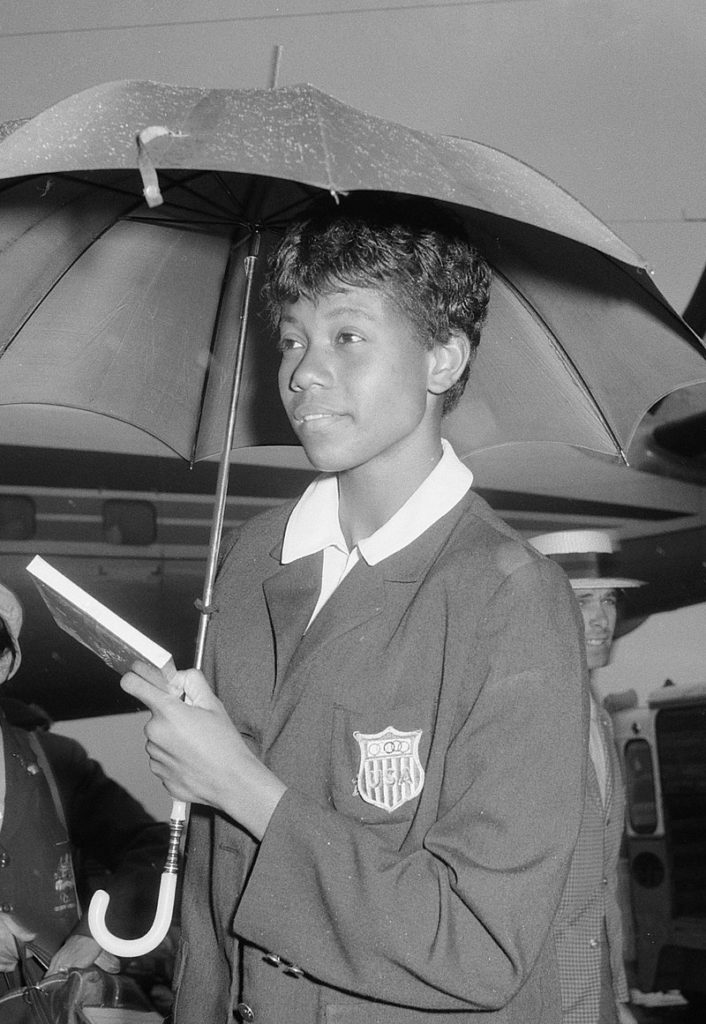
Wilma Rudolph took home no less than 3 gold medals for athletics in 1960, namely the 100m, 200m and 4 x100m relay. An impressive feat in itself, but even more impressive when you understand Wilma’s background.
The twentieth of 22 siblings, Wilma was born in 1940 in Clarksville, Tennessee. She was born premature, weighing just 4.5 pounds. She suffered from multiple illnesses in her childhood, including pneumonia, scarlet fever and polio – which left her lame in her left leg and foot. Medical care for African-Americans was in short supply in Clarkesville, so Wilma and her mother Blanche were forced to make a weekly bus journey some 50 miles to the largely-black medical centre in Nashville, for treatment. This continued for 2 long years, until Wilma regained the use of her leg, by the time she was 12 years old.
Wilma’s athletic talents were spotted at high school, where she soon earned the nickname ‘Skeeter’ due to her speed. At the tender age of 16, and the youngest member of the squad, Wilma travelled across the globe to the Melbourne Summer Olympics, where she brought home bronze in the 4 x 100m relay.
Four years later in Rome, Wilma competed in 3 events, winning gold in all 3 – becoming the first American woman to win three golds in a single Olympics. In sometimes scorching temperatures of 110F (43C), Wilma was inspired by another American sprinter – Jesse Owens, her inspiration from the infamous 1936 games in Berlin.
Whilst her victories had her cast as America’s ‘leading lady’, Wilma returned home to a very divided nation. When Clarksville celebrated ‘Welcome Wilma Day’ to celebrate her achievements, Wilma used her new-found fame to insist that the event be fully integrated between black and white people – the first fully integrated event in the city’s history.
Wilma retired from running age 22, feeling she had reached the heights of her Olympic career. In her own words; “I’ll stick with the glory I’ve already won, like Jesse Owens did in 1936”
Perhaps Wilma thought her fame was required elsewhere. As well as gaining a degree in education in 1963, Wilma spent over a month in west Africa as a US goodwill ambassador. On her return, she took part in a civil rights protest in Clarkesville to desegregate the city’s restaurants. Within weeks, all of the city’s restaurants, as well as public facilities, became fully integrated between black and white people.
No doubt the childhood memory of those weekly 50 mile bus rides to a ‘black’ hospital were high in Wilma’s mind – with a determination that no other young black child would have to endure the same hardships.
October in the UK marks Black History Month, and for the second year, here at KOREC we are taking part.
Last year, we asked our people to tell us who had inspired them, or left a positive impact on their life. As well as some personal connections, some notable names such as Nelson Mandela and Barack Obama were cited as inspirational figures.
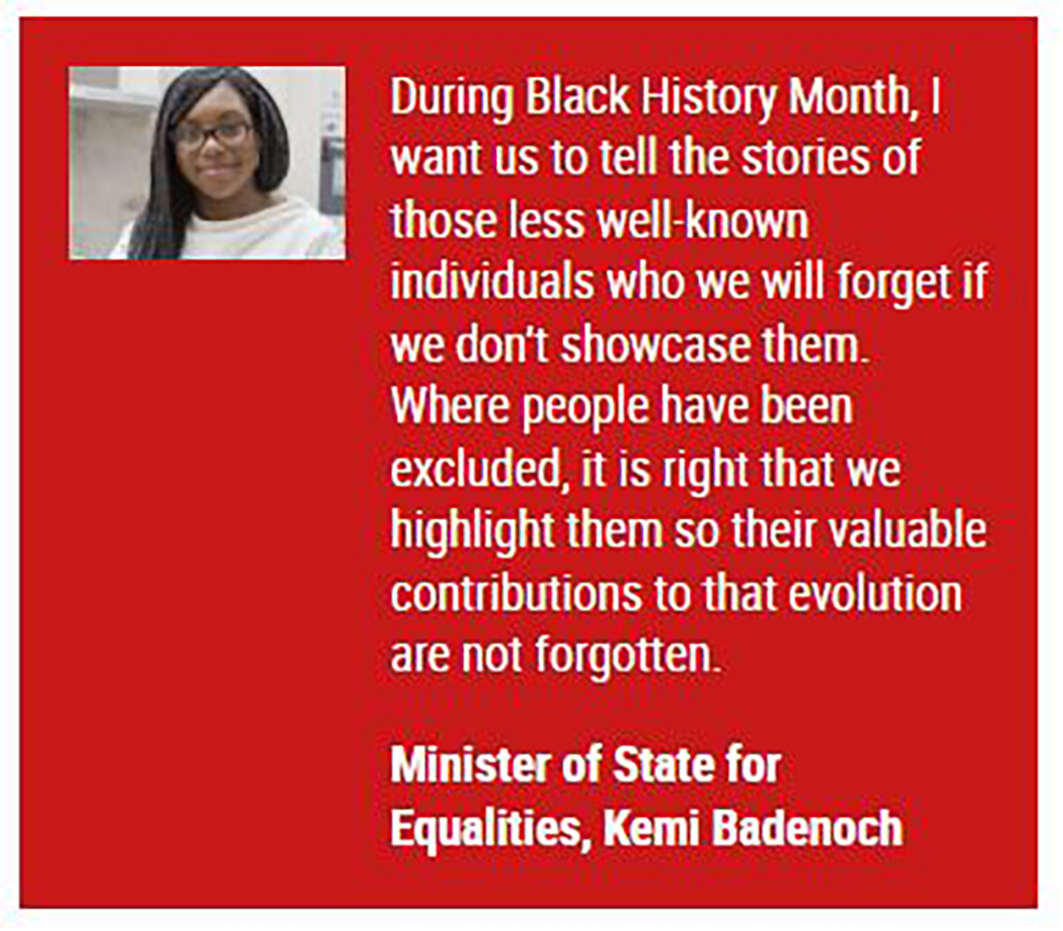
As a contrast, this year, we are taking our lead from these quotations from BHM editor Catherine Ross, and Minister of State for Equalities, Kemi Badenoch;

“Because black history is British history“
Dawn Butler MP (first female African-Caribbean minister to speak at the dispatch box)
Hidden Figures
Throughout the month, we’ll be focussing on some lesser known black figures from throughout history. The aim is to not only highlight people who have changed the course of history, but to educate ourselves on who these people were, the times they lived in, the challenges they faced – and the contributions they made to society.
So instead of familiar names, we’ll be talking about some lesser known (or even hidden) figures from throughout history – so if the names Wilma Rudolph, Ignatius Sancho, Mary Seacole, Harriet Tubman or Katherine Johnson don’t mean much right now, we hope that come October 31st we’ll all have learnt a little more.
After all, as this timeline shows – the black history of Britain is far from recent…

Virtual reality, 3D Laser scanning, robotics, AI, reality data capture, data analytics….today’s careers in the geospatial industry offer numerous possibilities and are a perfect fit for the tech savvy, early adopters of Generation Z who have grown up immersed in technology.
Fuelled by technological developments, the collection and processing of spatial data is now a far cry from the days of just muddy boots and making maps and reflecting these advances is the Technological University Dublin which has recently adapted its BSC in Geospatial Surveying. Changes include a modular approach, updated content and opportunities to combine working with a relevant company whilst completing a degree.
Hands-on with technology
A vital part of any course is for students to be fully aware of developments within the industry. KOREC Ireland’s Mark Poveda, Niall Hand and Fran Mullally (geomatics graduates of the university), along with KOREC colleague Kevin Kinahan, were therefore delighted to have the opportunity to present some new ideas to the University’s 1st and 2nd year students. This was achieved through an on-line presentation and then a day of socially distanced hands-on experience with some of the world’s most advanced Trimble survey technology.
Bringing with them a selection of Trimble instruments including Trimble’s SiteVision Augmented Reality system, the X7 3D Laser Scanner and an R12i GNSS, Mark, Fran and Kevin also had KOREC sponsored hoodies for all the students involved, which was extremely fortunate given the rainy conditions!

Great weather for a new KOREC sponsored hoody!
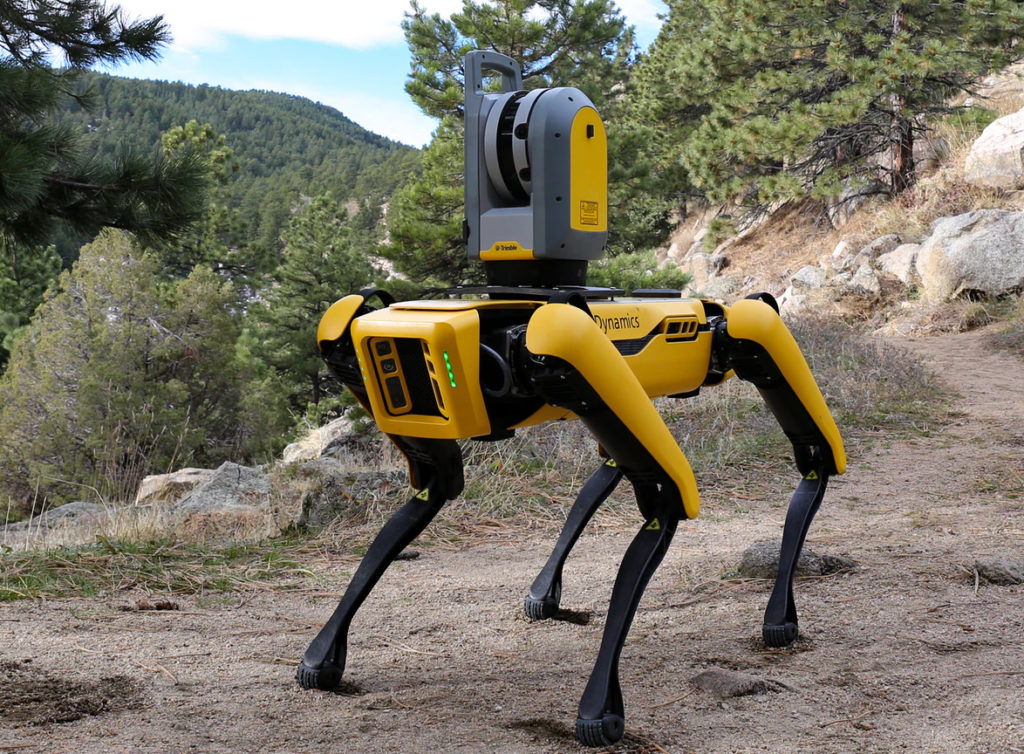
Whilst the students enjoyed the hands-on session, KOREC’s Mark Poveda hopes that the on-line presentation provided a useful source of information on how far reaching and exciting the geospatial industry has become. Particularly well received was the ‘Spot the dog’ Trimble robot video which can be viewed here.
Spot the Dog
“The demonstration day was a great way to finish off my college experience in the BSc of Geographic Science. The Korec team talked us through the operating system of the latest Trimble survey equipment and offered us the opportunity to try out the instruments ourselves. The weather behaved in typical Irish fashion and rain showers were frequent. I was especially impressed with the quality of deliverables produced by the Trimble X7 Laser Scanner and accompanying touch screen under these conditions. The seamless workflow of this machine really highlighted the modern advances in technology enabling us, as surveyors of the future, to carry out surveys to the highest standard regardless of what the Irish climate throws at us. Advances such as these in technology makes me excited for my future career as a surveyor and I can only wait in eager anticipation of what else Trimble will release onto the market in the coming years. “
Rose Pearson, final year student, TU Dublin
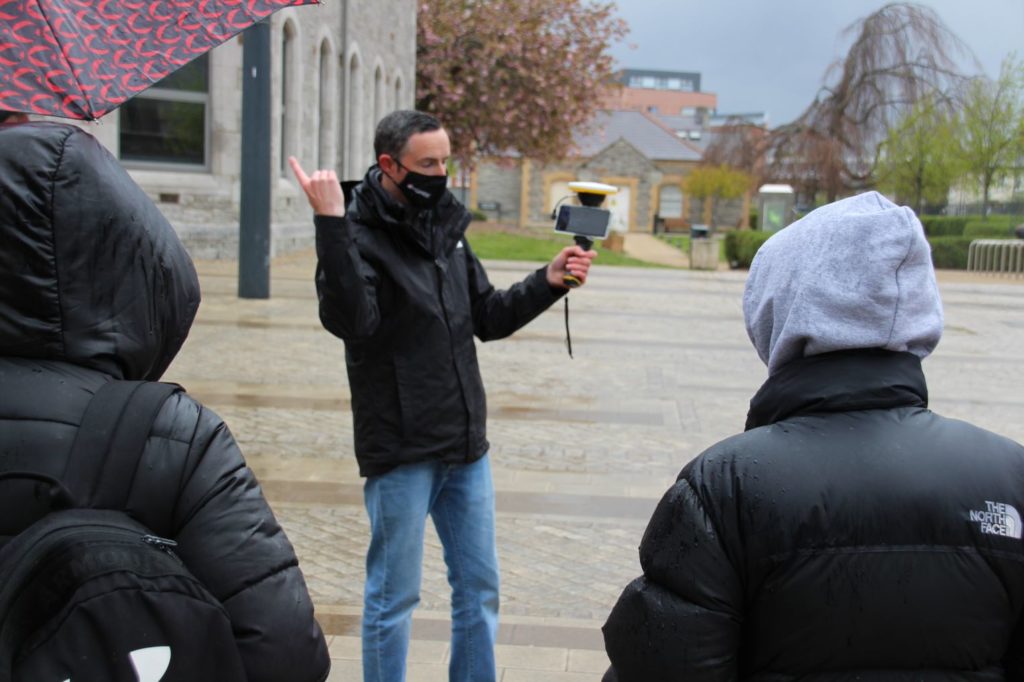
Augmented reality with Trimble SiteVision
“…..the technology demonstrated was very sleek, it was extremely easy to use and makes quick work of any of the tasks given to them. The scanning technology particularly was great, especially being able to view scans right after taking them.”
“The day spent with members of KOREC was extremely insightful and enjoyable. The demonstrations they showed us offered an exciting look into the advancements of this industry and their equipment as well as the broadness of its opportunities.”
1st/2nd year students (TU Dublin)
Our thanks to Dr Audrey Martin, Senior Lecturer, Chair BSc Geographic Science (TU Dublin) and of course to the students who attended and were kind enough to provide some great feedback.