Structural Health Monitoring: Methods, Equipment and Applications
Find out how structural health monitoring works, which methods and equipment are used, and how KOREC supports monitoring projects across the UK and Ireland.




Find out how structural health monitoring works, which methods and equipment are used, and how KOREC supports monitoring projects across the UK and Ireland.
Structural health monitoring is the practice of measuring, tracking, and interpreting the physical condition of structures and assets over time. Its purpose is to detect change early, before movement or deterioration reaches a point where safety, compliance, or structural integrity is at risk.
This article introduces the main methods, the equipment behind them, and the applications where monitoring makes the most practical difference. It is the first in KOREC’s monitoring guides series. The other articles in the series cover real-time building movement alerts, GNSS slope stability and embankment monitoring, and how robotic total stations are used for structural monitoring.
Structural health monitoring is the systematic collection of data from a structure or asset at defined intervals or continuously, with the aim of identifying change in its condition or position. It differs from a one-off inspection in that the value of the data comes from comparison over time, not from a single measurement.
A single survey captures the condition of a structure at one moment. It answers the question: what does this structure look like right now? Structural health monitoring answers a different question: how is this structure changing, and how fast? That distinction matters when the concern is not the current state but the direction of travel.
Monitoring also creates a defensible data record. For asset owners, contractors, and engineers, a time-stamped history of structural behaviour is evidence that can support maintenance decisions, satisfy regulatory requirements, and protect against claims.
Many engineers are already monitoring structures without describing it that way. If a survey team returns to measure the same structure two, three, or more times and compares the results for differences, that is monitoring. The data exists; it is the framework around it, including defined thresholds, alert levels, and reporting protocols, that makes it a formal programme.
Moving from repeat surveys to a structured monitoring programme is less of a technical leap than it might appear. The instruments are often the same. What changes is the regularity, the automation, and the analytical layer that sits on top of the data.
The most important function of structural health monitoring is early warning. Structures that move or degrade gradually rarely do so uniformly, and the first signs of a problem are often subtle. A millimetre of unexpected displacement in a bridge deck, a crack that has widened by half a millimetre in a week, a retaining wall that is tilting at a rate that has accelerated in the past month: these are the signals that a well-designed monitoring programme is built to catch.
Detecting these signals early means interventions can be planned and proportionate. Detecting them late, or not at all, can mean emergency closures, structural failure, or worse.
Monitoring is a requirement on many construction and infrastructure projects. Network Rail and National Highways both set standards for monitoring adjacent structures during works that could cause ground movement. Planning conditions for major developments frequently require monitoring of nearby buildings throughout the construction phase. Having a compliant, documented monitoring programme in place is not optional on these projects; it is a condition of proceeding.
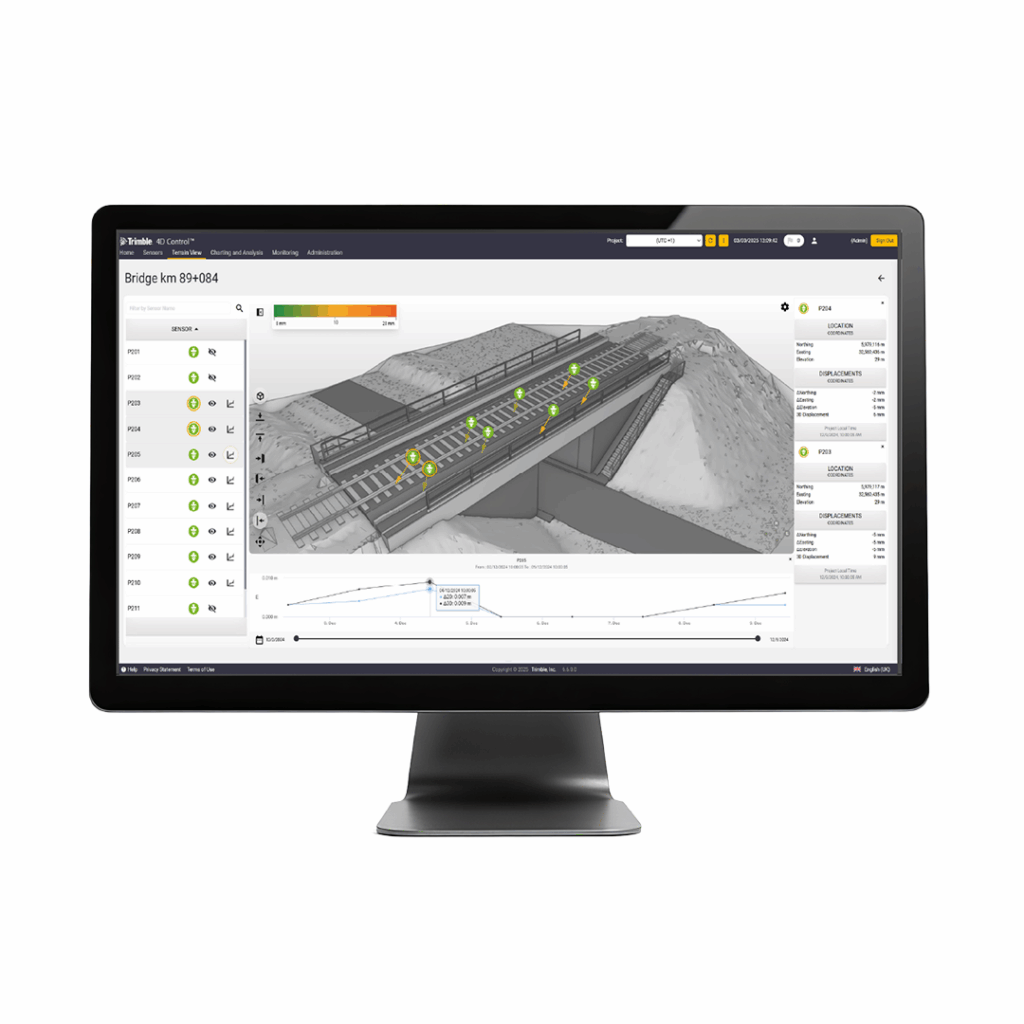
Trimble 4D Control software provides automated reporting and data archiving that supports compliance requirements, producing structured outputs that can be shared with client teams, regulators, and asset owners as required.
Automated monitoring systems reduce the need for staff to be physically present at a structure to collect data. On sites with restricted access, contaminated ground, active construction, or structures in a compromised state, reducing the frequency of physical visits is a safety benefit as well as a commercial one. A system that collects data continuously and only requires human intervention when thresholds are exceeded keeps the team out of harm’s way for the routine measurement cycles.
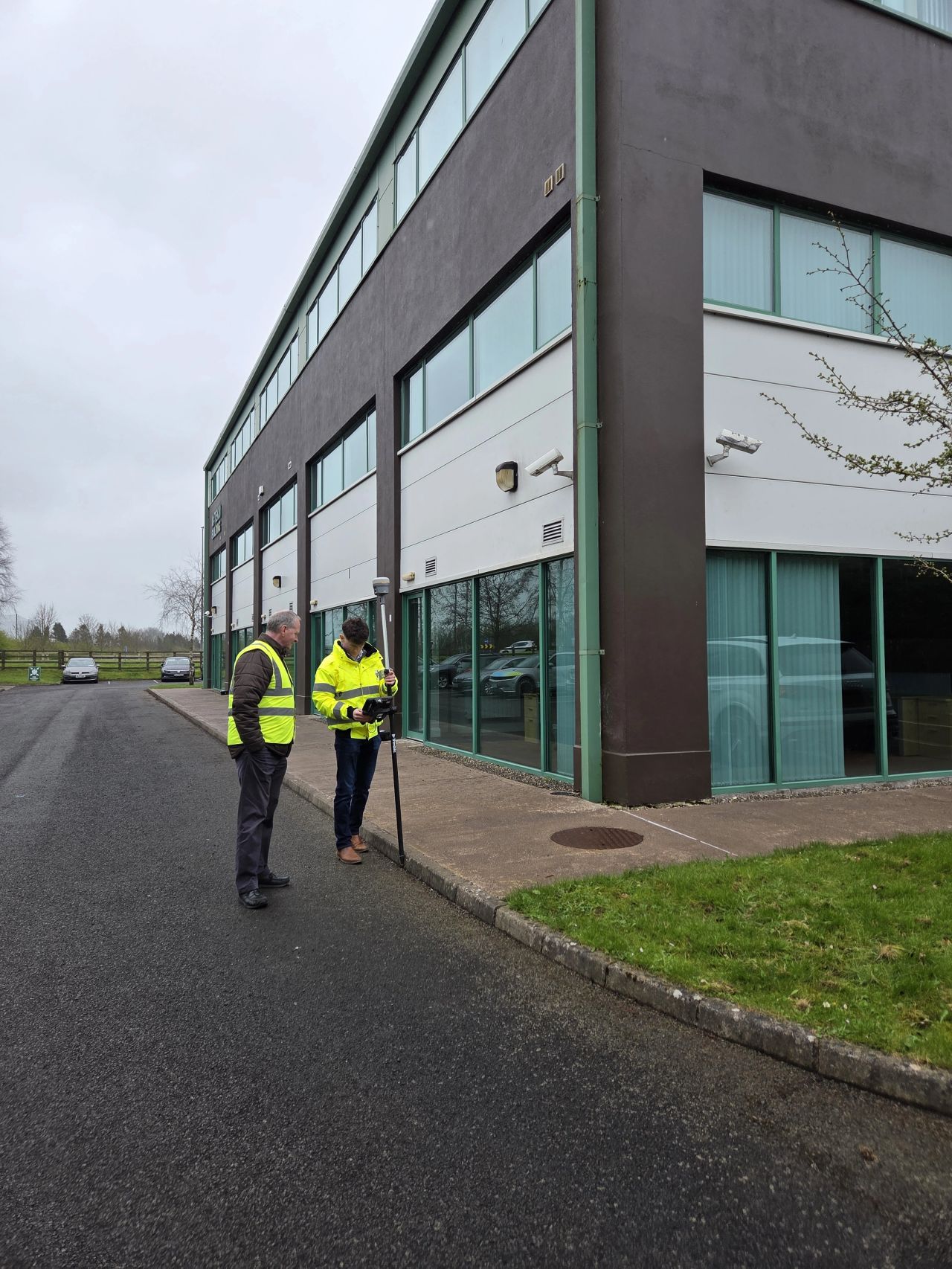
Manual monitoring involves a survey team visiting a site at defined intervals to take measurements from targets, prisms, or sensors. It is the simplest form of monitoring and appropriate for lower-risk structures or projects where the rate of change is expected to be slow. Robotic total stations, GNSS rovers, and digital levels are all used for manual periodic monitoring.
The limitation of manual monitoring is the gap between visits. If a structure moves significantly between one visit and the next, the change may not be detected in time to prevent harm. For structures where the risk profile is higher or where sudden movement is possible, a more frequent or automated approach is required.
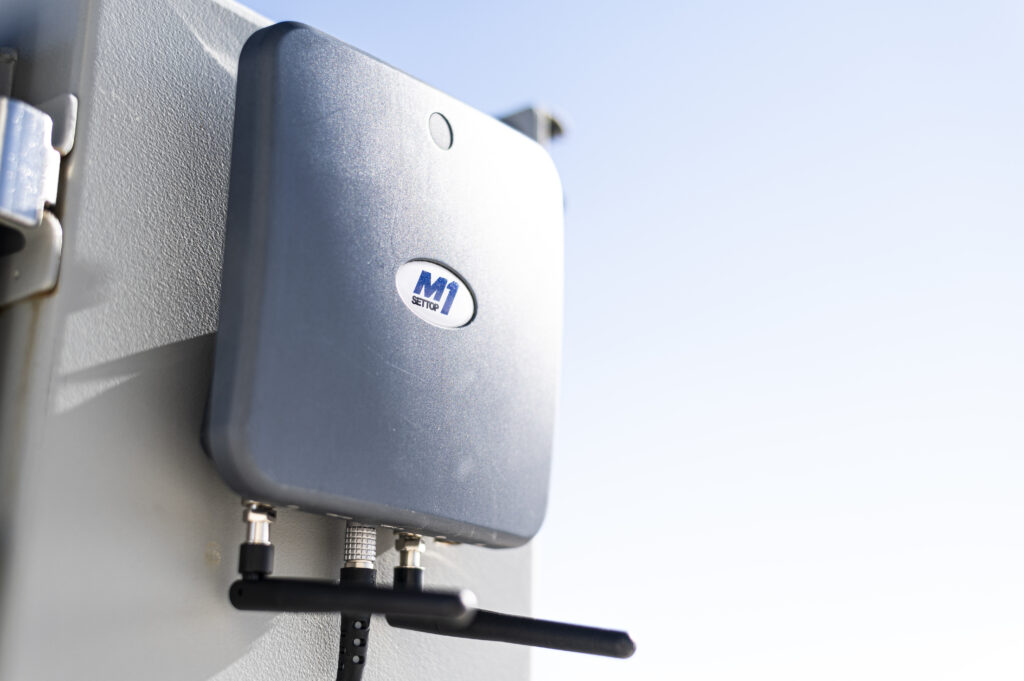
measurement cycles at defined intervals and transmitting results to a central platform. The Settop M1 automated total station controller and Trimble 4D Control software form the core of an automated monitoring system when used with a Trimble S9 HP or Trimble S9 robotic total station.
The Trimble R750 MON GNSS receiver serves the equivalent function for GNSS-based monitoring programmes, connecting directly to Trimble 4D Control without an external modem. Both systems can run unattended, transmit data in near real time, and trigger alerts when movement exceeds a defined threshold.
For high-risk or remote sites, fully autonomous monitoring systems operate around the clock without any staff on site. Data is transmitted to a central platform where it can be reviewed remotely, and alerts are sent immediately when thresholds are breached. This approach is particularly suited to embankments and slopes where access is difficult, structures in a deteriorated state, and sites where 24-hour coverage is required by a client or regulator.
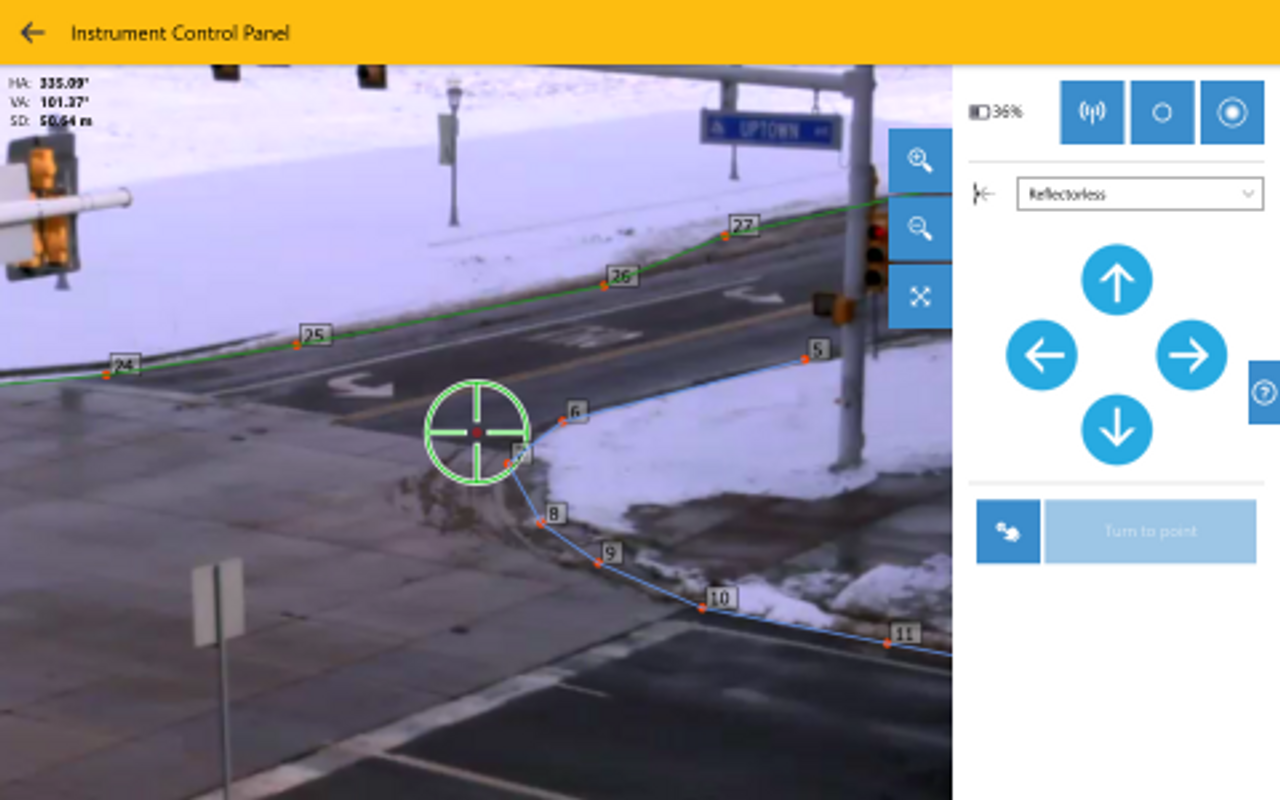
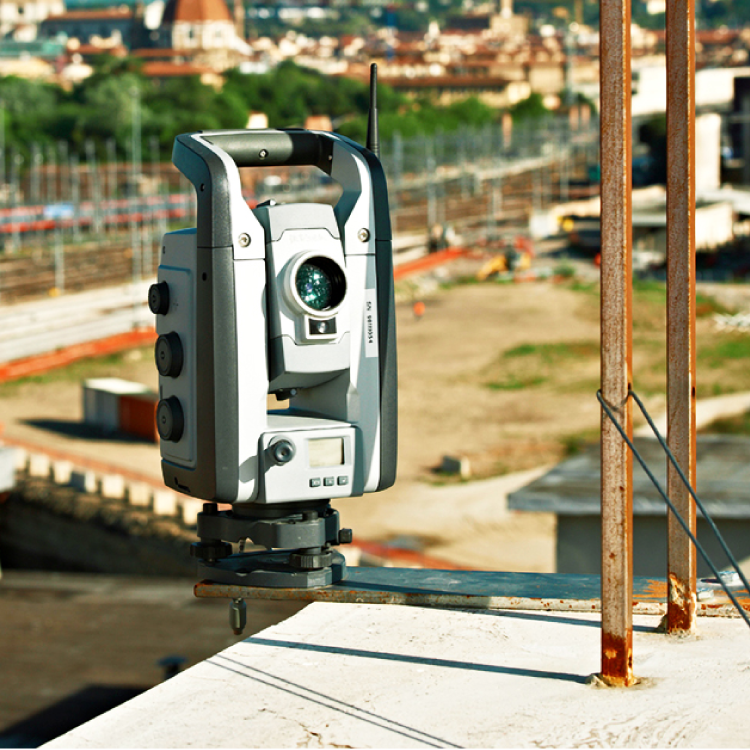
Robotic total stations are the primary instrument for precise structural monitoring where line-of-sight measurement to fixed prisms or targets is possible. The Trimble S9 HP achieves angular accuracy of 0.5 arc seconds and EDM accuracy of 0.8 mm + 1 ppm to prism, making it the appropriate choice for demanding applications including bridge monitoring, tunnel surveys, and adjacent structure protection. FineLock target detection allows the instrument to measure a specific prism without interference from adjacent reflectors, which is critical in congested monitoring arrays.
The Settop M1 controller automates the total station’s measurement cycles, allowing the instrument to run without an operator present. Combined with Trimble 4D Control, the system handles data collection, analysis, threshold monitoring, and alert delivery as a complete automated solution.
GNSS monitoring receivers are well suited to open sites where sky visibility is good and continuous position data from fixed points is required. The Trimble R750 MON is a dedicated GNSS monitoring receiver that delivers 8 mm horizontal and 15 mm vertical RTK precision at up to 20Hz, with integrated 4G LTE and direct compatibility with Trimble 4D Control. Trimble CenterPoint RTX satellite corrections allow it to operate without a base station or mobile network, making it deployable on remote embankments and slopes where infrastructure is limited.
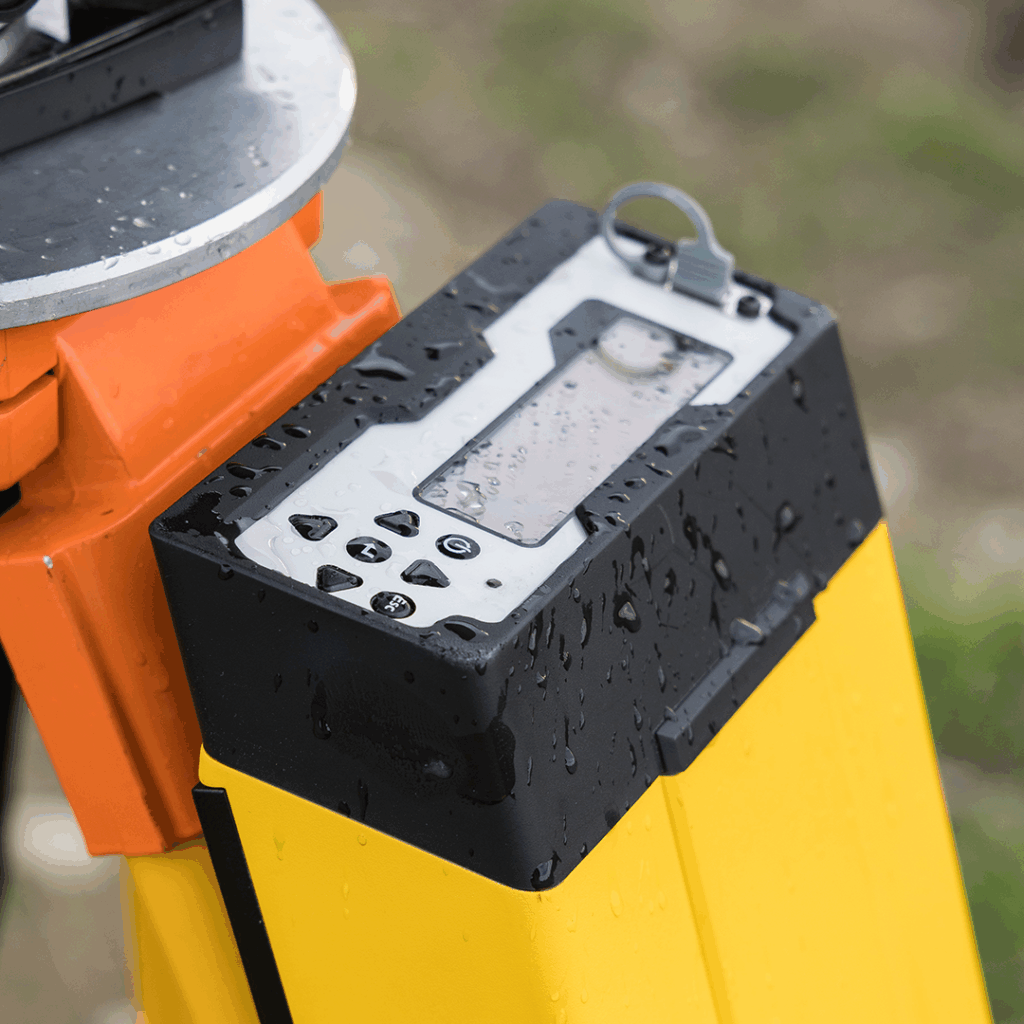
Geotechnical sensors including tiltmeters, piezometers, crack gauges, and inclinometers provide complementary data alongside spatial measurements. Trimble Wireless Data Loggers automate the collection of data from these sensors and feed it directly into Trimble 4D Control, creating a single unified picture of structural behaviour from multiple data sources. This is particularly valuable for bridge monitoring, where load-induced deflection, temperature effects, and long-term settlement may all need to be tracked simultaneously.
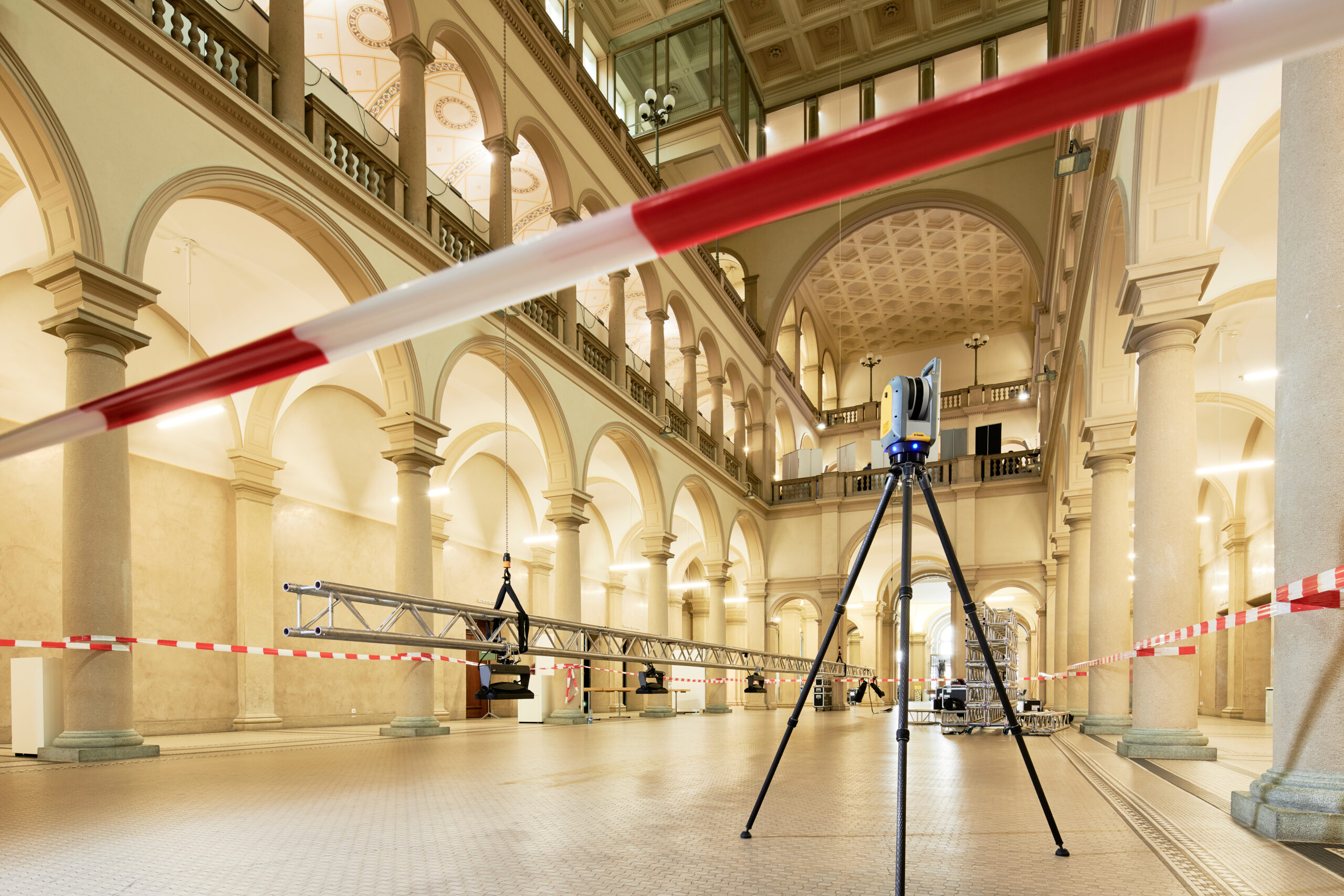
3D laser scanners capture dense point cloud data from a structure, creating a spatial record that can be compared between sessions to identify change in surface geometry. They are particularly useful for heritage structures, retaining walls, and complex surfaces where point-by-point prism measurement would be impractical. The Trimble X9 and Trimble X7 are both used in monitoring applications where a comprehensive spatial record of a structure is required at each visit.
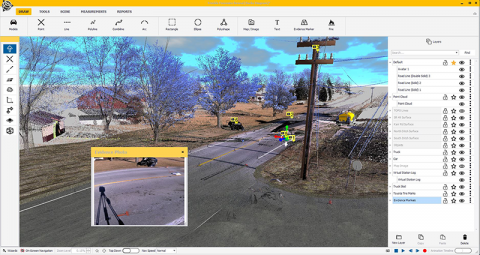
All of the hardware categories described above can connect to Trimble 4D Control as the central monitoring platform. Trimble 4D Control manages data collection schedules, applies analysis and trend detection, visualises results against defined thresholds, and delivers alerts when movement is detected. It provides a single environment for data from total stations, GNSS receivers, and geotechnical sensors, allowing the full picture of structural behaviour to be assessed in one place.
Reports can be generated automatically and shared with project stakeholders, supporting both day-to-day monitoring management and longer-term compliance reporting.
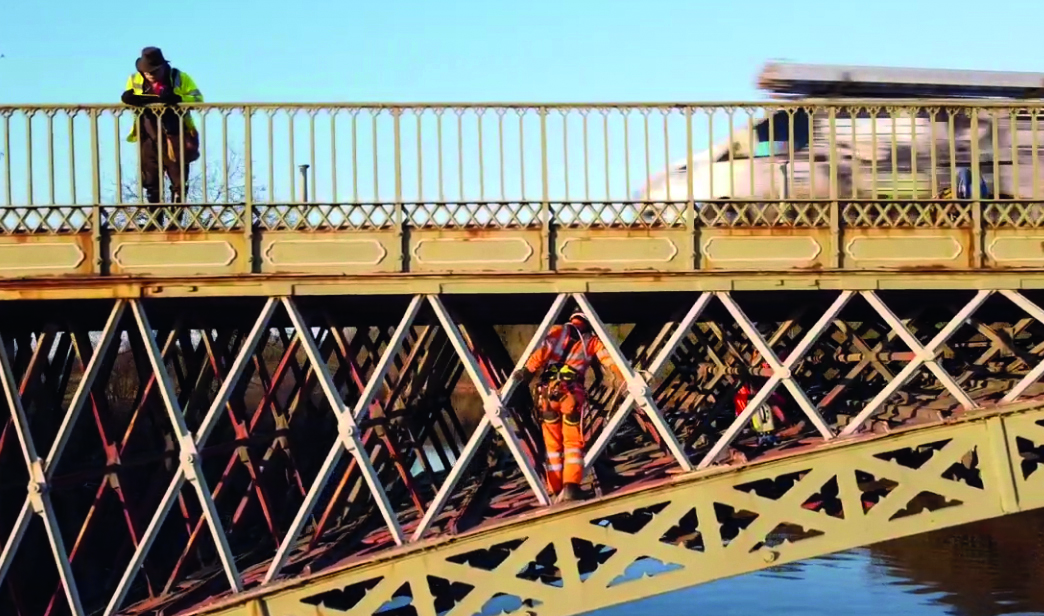
Bridges are subject to constant mechanical stress from traffic loading, thermal expansion and contraction, and the long-term effects of material ageing. Monitoring programmes measure displacement, tilt, and in some cases vibration, with data used to assess how the structure responds to load, to identify developing problems before they become critical, and to support maintenance scheduling. KOREC’s monitoring solutions are used by clients working to Network Rail and National Highways standards.
In urban environments and on construction sites adjacent to existing buildings, tracking ground movement and crack propagation is a standard requirement. Robotic total stations measure survey targets fixed to structures at regular intervals, while crack gauges integrated via Trimble Wireless Data Loggers provide continuous crack width data. When all of this feeds into Trimble 4D Control, trend analysis and threshold alerting is automated, reducing the manual workload and improving the reliability of the monitoring record.
Embankments and natural slopes can shift gradually over extended periods or fail suddenly with little warning. Automated monitoring systems using robotic total stations and GNSS receivers provide continuous position data from targets installed across the slope, with alerts configured to trigger when movement rates or total displacement exceed defined limits. For remote sites, fully autonomous systems with Trimble CenterPoint RTX corrections can operate without mobile data or a base station.
Construction projects involving excavation, piling, or tunnelling in built-up areas present a risk to adjacent structures from ground movement and vibration. Monitoring the affected buildings throughout the construction phase is typically a contractual requirement. Robotic total stations provide precise, repeatable measurements from prisms fixed to adjacent structures, with Trimble 4D Control managing the data and alerting the project team if movement approaches the agreed trigger levels.
A survey captures the condition of a structure at a single point in time. Structural health monitoring captures the same data repeatedly and compares results over time to detect change. The instruments used are often identical; what makes monitoring different is the regularity, the defined thresholds, and the analytical framework that turns repeat measurements into a meaningful picture of structural behaviour.
With an automated system using the Settop M1, Trimble S9 HP, and Trimble 4D Control, or the Trimble R750 MON and Trimble 4D Control for GNSS-based programmes, alerts can be issued within seconds of a measurement exceeding a defined threshold. The system does not require anyone to be present on site to trigger or receive an alert. Notifications can be delivered by email or SMS to whoever is configured to receive them.
KOREC’s monitoring specialists support clients from initial project specification through to ongoing programme management. This includes advising on instrument selection and system configuration, supplying and installing monitoring equipment, and providing training on Trimble 4D Control. For teams looking to establish a monitoring capability or expand into automated monitoring services, KOREC can help design a system that is appropriate for the risk profile and scale of the project.
KOREC can advise you on methods, equipment and applications for structural health monitoring. Speak to our friendly experts today to get the right technology to solve your project challenges.