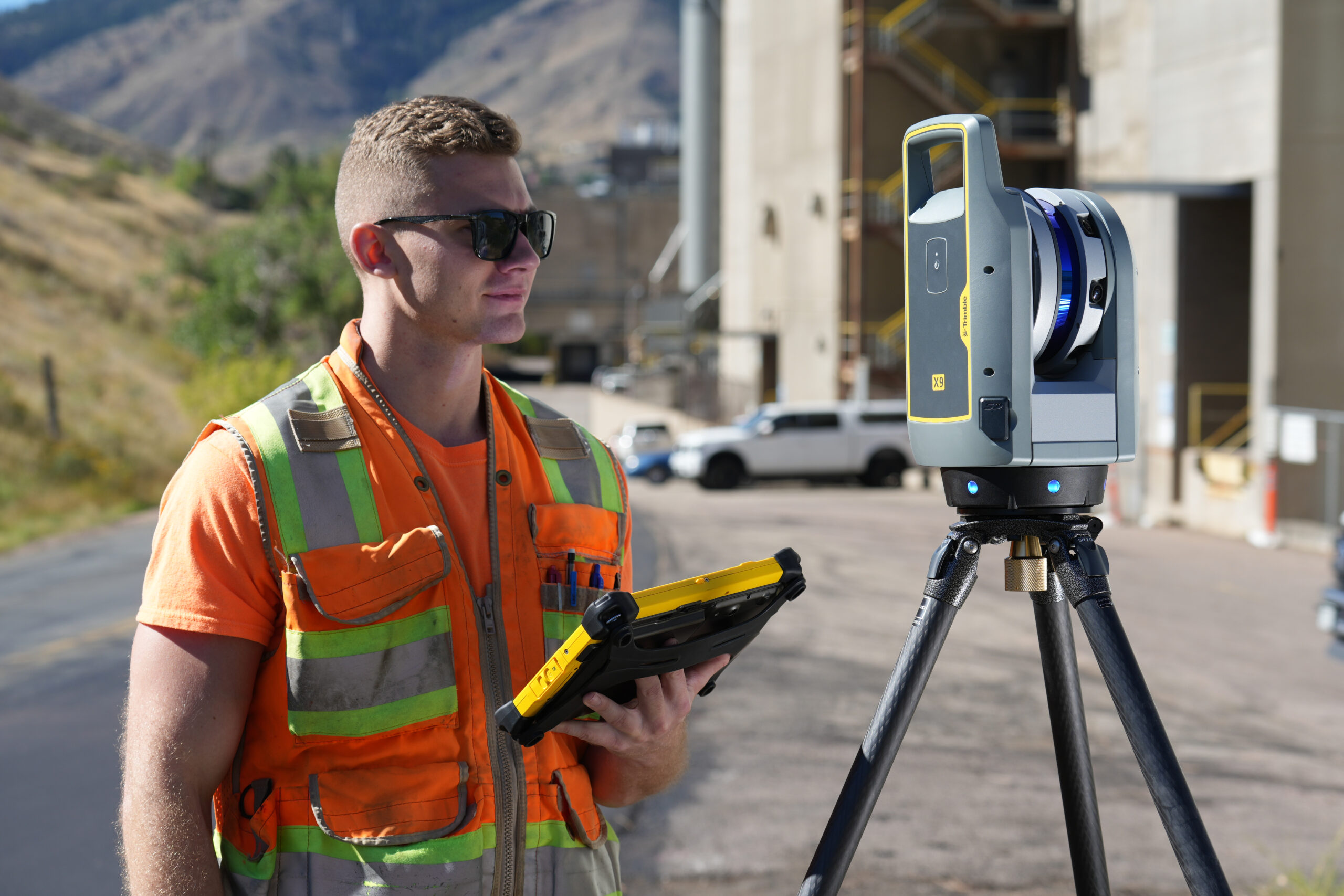
How Robotic Total Stations are Used for Structural Monitoring
Find out how robotic total stations deliver millimetre-level precision in structural monitoring applications, which instruments are used, and how automated systems eliminate the need for staff on site.
With over 15 years in survey, Adam now specialises in Trimble's monitoring solutions, helping customers deploy real-time systems like Trimble 4D Control to track movement and deformation with confidence.
When a structure needs to be measured repeatedly with the highest accuracy, when the monitoring points are in a confined space with no clear view of the sky, or when multiple prisms need to be measured in close proximity without the instrument confusing one for another, a robotic total station is the right tool. No other technology combines the line-of-sight precision, the environmental versatility, and the capacity for continuous automated operation that structural monitoring demands in its most challenging applications.
Why Robotic Total Stations Are the Preferred Instrument for Demanding Monitoring
Precision That GNSS Cannot Match in Every Environment
GNSS monitoring delivers reliable centimetre-level positioning on open sites with good sky visibility. But structural monitoring often requires something different: sub-millimetre sensitivity in the horizontal and vertical plane, maintained consistently over months or years, on structures where even small deviations from expected behaviour carry significant consequences.
The Trimble S9 HP achieves angular accuracy of 0.5 arc seconds and EDM accuracy of 0.8 mm + 1 ppm to prism. In practical terms, this means that at a measurement distance of 100 metres, the position of a target can be determined to better than one millimetre. For a bridge deck that must not displace by more than two millimetres before an alert is issued, or a tunnel lining that is being monitored against a one-millimetre threshold, this level of precision is not a technical preference: it is a requirement.
Line-of-Sight Measurement Without Sky View Requirements
A total station measures the angle and distance to a prism using a focused beam of light. It does not rely on satellite signals, and its performance is not affected by overhead obstruction. This makes it the natural choice for monitoring structures in environments where GNSS cannot function reliably: inside tunnels, in underground structures, in urban canyons surrounded by tall buildings, and in locations where the sky is partially or fully blocked by the structure being monitored.
For adjacent structure monitoring on dense urban construction sites, where buildings on multiple sides restrict satellite visibility and multipath interference is significant, a robotic total station installed at a clear reference point provides stable, repeatable measurements that are unaffected by the surrounding environment.
Reliability in Congested and Confined Environments
Many structural monitoring installations involve multiple prisms fixed to a structure at close intervals. A bridge monitoring array might include dozens of targets across the deck and abutments. A tunnel cross-section might have six or eight prisms within a few metres of each other. In these environments, an instrument that cannot reliably discriminate between adjacent targets will produce unreliable data, and an alert based on the wrong measurement could have serious consequences.
FineLock technology, standard on the Trimble S9 HP, allows the instrument to detect and measure a specific target without interference from adjacent prisms. In a bridge monitoring array where two prisms are installed 300 millimetres apart at a distance of 150 metres, FineLock ensures the instrument measures the correct one every time. Long Range FineLock extends this capability to greater standoff distances, which is relevant for monitoring applications where the instrument must be positioned further from the structure for safety or access reasons.
How a Robotic Total Station Monitoring System Works
Setting Up Targets and Reference Points
A total station monitoring installation begins with the placement of prisms or reflective targets on the structure being monitored. These are fixed permanently to the surface at the positions identified by the geotechnical or structural engineer as most representative of the movement being tracked. A separate set of reference prisms is installed at stable locations away from the structure, providing the fixed reference frame against which all monitored target positions are compared.
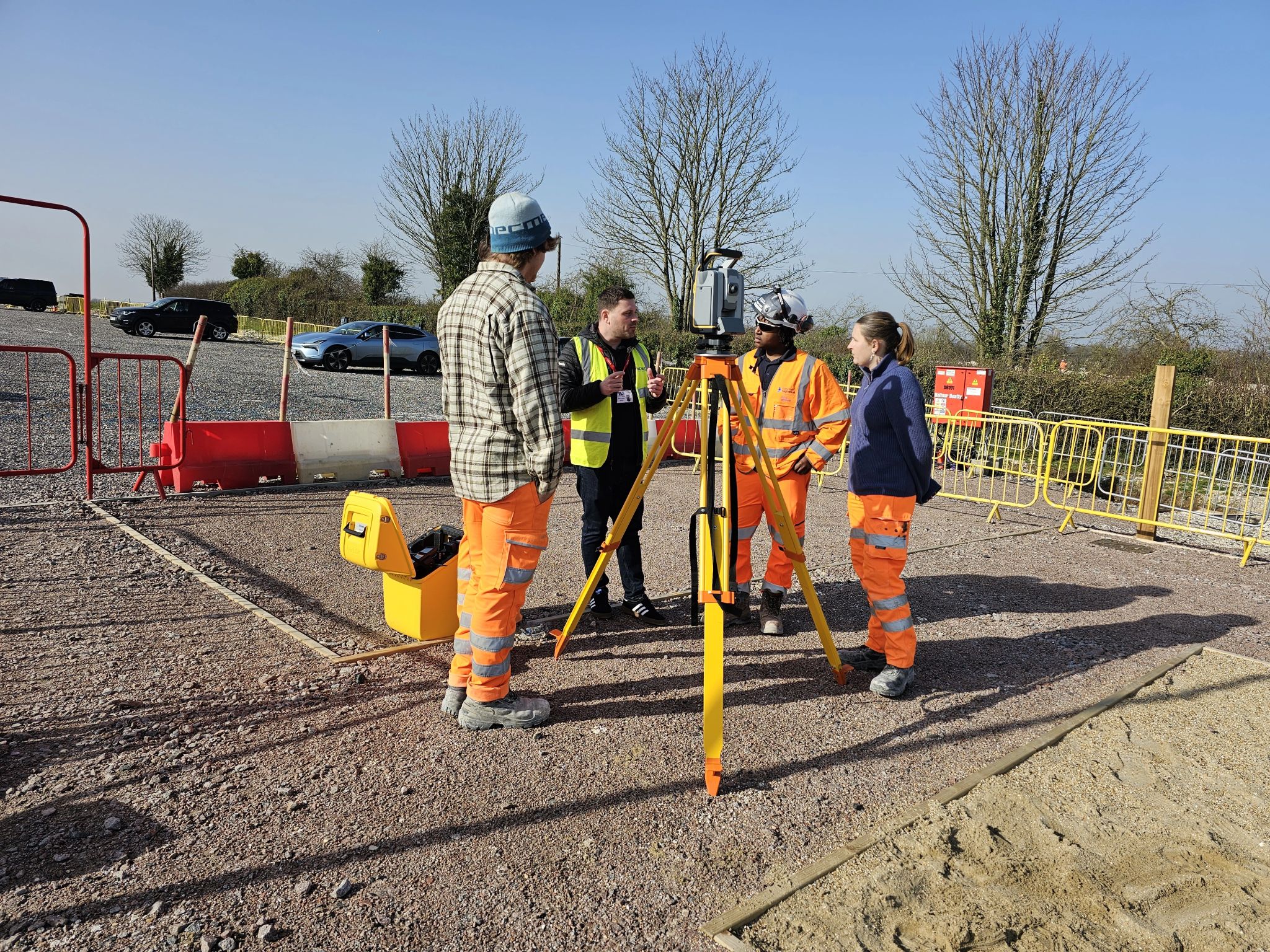
The total station itself is installed at a stable position with clear lines of sight to both the reference prisms and the monitoring targets. It is typically mounted on a concrete pillar, a steel frame fixed to an adjacent structure, or a purpose-built instrument housing designed for long-term outdoor deployment.
Automated Measurement Rounds
Once configured, the Settop M1 automated total station controller manages the instrument’s measurement cycles without any manual input. On each cycle, the total station measures all reference prisms and all monitoring targets in sequence, recording the precise position of every point. The cycle then repeats at the configured interval, whether every few minutes for high-risk situations or every hour for lower-risk long-term programmes.
The measurement data is transmitted from the field to the monitoring platform after each cycle. The speed and frequency of the measurement rounds means that any change in the position of a monitored target is captured and reported rapidly, without waiting for the next scheduled site visit.
Threshold Alerts and Real-Time Reporting
All data from the monitoring system flows into Trimble 4D Control, where each measurement is compared against the defined thresholds for that target. When a position exceeds the warning or action level, Trimble 4D Control issues an alert within seconds, by email or SMS, to the configured recipients. The alert includes the information needed to act: which target moved, by how much, in which direction, and when.
Reports can be generated automatically on a defined schedule or on demand, providing the structured documentation that compliance-driven monitoring programmes require. For projects where the client, the engineer, and the contractor all need visibility of the data, Trimble 4D Control gives each party access to the information they need.
Running Without Staff On Site
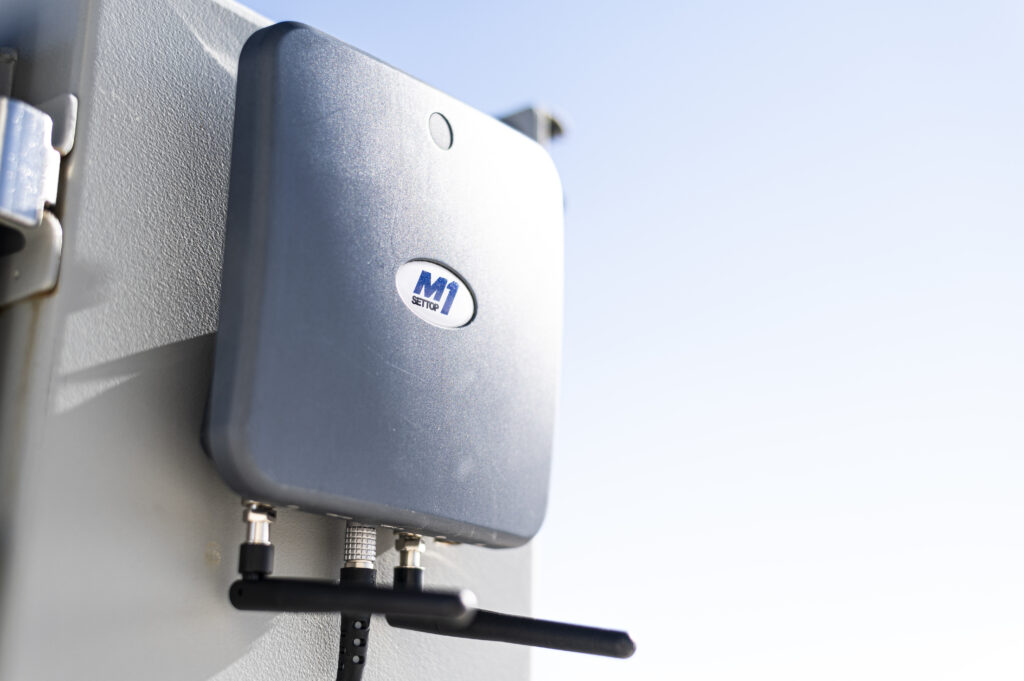
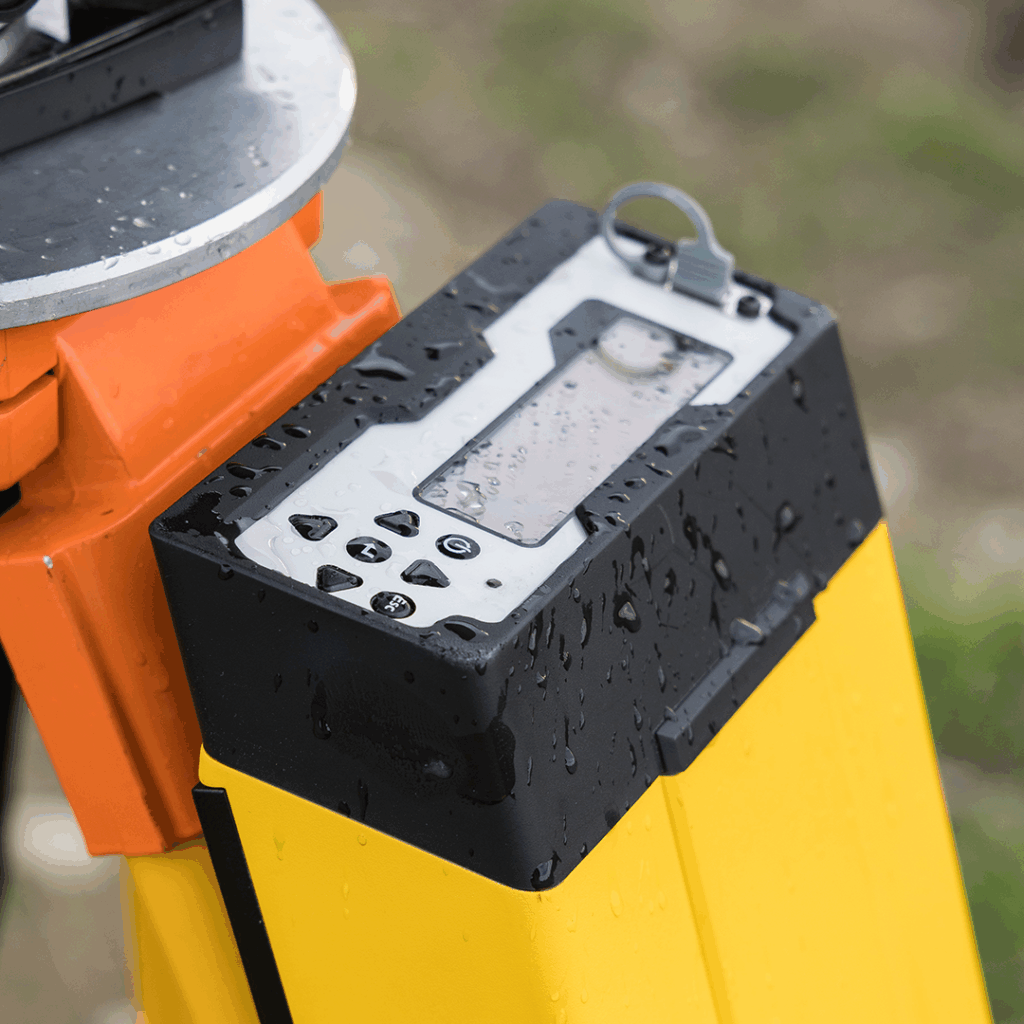
The Settop M1 consolidates a field computer, device server, router, 4G cellular modem, and remote switch into a single unit. Once the system is installed and commissioned, it operates autonomously. No engineer needs to visit the site to initiate measurement cycles, collect data, or check instrument status. Targets can be added or edited, and status can be reviewed remotely from anywhere, without a static IP address or complex network configuration.
If the cellular connection is interrupted, the Settop M1 continues running measurement cycles and stores the data locally. When connectivity is restored, the full data record is transmitted to Trimble 4D Control without gaps. As described in the second article in this series on real-time building movement alerts, this continuous operation regardless of network status is one of the most practically important features of the automated monitoring system.
The Equipment Behind a Robotic Total Station Monitoring System
Trimble S9 HP: The Flagship Monitoring Instrument
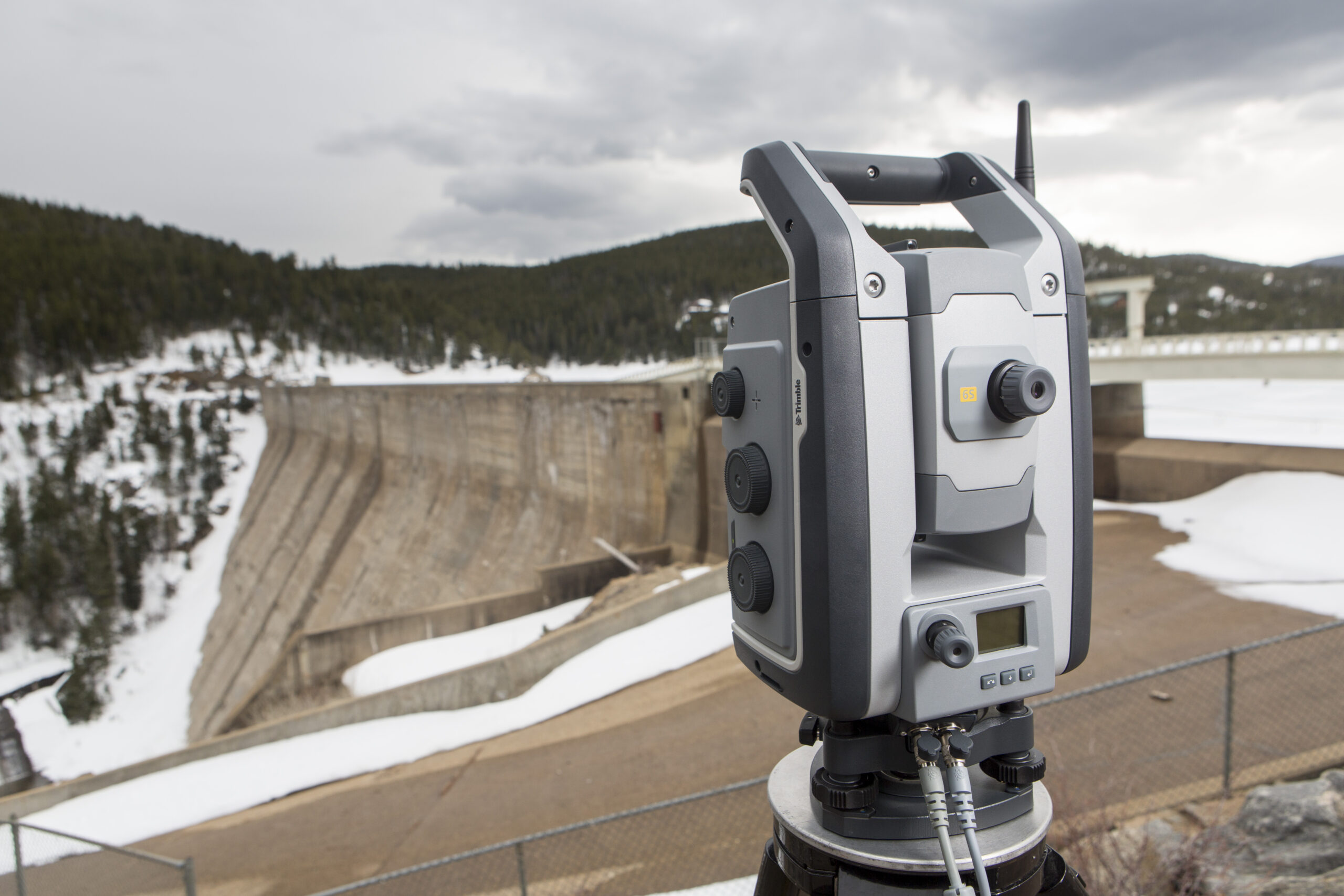
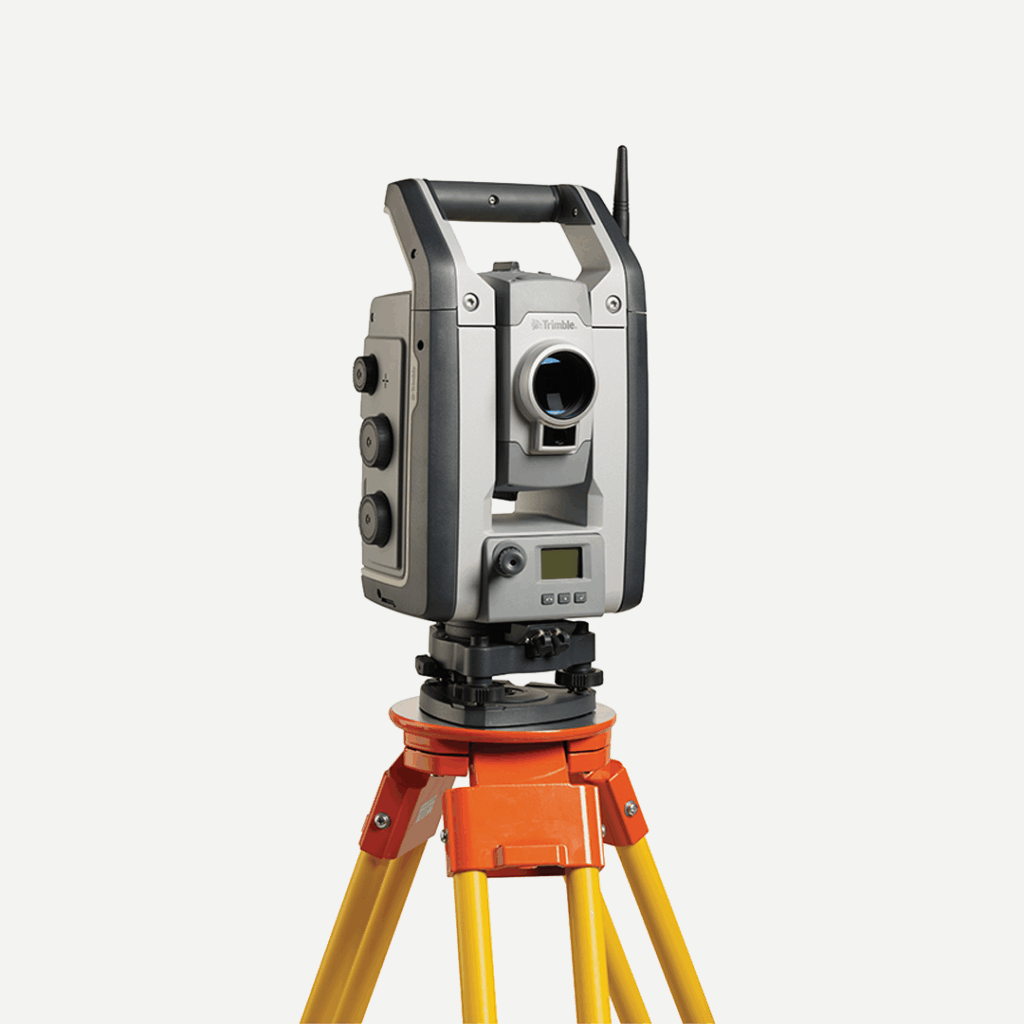
The Trimble S9 HP is KOREC’s highest-precision monitoring instrument, built specifically for applications where standard accuracy is not sufficient. Angular accuracy of 0.5 arc seconds, EDM accuracy of 0.8 mm + 1 ppm to prism, and a maximum range of 7,000 metres make it the appropriate choice for bridge monitoring, tunnel surveys, precision engineering, and any project where the tightest measurement tolerances must be maintained reliably over time.
FineLock and Long Range FineLock are standard on the Trimble S9 HP, along with Autolock, Trimble MagDrive servo technology, and Trimble SurePoint compensation. These technologies work together to ensure every measurement is taken accurately and consistently, even in difficult conditions and congested target arrays.
Trimble S9: High Performance for Standard Monitoring Applications
The Trimble S9 shares the same core platform as the Trimble S9 HP and is available in a one-arc-second angular accuracy configuration, which is appropriate for monitoring applications where the highest precision tier is not required. FineLock is standard on the Trimble S9, providing the same target discrimination capability as the Trimble S9 HP in congested arrays. For monitoring programmes where the risk profile does not demand sub-arc-second accuracy, the Trimble S9 provides a strong and cost-effective solution.
Settop M1: Automated Total Station Controller
The Settop M1 is the field controller that enables autonomous operation. Without the Settop M1, a total station requires a human operator to initiate and manage measurement cycles. With it, the instrument runs continuously and independently, turning a precision survey instrument into a permanent automated monitoring station. Communication options include cellular, LAN, and external comms, with intelligent power management suited to sites where mains power may not be available.
Trimble 4D Control: Monitoring Software and Alert Platform
All measurement data, from the Trimble S9 HP, the Trimble S9, the Trimble R750 MON GNSS receiver, and Trimble Wireless Data Loggers, flows into Trimble 4D Control as the central platform. Trimble 4D Control stores every measurement, applies trend analysis, visualises results against thresholds, and manages the full alert and reporting workflow.
Targets, Prisms, and Monitoring Accessories
The precision of the measurement system is only as good as the targets it measures. For automated monitoring, standard reflective targets are used for lower-precision applications, while dedicated monitoring prisms provide the retroreflective quality needed for high-precision measurements at longer ranges. Targets are fixed permanently to the structure using adhesive pads, anchor bolts, or purpose-made brackets designed to resist vibration and thermal movement without introducing error into the measurements.
Key Applications
Bridge Monitoring
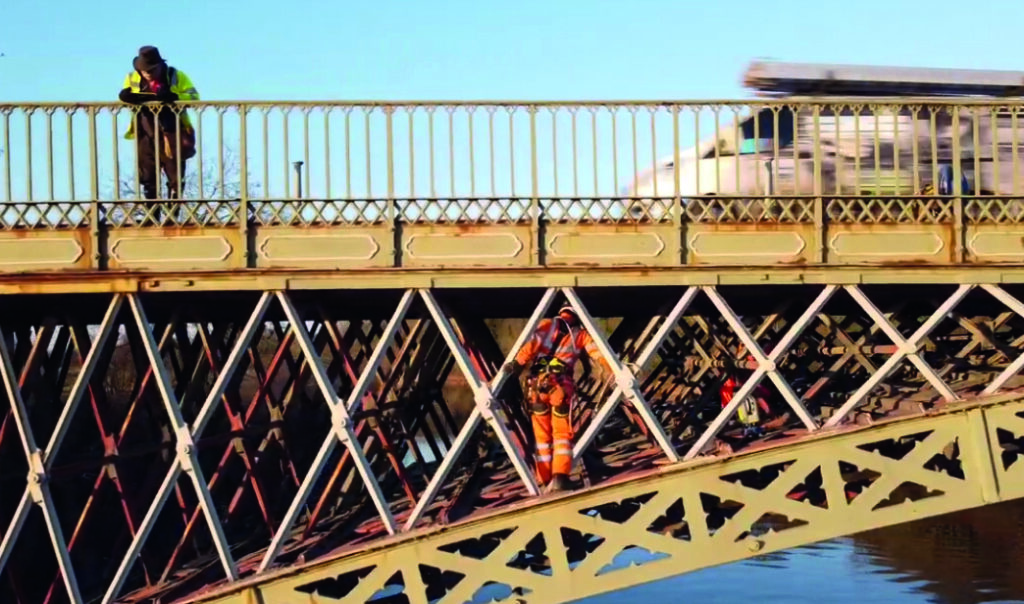
Bridges are subject to repeated loading from traffic, thermal cycling, and the progressive effects of material fatigue and corrosion. A monitoring system using the Trimble S9 HP, the Settop M1, and Trimble 4D Control provides a continuous data record of deck deflection, bearing movement, and abutment displacement, with alerts configured to trigger when any measurement exceeds the agreed threshold. The FineLock capability of the Trimble S9 HP is particularly important in bridge monitoring arrays, where multiple prisms on the deck and piers must be measured individually without the instrument confusing adjacent targets.
Tunnel Surveys and Underground Monitoring
Tunnelling environments present some of the most demanding conditions for monitoring instruments. The confined geometry of a tunnel cross-section means prisms are installed in close proximity to each other, and the structure’s behaviour under construction loading must be tracked with millimetre sensitivity. The Trimble S9 HP’s 0.5 arc second angular accuracy and FineLock target discrimination make it the appropriate instrument for tunnel monitoring, where measurement errors are not recoverable once the construction programme has advanced.
Adjacent Structure Protection During Construction
Excavation, piling, and tunnelling create ground movement that can affect nearby buildings. Monitoring prisms on adjacent structures, with the Settop M1 and Trimble 4D Control managing continuous automated measurement and alerting, provides the objective data needed to demonstrate compliance with monitoring specifications and to detect movement before it reaches the trigger levels that require a construction pause.
Settlement and Crack Monitoring
Long-term settlement monitoring of buildings, retaining walls, and infrastructure assets uses robotic total stations to measure targets fixed to the structure at regular intervals over months or years. The consistency of total station measurements over time, combined with the trend analysis capability of Trimble 4D Control, allows slow but progressive movement to be identified and characterised before it becomes a structural concern.
Rail and Highways Infrastructure
Rail and highways asset owners manage extensive monitoring programmes for bridges, retaining walls, and cuttings adjacent to the network. Automated total station monitoring systems using the Trimble S9 HP, Trimble S9, Settop M1, and Trimble 4D Control provide the continuous data and compliance documentation these programmes require, often operating alongside GNSS monitoring systems where the site geometry permits both technologies to contribute to the same monitoring network.
When to Use Robotic Total Stations Alongside GNSS
Combined Monitoring Programmes
Robotic total stations and GNSS monitoring receivers are complementary technologies. On large infrastructure projects, a combined programme using Trimble R750 MON receivers on open embankments and slopes alongside a Trimble S9 HP monitoring adjacent structures or confined sections gives the project complete spatial coverage across all terrain and environmental conditions. Both data streams feed into Trimble 4D Control, providing a unified view of the full monitoring network.
Matching Instrument to Environment
The decision between total station and GNSS monitoring comes down to the environment. Open sites with good sky visibility, and monitoring points that can accommodate a permanently fixed receiver, are well suited to GNSS. Enclosed environments, congested urban sites, underground structures, and applications requiring sub-millimetre precision are better served by a total station. Many projects require both.
What accuracy can a robotic total station achieve for monitoring?
The Trimble S9 HP achieves angular accuracy of 0.5 arc seconds and EDM accuracy of 0.8 mm + 1 ppm to prism. At 100 metres, this translates to a position uncertainty of better than one millimetre. For applications where tighter tolerances are needed across longer ranges, the maximum EDM range of 7,000 metres means the instrument can be positioned well clear of a structure while still maintaining high measurement precision.
How does FineLock technology help in monitoring applications?
FineLock allows the Trimble S9 HP and Trimble S9 to measure a specific prism without being confused or distracted by adjacent reflectors. In a tunnel cross-section where eight prisms are installed within a few metres of each other, or on a bridge deck where monitoring targets are spaced at one-metre intervals, FineLock ensures each measurement is taken to the correct target every time. Without this capability, congested monitoring arrays would require larger spacing between targets, reducing the resolution of the data and potentially missing localised movement.
Can the system operate continuously without anyone on site?
Yes. The combination of the Settop M1, the Trimble S9 HP or Trimble S9, and Trimble 4D Control is designed for fully autonomous operation. The Settop M1 manages all measurement cycles, maintains the connection to Trimble 4D Control, and continues collecting data during any connectivity interruptions. A site visit is only needed for installation, maintenance, or when the data indicates a physical investigation is warranted.
How does KOREC support the design and installation of a total station monitoring system?
KOREC’s monitoring specialists support clients from initial specification through to installation, commissioning, and ongoing programme management, including advising on instrument selection and target placement, supplying the Trimble S9 HP, Trimble S9, Settop M1, and Trimble 4D Control, and providing training on the full monitoring workflow.
Learn how robotic total stations are used for structural monitoring
KOREC can advise you on how robotic total stations are used for structural monitoring. Speak to our friendly experts today to get the right technology to solve your project challenges.