

Combining high-quality performance, simple installation and easy operation.
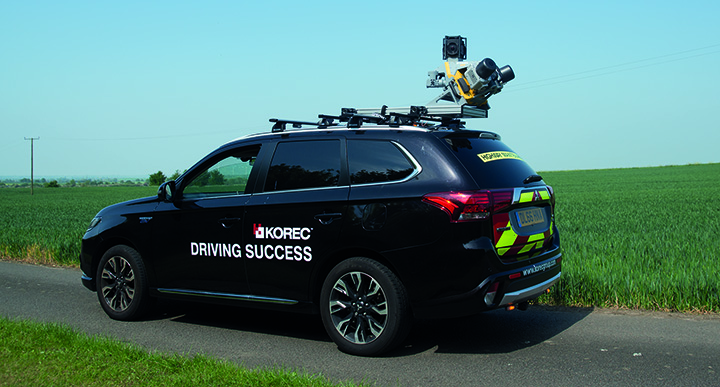
KOREC, Trimble’s leading distributor in the UK and Ireland, has taken delivery of Trimble’s ‘New Generation’ MX9 Mobile Mapping System.
The MX9 will be available to KOREC customers either through purchase or as KOREC’s preferred system for undertaking large-scale scanning and mapping surveys on behalf of its clients through its services company, Professional Services (KPS).
The Trimble MX9 is a complete field-to-finish mobile mapping solution and has been developed to deliver survey-grade data and detail in an easy to use and install design.
Performance
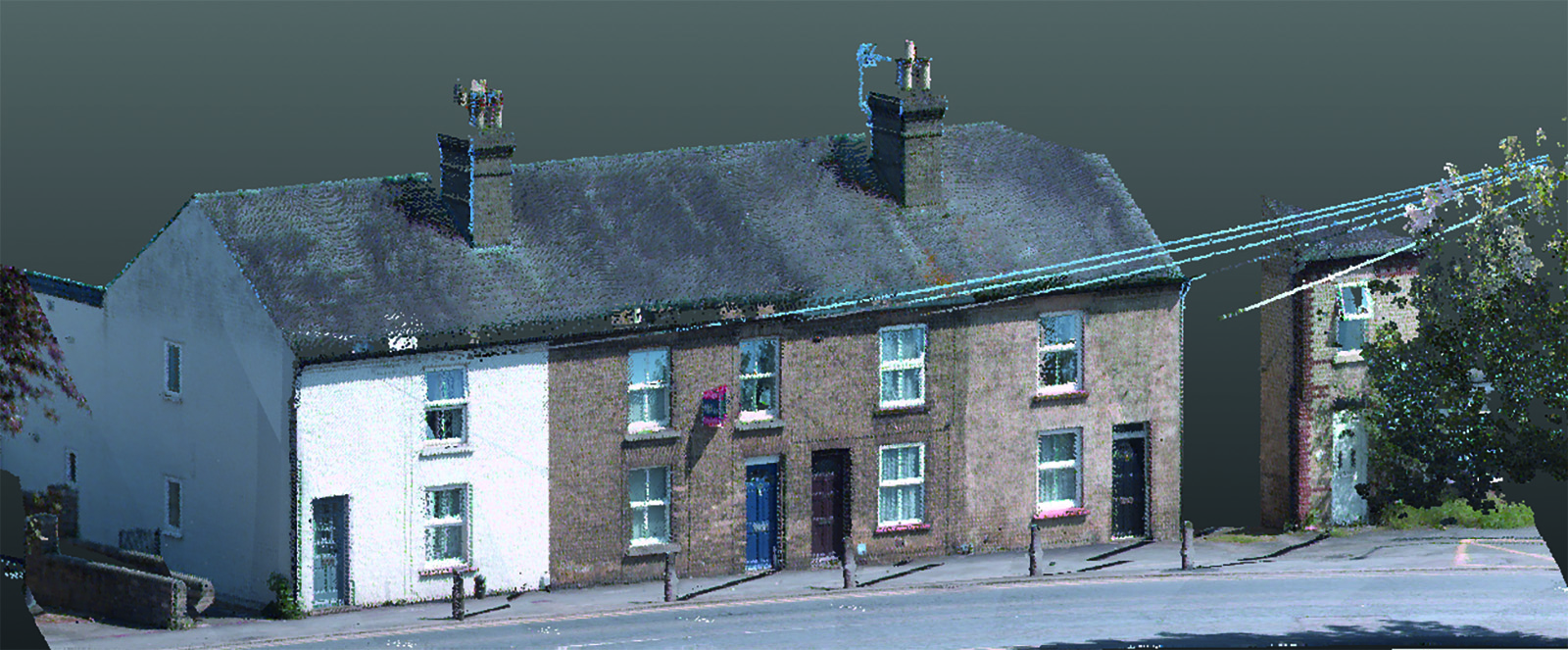
The MX9 combines a vehicle-mounted mobile lidar system, multi-camera imaging and field software for efficient, precise and high-volume data capture, delivering up to 500scans/second. The end result is data of unrivalled accuracy, density and repeatability.
Ease of Use
The system weighs just 37kg and can be easily mounted on a range of vehicles in less than 12 minutes. Operation is through intuitive browser-based field software, accessible via most tablets or any notebook.
As a Service
KOREC Professional Services means every company can offer their clients mobile mapping surveys without a large capital outlay and staff training. Specialising in tailor-made mapping surveys for a wide range of applications including topographic, engineering, and asset management surveys for whole city centres and boroughs or smaller projects, KPS combines expertise with the highest quality of mobile mapping data achievable.
Mark Reid, Professional Services Director said, “Our aim is to expand our customer’s business by offering clients mobile mapping surveys, and all their benefits, without the need for a hefty capital outlay or training costs. KOREC’s acquisition of the MX9 means that we are equipped to offer the very best in precise, high-volume data capture, faster than ever before.”
Alan Browne, KOREC CEO said, “As a company that has already invested heavily in mobile mapping systems, the purchase of a Trimble MX9 was an easy decision to make because simply it places KOREC and K-SERVICES customers, at the cutting edge of mobile mapping technology – the potential is tremendous.”
For a sample dataset or to discuss a Professional Services project, please contact Mark Reid, KOREC Professional Services Director on 07423628529 or by email at mark.reid@korecgroup.com
For sales enquiries, please contact your regional KOREC sales consultant.
ENDS
Many thanks to Geraint Thomas who supplied the information for our latest ‘Business in a Box’ case study – this one looks at how some clear thinking and hardwork has paid off for Geraint who went from zero UAV knowledge to producing top quality aerial imagery in just 8 weeks with his eBee RTK.

The theme for the May/June issue of Geomatics World is “Education is Crucial”, a subject that touches on many aspects of our profession from recruitment to career progression. Editor, Ian Dowman, also points out that this is something that’s covered in the latest KOREC article from our GIS and Mapping Business Area Manager, Richard Gauchwin.
In his editorial he writes, “Richard Gauchwin from KOREC takes up the theme of tailoring data capture to the customer. A key element of educating customers and providing them with what they need is establishing a partnership between educators, industry and users.”
Read Richard’s article entitled ‘Let’s Be Specific’ here.

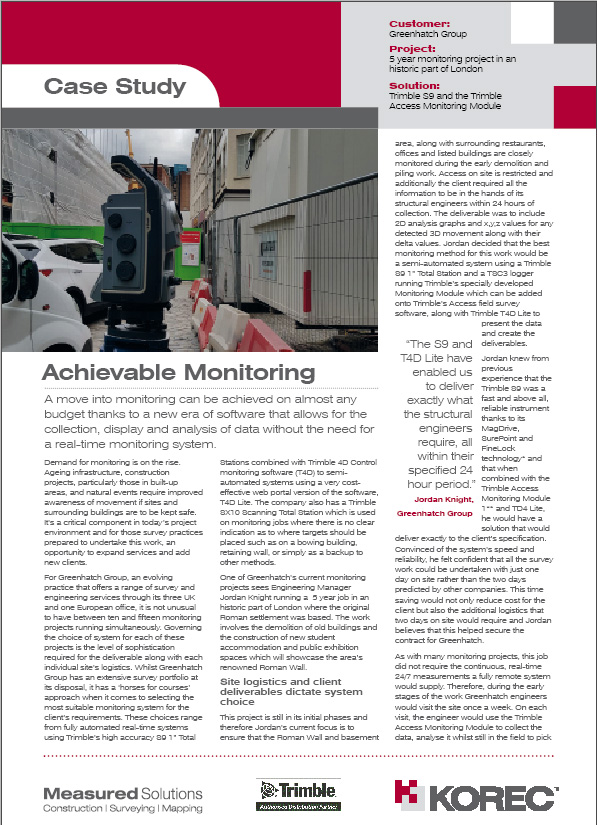
The theme of our latest case study is very much one of monitoring being an achievable and affordable service that all survey practices can offer their clients.
“Achievable Monitoring” is based on the Greenhatch Group and their use of a Trimble S9 with Trimble’s Access Monitoring Module.
Read the full story here.
Market reports predict a significant increase in the demand for UAV generated data in 2018 and consequently there exists huge potential even for those who may have no previous knowledge of UAV technology but are prepared to invest in the right system, time and training required to offer a quality service that will see clients return. A great example of this approach is Rob Brocklehurst through his company Scottish Drone Surveys. Rob has specialist knowledge of the wind farm construction industry and has expanded his survey offering with the purchase of both a SenseFly albris for – track surveys and access roads and an eBee Plus RTK for
main site surveys. Read the full case study here.

The latest issue of Mensura is now available to download here.
Mensura is KOREC’s quarterly geospatial newsletter packed full of news, new releases, training tips, case studies and competitions. If you’d like to receive a printed copy, please drop us an email at marketing@korecgroup.com and we’ll add you to our Mensura mailing list.

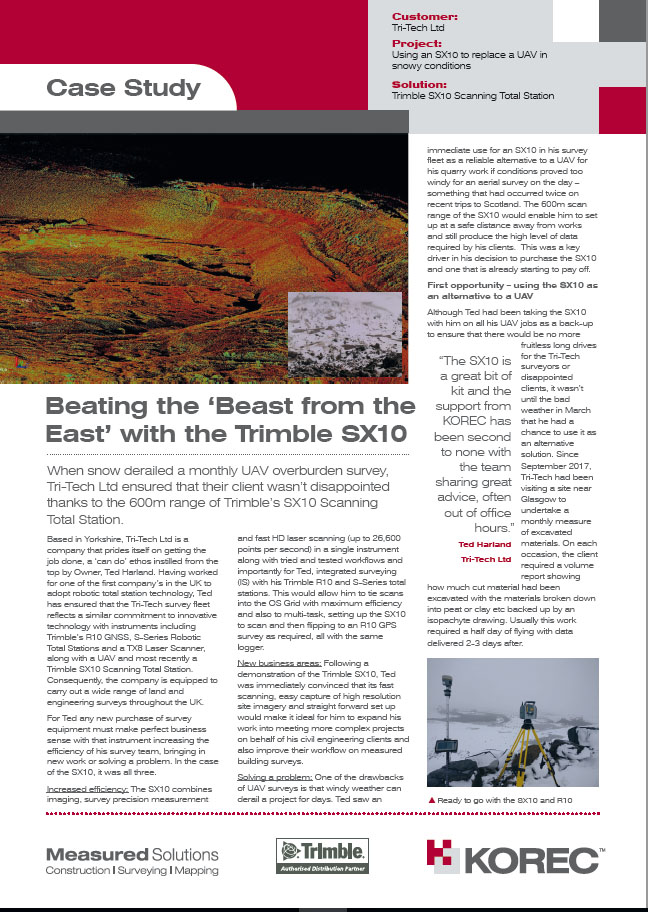
Remember ‘The Beast from the East’? Last month’s snow has provided us with a great case study from Tri-Tech Ltd who used their SX10 instead of their usual UAV for an overburden survey in Scotland. Many thanks to Tri-Tech Ltd Owner Ted Harland for sharing the informatioin and pictures.
Download the PDF here.
K-Mobile Updates
Progress never stands still and neither does KOREC’s K-Mobile mapping/data capture software development team! Here’s a round-up of what they’ve been working on over the past few weeks:
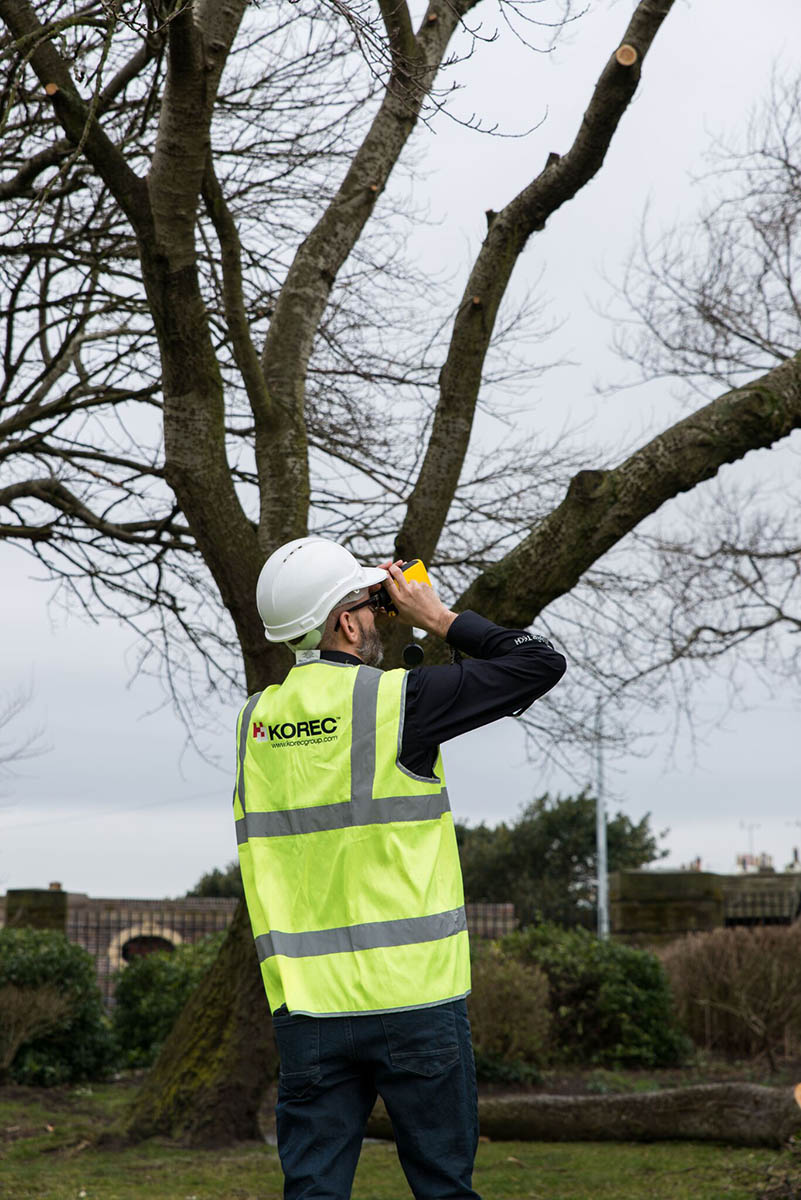
Android Bluetooth link to laser rangefinders
It’s been available in the Windows version of K-Mobile for a while and now we’ve added this useful function to the Android version too. Suitable for any Bluetooth enabled laser, its perfect for ensuring your offset measurements (eg shooting to points in inaccessible areas or GPS blackspots) or height and width measurements (ideal for tree surveys) are recorded directly into your data entry form.
Live Portal Update
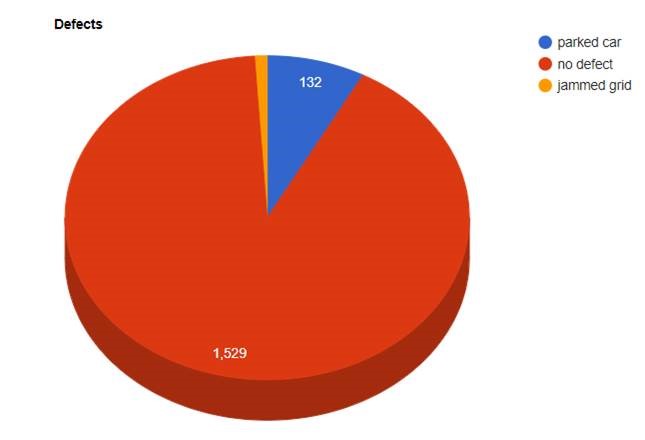
Imagine you are cleaning gullies or checking street furniture. Permitted office users can now log into the secure K-Mobile portal and track a service vehicle through a ‘bread crumb’ trail watching dots turn from red to blue as work is completed. Updates occur once a minute and this useful information can be used to illustrate all work done in a day or even show live dashboards, for example as an interactive pie chart. Simply click on a segment to view the location of recorded defects etc bringing live analysis to your data collection projects.
New product – K-Mobile Tree Edition
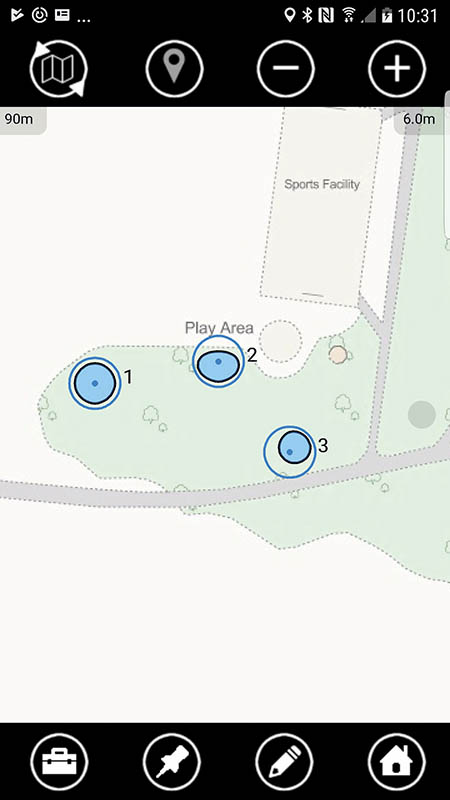
All the functionality of our fully featured K-Mobile data capture software with extra built-in tree functionality and visualisation tools. Perfect for undertaking British Standard tree surveys, key benefits include live graphic representation of tree canopy measured in four directions (N,S,E,W) and calculations and graphic representation of root radius. Also visible back in the office via the Live Portal. We have a new case study on exactly this application at http://bit.ly/2FRtMRb
The February issue of CES magazine sees the publication of the full version of Alan Browne’s article on instrument theft and its consequences. This is a problem that is blighting our industry and its good to see it highlighted in CES.
Read Alan’s full article here
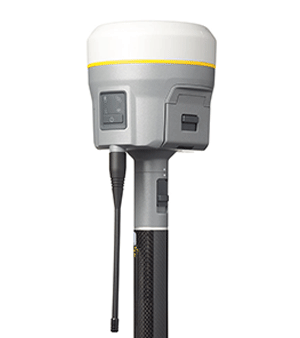
Since its launch in 2012 the R10 has proved to be one of KOREC’s best selling products. It’s generated more KOREC case studies than any other Trimble instrument and provided us with a CES magazine front cover photograph that became recognisable across the world.
But what do KOREC customers value most about their Trimble R10’s performance? Of course there are honourable mentions for all the R10’s patented technologies including:
• Trimble CenterPoint RTX delivering GNSS corrections via satellite or internet connection with unprecedented speed and accuracy for a PPP solution
• Trimble xFill ensuring less downtime in the field, with continuous RTK coverage during connection outages from an RTK base station or VRS network
• Trimble SurePoint fully compensating for pole tilt for the convenient measurement of points that were otherwise inaccessible with complete quality assurance
But coming in at number 1 is the R10’s cutting edge Trimble HD-GNSS processing engine which simply enables surveyors to measure points more quickly!
Here’s why the R10’s HD-GNSS processing engine makes it the industry’s turn to GNSS solution:
Trimble has a strong history of in-house is development which is why we have HD-GNSS, the ‘quiet’ hero of the R10. In keeping with Trimble’s ability to produce systems aimed specifically at the needs of the land surveyor, the HD-GNSS processing engine of the R10 provides markedly reduced convergence times as well as high position and precision reliability when compared to earlier processing engines, especially in poor GNSS environments. Key benefits Trimble HD-GNSS delivers include:
• Increased initialisation speed
• Improved real-time measurement precision
• Elimination of the possibilities of a “bad fix”
• Increased reliability of precision reporting
• Reduced post processing complexity for the user
The R10 is based around the Trimble Maxwell-6 custom integrated circuit technology for GNSS signal processing RTK calculations are performed in the R10 with a microprocessor that has more magnitude and is more powerful than anything before it and also more energy efficient. The shift to this new methodology makes it possible for Trimble to continue to improve performance as GNSS constellations develop.
Fully scaleable through firmware and software updates, HD-GNSS is well positioned to take full advantage of additional GNSS satellites and signals to further improve surveying in increasingly demanding field conditions.
All this is possible because, unlike most other providers of survey grade GNSS, development is in-house and fully under Trimble’s control allowing the company to meet a very specific set of requirements, namely those of the surveyor in the field.
Download the Trimble HD-GNSS white paper for full details or call your regional KOREC survey consultant for a demo.