

The onset of the COVID-19 pandemic two years ago really brought home to us the importance of maintaining and improving our health – both inside and out.
Maintaining our physical health could mean the difference between a mild or a severe case of covid, and the impact of multiple lockdowns, separation from our loved ones, and working from home, all took their toll on our mental health, too.
Combined with the distressing and upsetting news coming out of Ukraine on an almost daily basis, it does seem a challenge to keep ourselves upbeat and positive.
As a responsible employer, KOREC understands the importance of ensuring a happy, healthy and supported workforce – and takes action to ensure it.
To mark this International Day of Happiness, here’s just some of the initiatives we’re undertaking to bolster the health, happiness and prosperity of our people;
Perks of the Job
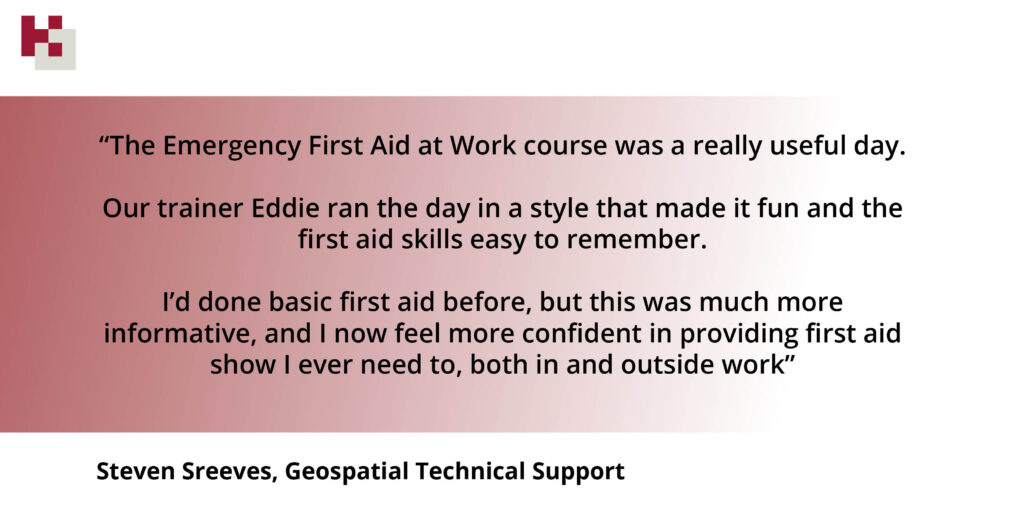
The company now proudly boasts 5 physical first aiders, including Steven Sreeves who just completed his Emergency First Aid at Work training, provided by St John Ambulance
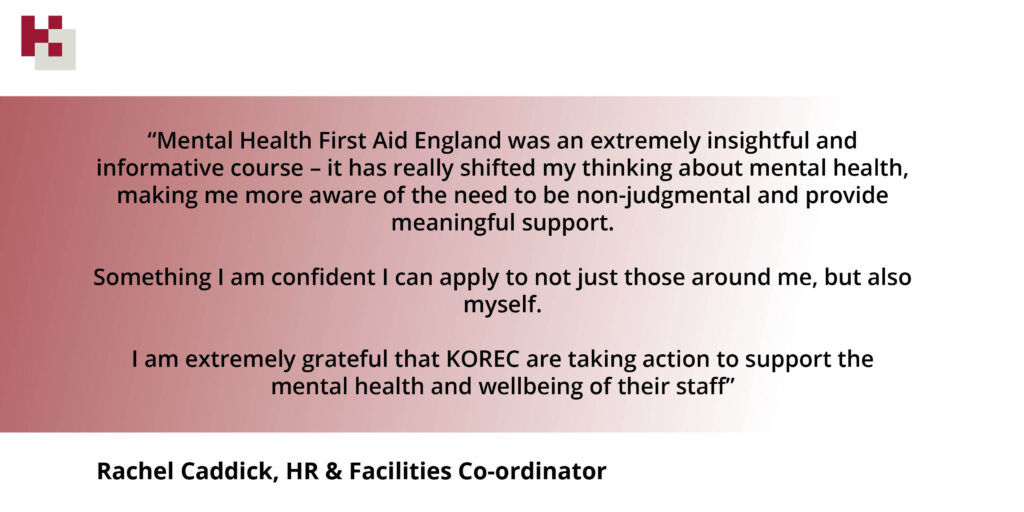
- We’re also proud to have two mental health first aiders, in the shape of Rachel Caddick and Stuart Guthrie-Cadge, both of whom recently completed the Mental Health First Aid England course.
- Rachel and Stuart recently held a Lunch ‘n’ Learn on the difficult but important subject of depression, anxiety and suicide – and offered advice and tips for those who may be struggling.

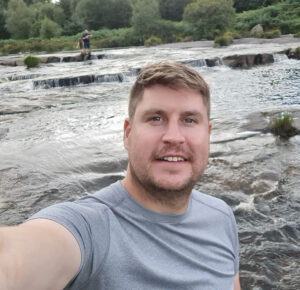
Meet the KOREC mental health first aiders! Rachel Caddick and Stuart Guthrie-Cadge
- We’ve signed up to Plumm – a dedicated online platform that offers free and confidential chat therapy, online courses and meditation
- We recognise the importance of small gestures, which is why we send every single employee a small Valentine’s gift each year, just to let them know we appreciate them.

- Speaking of small gestures, who doesn’t love a wee perk? For a few years now KOREC has invested in Perkbox, an online portal chock full of freebies and discounts on everything from free cinema tickets to cheaper gym discounts. This also includes access to the Employee Assistance Program – providing 24/7 support for those struggling with legal issues, debt, anxiety, bereavement or relationship issues.
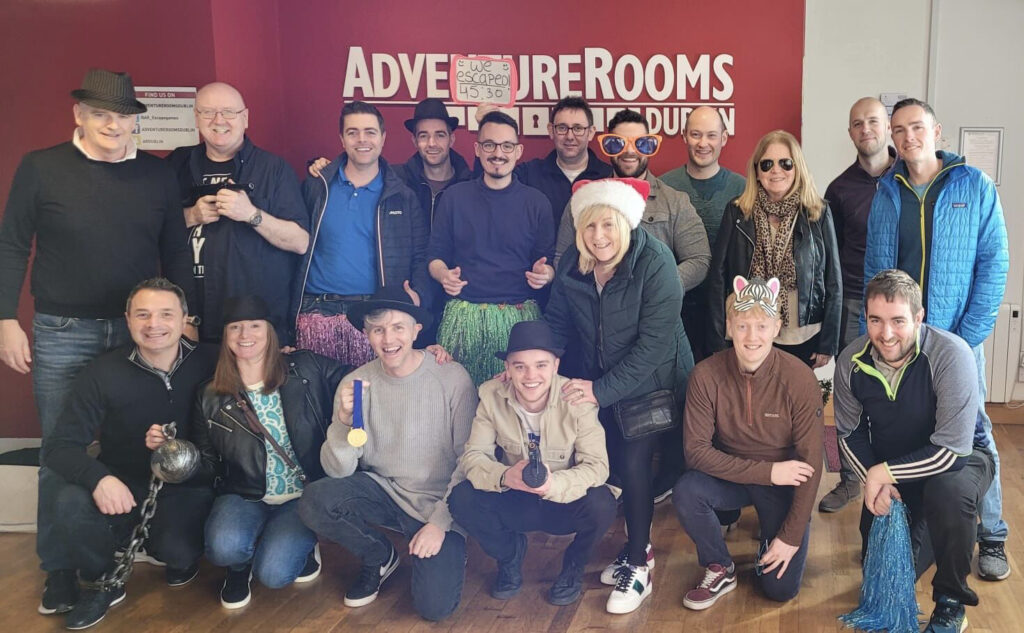
- We also love to party! Which is why we have not one, but two KOREC parties – a summer and a Christmas event! The KOREC gang love nothing more than getting together and having a knees up. During COVID, we thought this was more important than ever, so we held our first ever ‘virtual’ Christmas party, and smaller, socially-distanced summer events.
On this International Day of Happiness, why not take a few moments out of your day to do something that makes you feel good?
Wishing you health, happiness and prosperity – from the whole KOREC team!
Last month, we calculated that the cost of wet weather due to lost productivity, repeat visits and wasted trips could be in the region of £20,000 per year for the ‘average’ land surveying practice*.
Not all brands of surveying equipment work well in the rain, and with the UK averaging 161 days of wet weather a year, that’s a lot of wasted journeys and repeat visits. And if there’s one thing we hate at KOREC, it’s waste and inefficiency.
So, with this is mind, we decided to do something rather bold. We teamed up with ATR Shield to give away 50 total station shields, free of charge, to the 50 surveyors who gave us their most convincing reason for needing one.
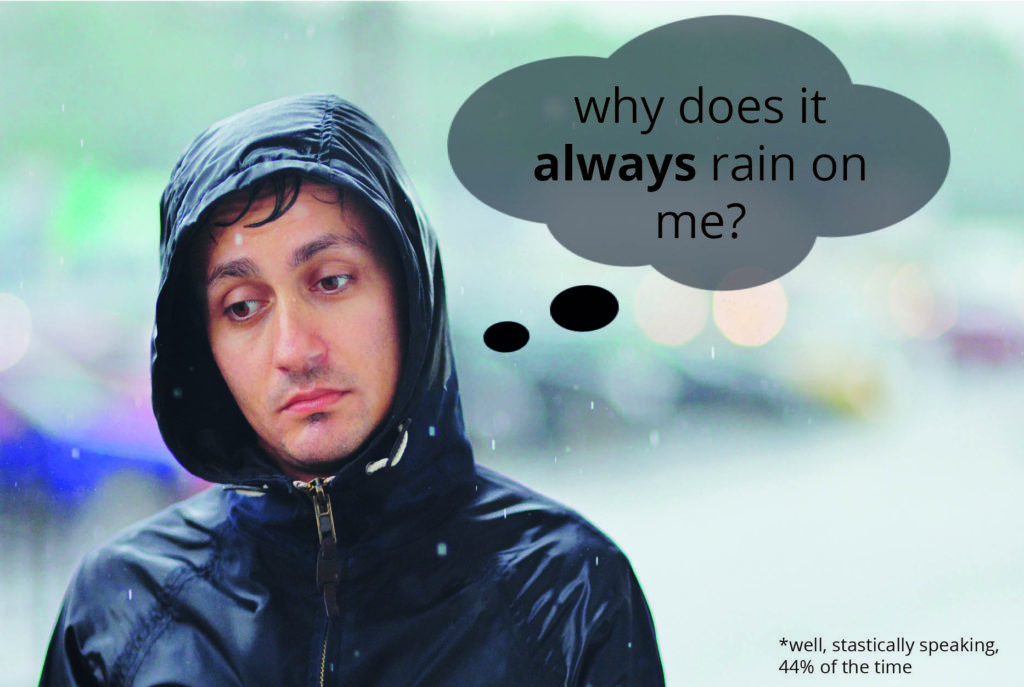
And boy did you deliver! We received over 150 requests from across the nations. From the tip of Cornwall to the top of Ireland, from the Welsh valleys to Brixton – and your reasons made for fascinating reading. Here’s just a selection of your comments for why you desperately need a shield for your soggy total station;

Trimble to the Rescue!
At KOREC, we’re all about empowering our customers with the solutions they need to get the job done, with the minimum of fuss. After all, the slogan ‘Do It Once, Do It Right, Do It Now’ was a former company motto of ours!
That’s why we are so proud to provide solutions that are built for all weather conditions – come rain, shine – or even sleet and snow!
Trimble S Series total stations are world renowned for their reliability, their accuracy, and their robust nature in all weather conditions – no shields needed for this one!
Right now, we are offering over 20% off the Trimble S5, along with all the kit you need;
- Trimble TSC5 controller
- Access software (General Surveyor)
- Trimble Sentinel track & retrieve app
- Prism
- Telescopic pole
- Tripod
If you’d like to find out more about this bundle, contact your local KOREC consultant, or use the details below;
Call UK Sales: 0345 603 1214
Call Ireland Sales: 01 456 4702
For anything else, view our contact page.
*See previous blog ‘Don’t Let Rain Stop Play’ for full breakdown of the numbers
1st February 2022 marks the beginning of the Chinese New Year. Three days later, on Friday 4th, the Beijing Winter Olympics begin.
To mark these two occasions, and because we are mad for a group fitness challenge (or just plain mad?) the KOREC team are committing to undertake a mammoth journey.
In February 2021, our UK and Irish teams undertook their ‘Fit4Feb’ challenges – traversing Europe and America (virtually, of course…), and totting up an impressive 6,200km between them.
This year, in the spirit of the Chinese New Year – the year of the Tiger – we’ve committed ourselves to an even bigger challenge.
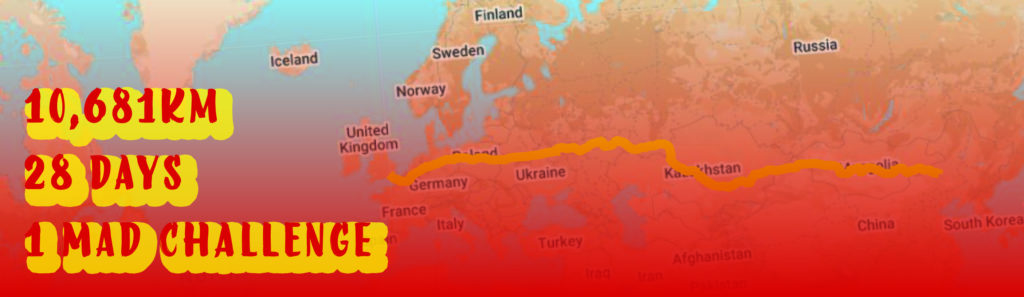
We are going to walk, run, swim, cycle and hop our way back from Beijing to London – a distance of a whopping 10,681km!
The well-known quote ‘a journey of a thousand miles’ is attributed to the Chinese philosopher Lao Tzu, and seems particularly apt for the challenge that lies ahead – at first, a journey of over 6,000 miles seems impossible – but all we can do is take that vital first step and begin our journey – and crucially – we’re not alone!
The Year of the Tiger
Since 2022 marks the year of the tiger, we’ve taken some inspiration from our furry friend. According to the Chinese Zodiac, the tiger is the ‘king of all beasts’, and is a symbol of Bravery, Competitiveness, Unpredictability and Confidence – some familiar traits we can see in ourselves!
So we’ve set some mini challenges based on these qualities, with some awesome (tiger-themed) prizes up for grabs!
BRAVE
- Who is brave enough to join our challenge?
- Who will brave dark and dismal early mornings for an invigorating run?
- And most importantly, who is brave enough to share their most embarrassing workout outfit?!
COMPETITIVE
- Who will get the most miles under their belt?
- Who can most accurately guess where we’ll end up come 28th February?
UNPREDICTABLE
- What will we discover en route?
- Who will come up with the most wacky method of exercise?
CONFIDENT
- Who actually thinks we can go the distance?
- Who’s willing to give it a go anyway?


We hit the ground running on February 1st, and we’ll be providing regular weekly updates on our progress throughout the month via our social channels.
Wish us luck, or as the Chinese say – Zhù nǐ hǎo yùn!
Resolve to save 20% on a Trimble R8s GNSS receiver with TDC600
Flexible and scalable, Trimble’s R8s GNSS has always been ‘the one with all the options’! Choose the configuration level that suits your needs best, whether it’s post-processing, base, rover, or a combination.
The R8s can be used in conjunction with Trimble’s VRS Now service, giving you instant access to RTK positioning services sing a network of permanent, continuously operating reference stations. For more information about VRS, watch this YouTube video or speak to a member of our team.
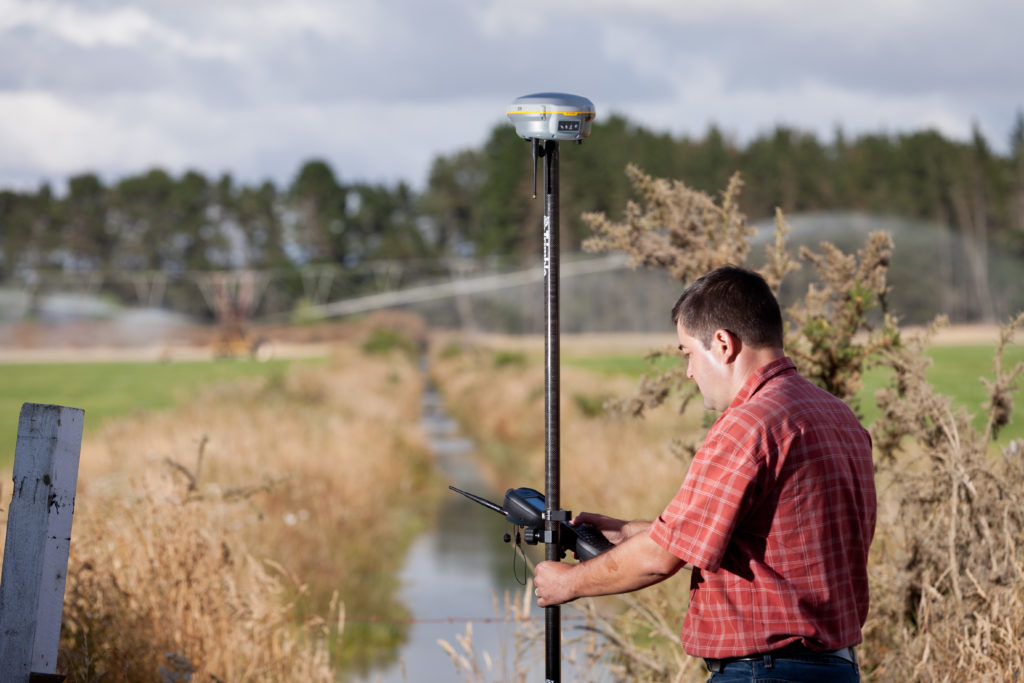
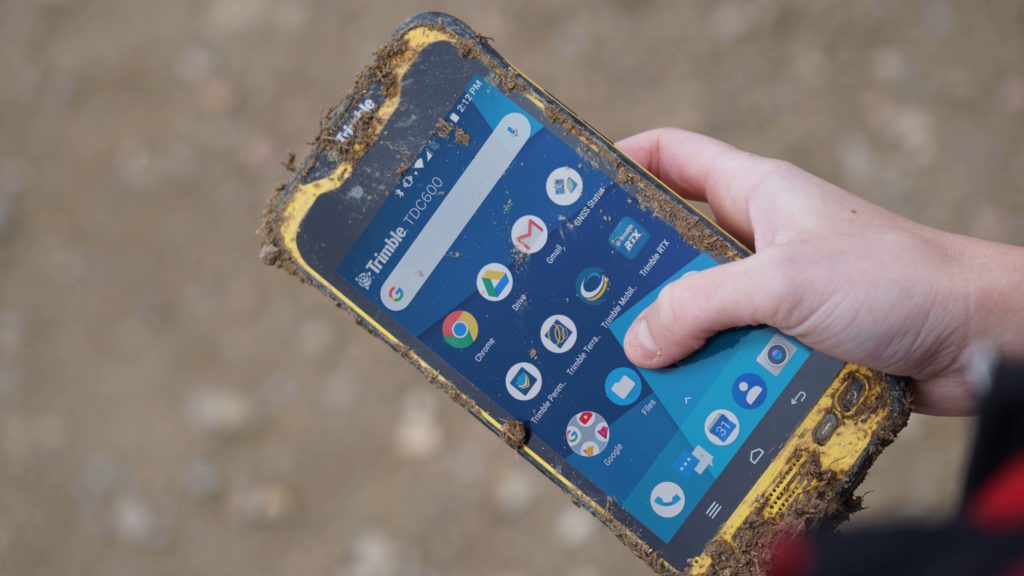
If the R8s is our most flexible GNSS, then the TDC600 is our most versatile logger, a half-way house between a phone and a tablet. Pocket sized, rugged and lightweight, we’d recommend the Android based TDC600 to all those surveyors who have to cover large sites or walk long distances but still want the full functionality of Access software and a decent screen that can be viewed landscape or portrait. Together these devices offer the user accuracy, efficiency and reliability all at once – so for a limited time we’re bundling them together with savings of 20%.
Accuracy needn’t cost the earth
“I’ve been very, very impressed with the TDC600 for a number of reasons. The modern Android interface brings all the slickness, ease of use and extended functionality you’d expect including access to the apps store so that whilst I’m in the field I can now use a CAD viewer, a calculator and of course regularly check weather updates. However the main plus is that it’s a fantastic platform for Access 2020 which is far slicker to use than its Windows counterpart and brings additional features such as a split screen and quick start up.” – Ted Harland, Tri-Tech. Read more about Ted’s experience with the TDC600 here.
If you’d like to streamline your workflows while saving 20% speak to our sales team while stocks last!
Contact us;
Call UK Sales: 0345 603 1214
Call Ireland Sales: 01 456 4702
For anything else, view our contact page.
We’ve all heard of the saying ‘a little bit of rain won’t hurt’, but when it comes to your land survey kit, is it true?
Being the stats nerds that we are, we decided to run the numbers to see how much your soggy survey kit is really costing you.
Picture the scene. You’re out on a land survey or set out job with your total station, when the skies darken, the wind picks up, and the heavens open. You’ve got two choices – you fashion a DIY cover out of spare bits and bobs, or, if you’re like us, you make a dash for the van, grab a coffee to keep warm and dry, and wait for the rains to subside.
If we lived in the Med this may not be such an issue, but here in the UK it rains an average of 161 days of the year – that’s almost half of the time!
That’s a lot of days wasted sitting waiting for the skies to clear – or risking damaging kit that you know isn’t too fond of water ingress. We’ve even heard tales of folk desperately drying off their kit with hair dryers in the back of the van!
Running the Numbers
So, we decided to run the numbers to see exactly how much all of this wasted time could be costing you.
Over the last two decades, the UK has averaged 161 rainy days each year, 44% of the days. When it comes to working days (assuming you’re not a workaholic and enjoy the odd weekend and holiday each year) there’s roughly 240 days of working per year, which means a potential for 106 ‘rainy’ working days.
With the average land surveyor costing around £120 a day*, and assuming that on the rainiest of days you’re losing around 3 hours of productive time packing away kit, returning to the van, sitting in the van (not to mention getting the hair dryer out) we reckon the daily loss is around £48 per rainy day.
But, it gets worse. That ‘lost’ 3 hours of work still needs to be completed on a dry day, meaning another trip to site, another mileage expense, and another £48 gone. This second trip to site also means that other survey work, for other clients, has to either be rearranged, pushed back – or worst of all, lost.
All in all, we reckon that ‘bit of rain’ could be costing you the best part of £10,000 per surveyor over the course of a year!

Of course, the financial cost is just one element.
Every time rain stops survey, it shortens the timescale for getting the job done. Not only does this add time pressure to the job, it cause severe reputational damage to your business, straining relations with your client, as well as threatening your competitive edge when it comes to bidding for other work.
Dry your Eyes
If those figures brought a tear to your eye, don’t be concerned – there is another way!
We’ve put together the #WinterReady land survey package which has everything you need to get your survey work completed – come rain or shine.
Featuring the robust Trimble S5 with active tracking, the new TSC5 controller, a license for Trimble Access (General Survey) and more, our #WinterReady bundle gives you all you need to keep on working thru’ the wind and rain.

If you’d like to find out more about this bundle, contact your local KOREC consultant, or use the details below;
Call UK Sales: 0345 603 1214
Call Ireland Sales: 01 456 4702
For anything else, view our contact page.
*Based on figures from Reed.co.uk, assuming an annual salary of £30,518 and a working week of 37.5 hours, we obtained a figure of approximately £117 per day for a land surveyor, or £16 per hour.
Born in 1918 Katherine began making breakthroughs at a young age. When West Virginia integrated its graduate schools in 1939, Katherine was selected as one of three black students to be offered places at the state’s flagship – West Virginia University.
Following graduate school, Johnson embarked on a career as a research mathematician – a difficult field to enter as both an African American and a woman. When a relative mentioned that the National Advisory Committee for Aeronautics (NACA) – the precursor to today’s NASA – was hiring mathematicians, Katherine applied and was offered a job in 1953.
The next four years was taken up investigating plane crashes caused by wake turbulence. The research conducted helped shape Alan Shepard’s May 1961 mission Freedom 7, America’s first human spaceflight where Katherine provided trajectory analysis. Despite this pivotal work, Johnson and the other African-American women in the computing pool were required to work, eat, and use restrooms that were separate from those of their white peers up until desegregation in 1958 when NACA became NASA.

In 1962 Johnson was called upon to work on the project she would become most known for, the orbital mission of John Glenn. Astronauts were wary of putting their lives in the hands of new electronic computing machines (prior to 1958 NASA only employed human “computers” – a job title which meant “one who computes”), as they were prone to problems. As a part of the pre-flight preparations, Glenn requested staff to “get the girl”—Johnson—to run the same numbers through the same equations that had been programmed into the computer, by hand.
“If she says they’re good… then I’m ready to go” said Glenn.
Glenn’s flight was a success and signified a turning point in the space race between the USA and Soviet Union.
Johnson retired in 1986 after 33 years at what is now known as Langley Research Center. “I loved going to work every single day,” she said. In 2015 Johnson was awarded the Presidential Medal of Freedom, America’s highest civilian honour by President Barack Obama.
She passed away on 24 February 2020, but her pioneering legacy lives on.

Ahead of next week’s COP26 climate summit, how KOREC are playing their part by investing in the future – not just of our planet, but the next generation of geospatial experts, too
Next week, virtually every world leader will descend on Glasgow for possibly the most important climate summit since Paris in 2015. By the time the summit wraps on 12th November, it is hoped they will have committed to limiting global temperature rise to the vital 1.5C to avoid the most catastrophic effects of climate change.
Since COP26 takes so close to home, and with KOREC in attendance, what better time than to make some commitments of our own?
This week, KOREC Group signed up to the SME Climate Commitment, where we as an organisation have committed to halving our emissions by the year 2030, and going carbon-neutral by 2040 – a full decade ahead of the UK government’s target.
We have been working to reduce emissions across our vehicle fleet for several years with most of our vehicles now hybrid electric models – but we recognise there is work to do when it comes to our offices, our staff travel, and our supply chain.

But it’s not just the climate that we’ve committed to. KOREC was also recently confirmed as a partner of Geospatial UK. Based at Newcastle University, the organisation was formed to counteract the widely-publicised skills shortage in our geospatial industry. Their key aim is thus to engage and inspire the next generation of geospatial experts – by educating and informing them about the exciting, fast-changing and varied industry that we love. As well as being a key sponsor, KOREC will be supporting this great work in a much more hands-on way – more on this to come!
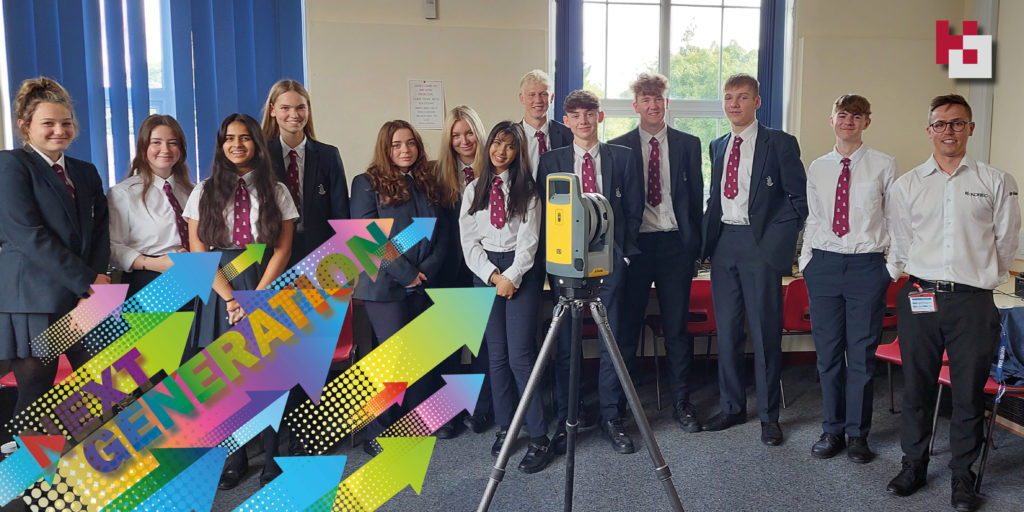
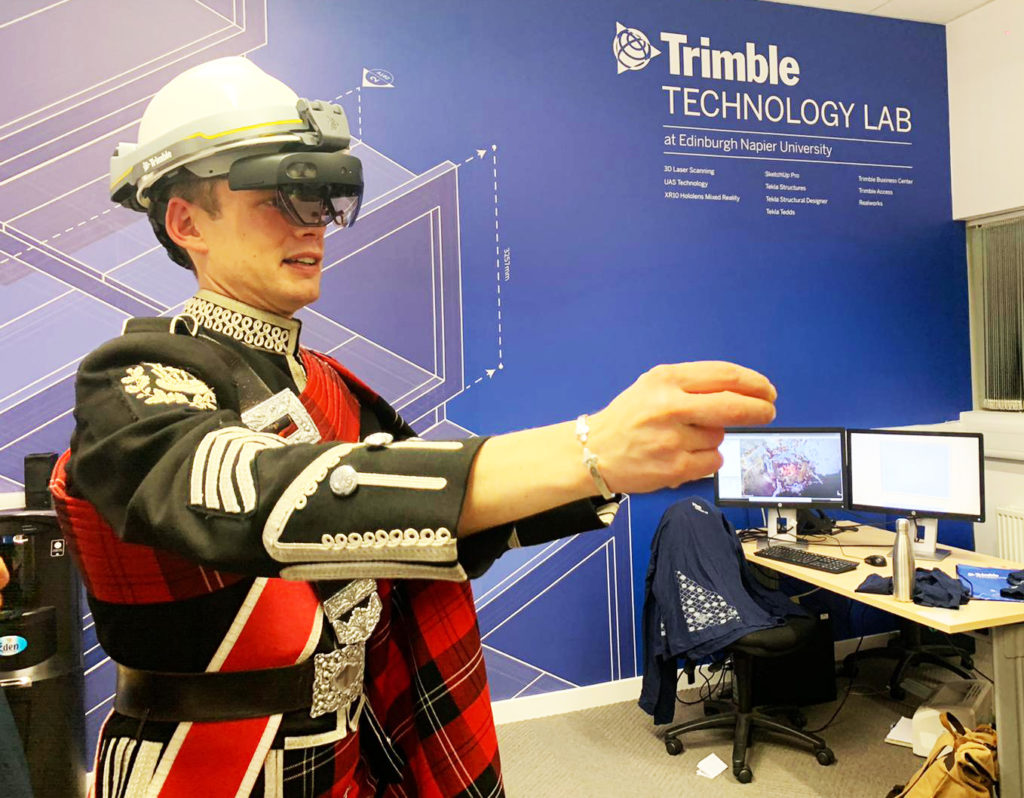
This focus on the climate and future generations will converge beautifully at next week’s COP event, which we are delighted to be attending. Our partners at Edinburgh Napier University (home to a Trimble Technology lab which is helping to expand the University’s leadership in training and research in 3D building design, digital fabrication and the sustainable built environment) have invited us to take part in their #GetOnWithIt event in Glasgow.
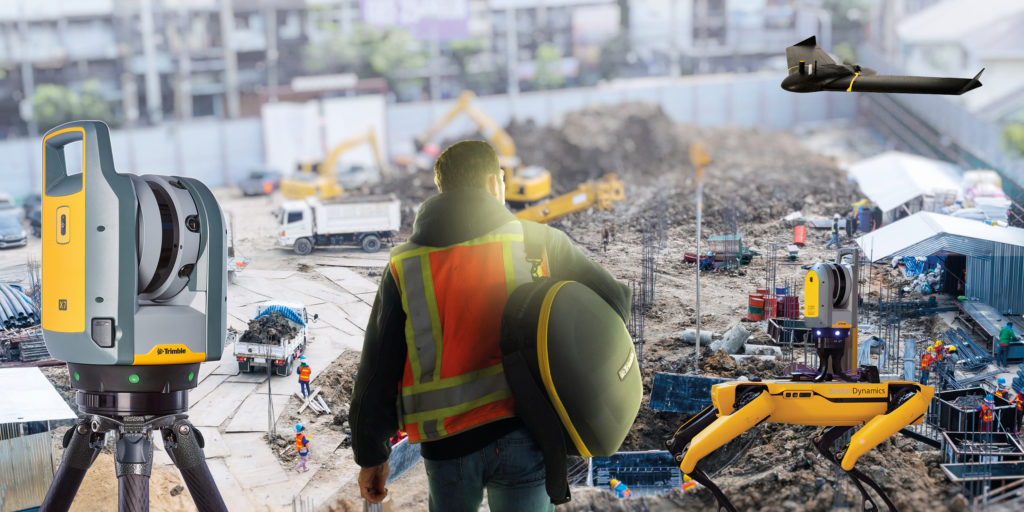
Sam and Stuart from KOREC will be in attendance, showcasing key digital construction tools such as the X7 laser scanner, SiteVision augmented reality and XR10 mixed reality headset, to the student body and public alike. Besides being excellent tools to showcase to a live audience, these solutions are excellent examples of ‘connected construction’ – efficient, effective digital tools that allow online collaboration (cutting down unnecessary trips to site) and as well as reducing construction site waste and rework.
We’ll be sure to be sharing pictures and clips from the event – so keep your eyes peeled on our social channels next week!
Our third ‘Hidden Figure’ of October was a true pioneer in not one but two fields – the football pitch and the fields of war – and has just entered the Hall of Fame at the National Football Museum
Walter Tull seemed to face adversity at every step of his short but eventful life. Walter, along with his brother Edward, was left orphaned at just nine years of age after his mother died of breast cancer and his father of a heart attack. The two young boys were moved from their native Folkstone to a children’s home in Bethnal Green.
It was here that Walter’s love and talent for the beautiful game first became apparent, and at the age of 20 he was signed for local amateur club Clapton FC – one of the first black players in English football. Reports were Walter never played a losing game, and was called the “catch of the season” by the Football Star.
Fame came calling just a year later when Walter signed for Tottenham as inside forward. During his short time with the club, Walter endured horrific racial abuse at the hands of the opposing fans. Newspaper reports of the time state that, despite being abused with language “lower than Billingsgate [market]”, Walter remained, at all times, a true professional;
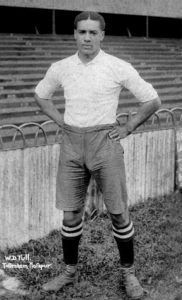
“He is Hotspur’s most brainy forward … so clean in mind and method as to be a model for all white men who play football … Tull was the best forward on the field.”
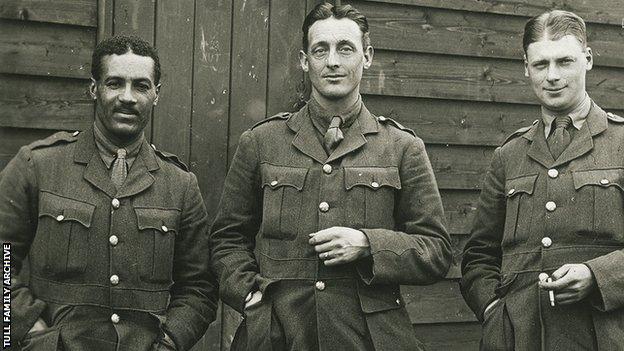
Walter’s life took a very different turn with the outbreak of the Great war in 1914. He wasted little time in enlisting, joining the ‘Footballer’s Battalion’ (what else?) of the Middlesex Regiment in December 1914. He fought extensively in the war including on the Italian and Western fronts, and at the battle of the Somme. His “gallantry and coolness” helped him climb the ranks, becoming a second lieutenant in 1917 – one of the first mixed-heritage men to become an officer in the British Army, and the first black man to command white troops.
Walter’s life was cut tragically short on 25th March 1918 in northern France, during a German offensive. He was just 29 years old. When notifying of his death, his commanding officer recommended Walter for a Military Cross – for his gallantry and brave service.
Despite never receiving the award he clearly deserved, today Walter has been recognised for his contribution to the beautiful game. This week he was posthumously entered into football’s Hall of Fame, in a ceremony at the National Football Museum, Manchester.
Former Tottenham defender Ledley King, who was at the ceremony, described Walter as a “true inspiration – to me and for every black footballer who has come through since”
Sources for this blog;
https://www.bbc.co.uk/sport/football/43504448
https://www.bbc.co.uk/sport/football/58992003
https://en.wikipedia.org/wiki/Walter_Tull
Marking the second in our ‘Hidden Figures’ series is a look at the woman who has just topped the 2022 Powerlist – Microsoft CDO Jacky Wright
First published in 2007, The Powerlist is a list of the top 100 most influential people of African or African Caribbean heritage working in the UK. Famous recent winners have included the author Malorie Blackman, Brexit activist Gina Miller, and last year’s winner, Formula 1 driver Sir Lewis Hamilton.
2022’s winner is admittedly less of a household name – Microsoft Chief Digital Officer Jacky Wright.
We did a little research to find out more about Jacky and her background – and how she explains her business philosophy in her own words.
Jacky was born in Jamaica, her parents part of the Windrush generation that came to the UK in search of a better quality of life for their families. Her father served in the Royal Air Force and distilled in Jacky the belief that, through striving and hard work, she could truly be and do anything she wished.
Hear Jacky in her own words in this BBC interview:
Jacky has spent much of her working life in the US, with senior positions at major multinationals such as BP, General Electric and Anderson Consulting. But she returned to the UK in 2017 for a two-year stint overseeing the transformation of HMRC to a truly modern, digital organisation.
Clearly, Jacky does not shy away from a challenge. The ongoing transformation of the UK’s tax body is fundamental shift – involving the relocation of 65,000+ employees into 13 regional UK hubs by 2025.
At the same time, the government had set itself the challenge of becoming the UK’s most diverse employer by 2020. For Jacky, these two challenges, at first seemingly separate, are at the heart one and the same.
“Becoming a more diverse environment is not just about making government a better workplace. It is also about enabling government to work better: you can more effectively serve the breadth of the citizenry if your workforce is composed of a similarly broad cross-section”
For Jacky, if organisations such as HMRC are to truly modernise, decentralise and better reflect contemporary working practices, it is vital that the people making the decisions best represent UK society as a whole.
“I want my team to be an inclusive team from all walks of life, because then we can best address problems. Diversity informs me like it should inform anything that anyone does…We’ve got to understand the citizens, because we have to make sure they are able to interact with us – no matter who they are, what walks of life they are from, or whether they have disabilities. And, in order to do that, I’ve got to think broadly.”
We think we can learn a lot from Jacky’s ethos, in how we continue to build modern, forward-thinking and inclusive organisations.
Congratulations to Jacky on topping the Powerlist – we don’t think we’ve heard the last of her!

Sources for this blog;
https://www.bbc.co.uk/news/av/business-58890913
The 1960 Rome Olympics introduced the world to a boxing superstar named Cassius Clay, better known perhaps as Muhammad Ali. But it’s a lesser known gold medal winner from that games who’s the star of our first ‘Hidden Figures’
Wilma Rudolph took home no less than 3 gold medals for athletics in 1960, namely the 100m, 200m and 4 x100m relay. An impressive feat in itself, but even more impressive when you understand Wilma’s background.
The twentieth of 22 siblings, Wilma was born in 1940 in Clarksville, Tennessee. She was born premature, weighing just 4.5 pounds. She suffered from multiple illnesses in her childhood, including pneumonia, scarlet fever and polio – which left her lame in her left leg and foot. Medical care for African-Americans was in short supply in Clarkesville, so Wilma and her mother Blanche were forced to make a weekly bus journey some 50 miles to the largely-black medical centre in Nashville, for treatment. This continued for 2 long years, until Wilma regained the use of her leg, by the time she was 12 years old.
Wilma’s athletic talents were spotted at high school, where she soon earned the nickname ‘Skeeter’ due to her speed. At the tender age of 16, and the youngest member of the squad, Wilma travelled across the globe to the Melbourne Summer Olympics, where she brought home bronze in the 4 x 100m relay.
Four years later in Rome, Wilma competed in 3 events, winning gold in all 3 – becoming the first American woman to win three golds in a single Olympics. In sometimes scorching temperatures of 110F (43C), Wilma was inspired by another American sprinter – Jesse Owens, her inspiration from the infamous 1936 games in Berlin.
Whilst her victories had her cast as America’s ‘leading lady’, Wilma returned home to a very divided nation. When Clarksville celebrated ‘Welcome Wilma Day’ to celebrate her achievements, Wilma used her new-found fame to insist that the event be fully integrated between black and white people – the first fully integrated event in the city’s history.
Wilma retired from running age 22, feeling she had reached the heights of her Olympic career. In her own words; “I’ll stick with the glory I’ve already won, like Jesse Owens did in 1936”
Perhaps Wilma thought her fame was required elsewhere. As well as gaining a degree in education in 1963, Wilma spent over a month in west Africa as a US goodwill ambassador. On her return, she took part in a civil rights protest in Clarkesville to desegregate the city’s restaurants. Within weeks, all of the city’s restaurants, as well as public facilities, became fully integrated between black and white people.
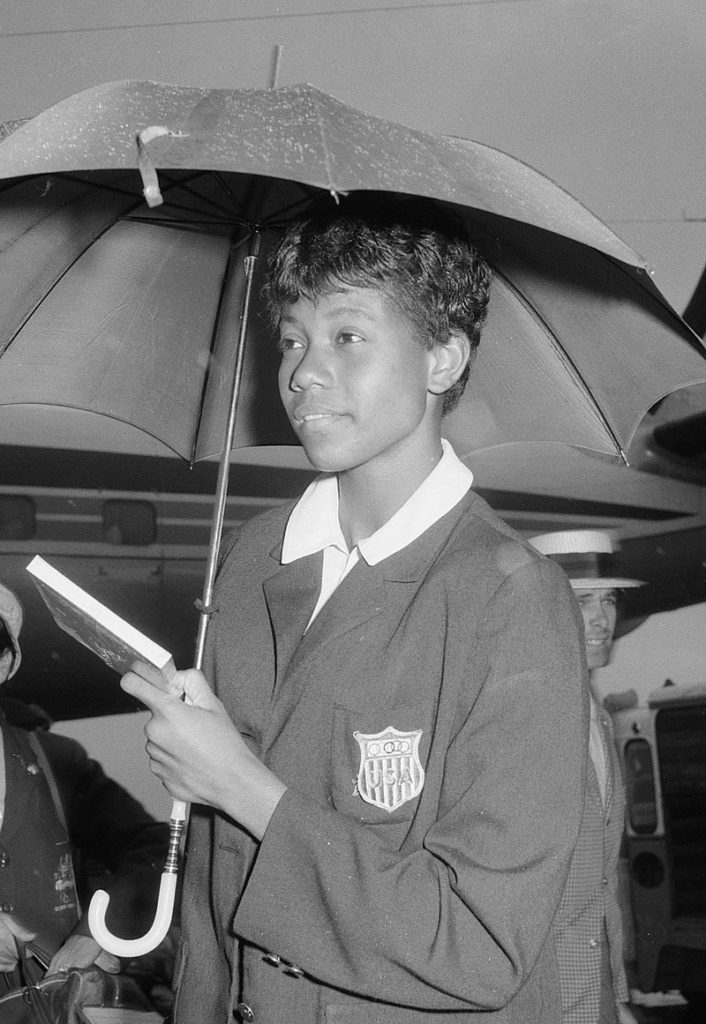
No doubt the childhood memory of those weekly 50 mile bus rides to a ‘black’ hospital were high in Wilma’s mind – with a determination that no other young black child would have to endure the same hardships.