Transforming MEP delivery with the Trimble X9 3D Laser Scanner
Transforming MEP delivery with the Trimble X9 3D Laser Scanner - the recent acquisition of this laser scanner represents the company’s commitment to working smarter, empowering its people and delivering even greater value and confidence to its clients.
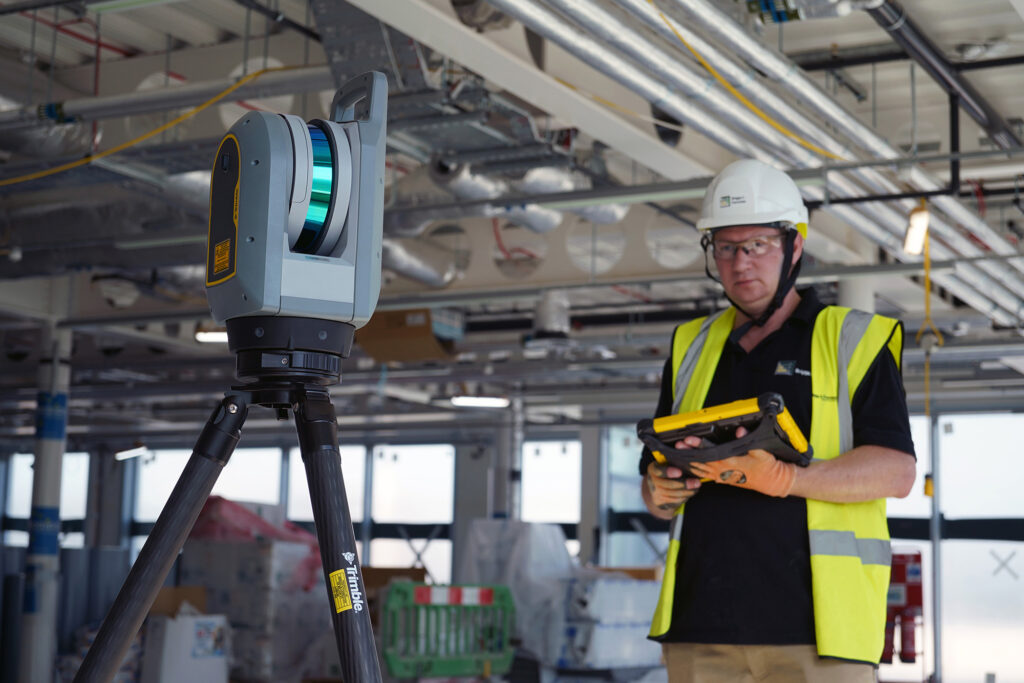
With a well-earned reputation for quality, collaboration, innovation and engineering excellence, Briggs & Forrester has always sought to deliver more than just mechanical and electrical expertise. The recent acquisition of a Trimble X9 laser scanner represents the company’s commitment to working smarter, empowering its people and delivering even greater value and confidence to its clients.
Briggs & Forrester Engineering Services is a subsidiary of the Briggs & Forrester Group, one of the UK’s largest independent mechanical and electrical building services contractors. They deliver the design and installation of M&E building services across the UK, serving a wide range of sectors including commercial, healthcare, industrial, education, pharmaceutical & research, automotive, sport and leisure, and decarbonisation projects.
With a strong focus on quality, innovation and sustainability, Briggs & Forrester Engineering Services was the first company within the Group to bring laser scanning capabilities in-house. Leading this initiative is Digitalisation and Innovation Manager, Grayham Roper, who over the past eight years has been researching and introducing technologies that enable the teams to work smarter, more sustainably and more effectively. Grayham explains:
“We employ the industry’s best and brightest and investing in the quality of our people and their working environment is fundamental to everything we do. For us, the introduction of the Trimble X9 isn’t about cost-cutting or replacing people, it’s about empowering the talented team we already have, enabling them to work more effectively, and making their jobs easier and more rewarding.”
From manual to digital
Historically, Briggs & Forrester Engineering Services relied on traditional methods and 360-degree camera systems, like OpenSpace, for documenting sites. Whilst useful for visual progress tracking, these tools had significant limitations:
Data could not be measured accurately
Data couldn’t be imported directly into Revit models
Reliance on assumptions
Use of costly external scanning contractors
Repeated site visits if access wasn’t always available to every area on the same day/ time taken to undertake tasks
Accuracy, speed, cost and certainty are four critical areas for MEP installation. Errors discovered late often result in costly rework, project delays and in some cases, commercial tension. These are all areas Grayham felt could be vastly improved through the use of scan generated point clouds.
Choosing the Trimble X9
From the outset, Grayham had three prerequisites that a 3D laser scanner would have to meet:
Delivery of high-quality data – critical for all aspects of work, especially work that has to be signed off and certified such as fire dampers
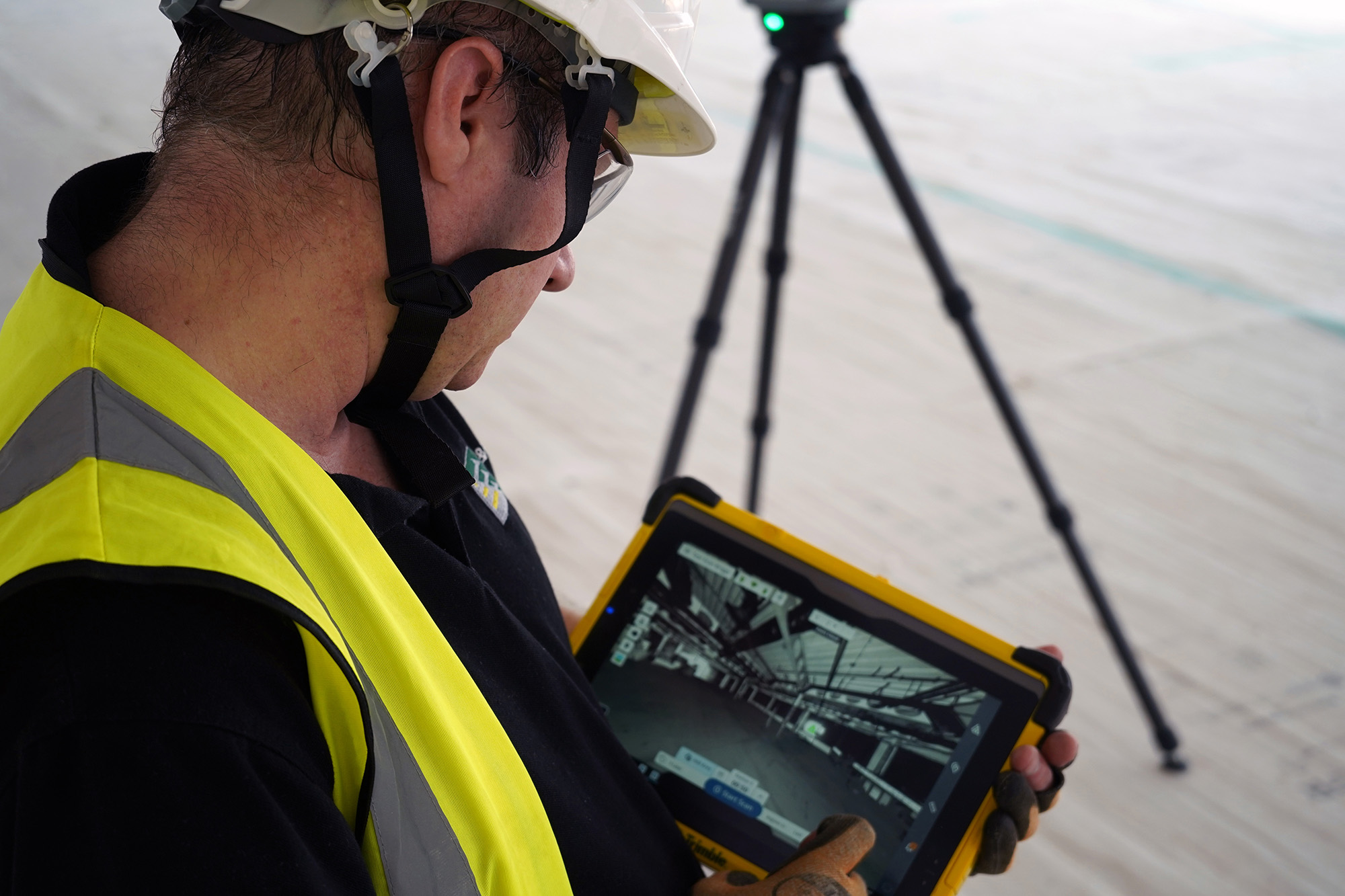
Fast workflow from data capture to the finished point cloud – the X9’s automatic scan registration means that nothing is missed on site and data is often ready by the time the train trip home has been made
Ease of use with a short learning curve – with just one hour of training, selected site operatives and a dedicated scan technician are now up and running making it easy for the scanner to be used across multiple regions
Reliable technical support – the KOREC team has dedicated scanning support
After evaluating a number of options, Briggs & Forrester contacted KOREC and selected the Trimble X9 Laser Scanner for its ease of use, speed, data quality and accuracy.
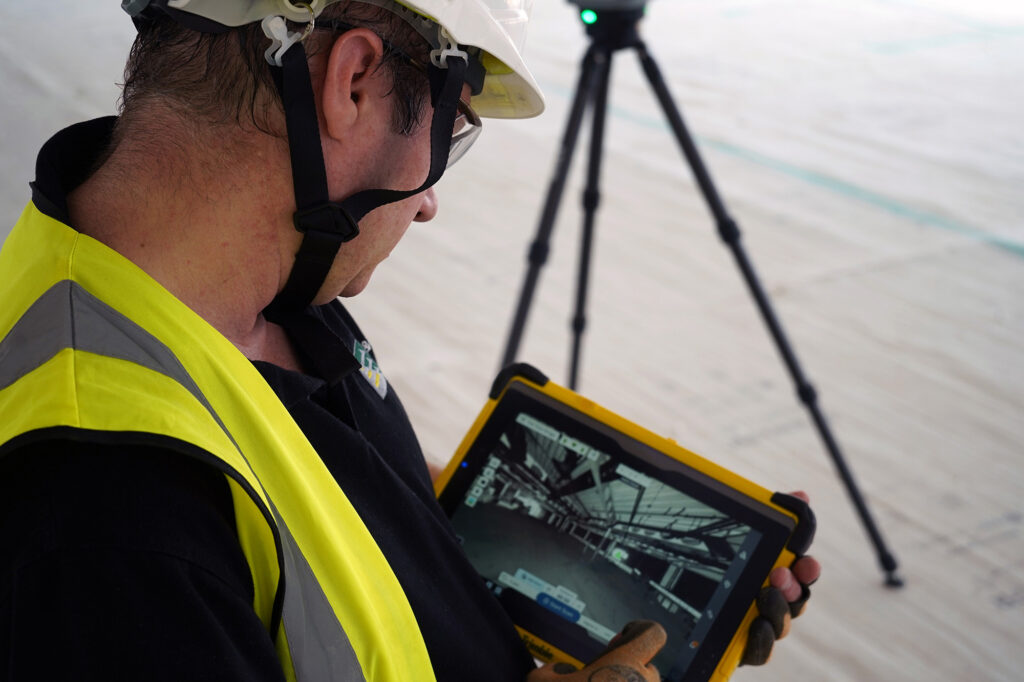
“The X9 gave us the fast scan to usable data time that we needed, and for 50% of our jobs for smaller areas like plant rooms we can export straight from the tablet,” says Grayham. “For the other 50% we use Trimble RealWorks point cloud processing and analysis software to tidy larger datasets.”
Recent X9 projects
Case study 1: Resolving head height disputes On one project, unexpected beam encasement, that was not in the model, created head height issues for ductwork risers. A rapid X9 scan provided millimetre-accurate data across the area, proving ductwork levels and slab variations. This evidence resolved the discussion in a single day of scanning. Further analysis and major rework (duct removal and wall rebuilding) that would have taken months and involved significant commercial resources was also averted.
Stand out benefit: Any dispute was immediately sorted, saving time and avoiding rework that would see the removal of duct work and demolition and rebuilding of walls.
The scanner paid for itself in this single project.
Case study 2: Measurement of duct and pipework holes with shared benefits During a major central London refurbishment, X9 generated scans clarified hole positions for duct and pipework. The point cloud data enabled precise comparison against the models, identifying which penetrations were usable and which required adjustment. This collaborative approach saved time and cost for both Briggs & Forrester and the main contractor, demonstrating the technology’s role in de-risking projects for all parties and avoiding disputes.
Stand out benefit: Avoidance of tens of thousands of pounds of rework and bringing benefit to the builders as well as Briggs & Forrester rather than using the data in an adversarial manner.
Case 3: ‘Right first time’ hospital decarbonisation project On a large healthcare site in Bristol, accurate X9 scans of an existing heating system and plant room enabled precise modelling for the connections for new plant. This minimised downtime during fitting ensuring a ‘right first time’ approach – vital for maintaining hospital heating and hot water services.
Stand out benefit: Delivering a high-quality job with minimal downtime and disruption to important services in a live environment.
Case study 4: Adding value in tendering and QA
On an upcoming Birmingham refurbishment project, Briggs & Forrester offered to scan the building as part of the tendering activity. This scan provided a deeper insight for their submitted tender that other competitors lacked.
Stand out benefit: A prestigious job was won based on the ability to showcase the technology in advance and also put that data to good purpose in the tendering process.
Grayham concludes:
“Now we have brought our scanning capabilities in-house with the X9, our approach is even more one of ethos and excellence and not just about money saved, although an early ROI was in evidence from the very first job we completed.
“In short, the X9 helps us deliver the high-quality work our clients expect, use our teams in the best possible way, and collaborate more effectively with partners. It’s about excellence across every level of the project and that benefits all involved.”
Multiple uses on every project
Laser scanning has become a core process for many Briggs & Forrester projects, and with the process now in-house, this will expand even further bringing a significant ROI on the X9. It will be used across future new build and refurbishment projects in multiple ways including:
Enhancing work winning Having rapid access to accurate site data allows the team to produce stronger, more confident bids. By validating existing conditions early, they reduce assumptions, improve coordination certainty and demonstrate to clients how we actively de-risk complex projects. This directly supports better quality tenders and stronger competitiveness.
Driving quality management The Trimble X9 gives the Briggs & Forrester teams the ability to verify structural conditions, validate ceiling voids and check MEP installations against digital models with a high degree of accuracy. This reduces rework, supports prefabrication and provides clear QA evidence for the build.
Improving coordination and delivery Reliable point cloud data enables smoother collaboration between Design, BIM, and Operations. By integrating scans into the coordination processes, the company minimises late-stage clashes, supports smarter sequencing and protects the construction programme.
Adding real value for clients In-house scanning allows delivery of accurate digital as-builts and provide a trusted record of installed quality.
X9 benefits for Briggs & Forrester
Seamless integration into digital processes, providing reliable point clouds for BIM coordination, clash detection etc
The on-tablet registration removes the need for targets, making it practical on live, congested sites where missed areas can be addressed immediately
Hard evidence, backed up by a calibration certificate for overcoming potential disputes
Short learning curve for multi-purpose use across a multitude of sectors
Trimble RealWorks software for easy clean up of scans, particularly on cluttered London sites that lack offsite storage
Empowers a talented workforce and strengthens client relationships
IO Geomatics combines over 27 years of topographical expertise with an extensive survey portfolio that allows them to apply the most effective methodologies for each site’s specific challenges. A recent...
How WM Ironwork’s use of Tekla Structures led them to introduce the Trimble X9 3D laser scanner into their workflow, increasing their abilities tenfold by significantly reducing rework and improving...