Delivering exceptional survey detail for steel fabricators on railway bridge strengthening works and tunnel infrastructure
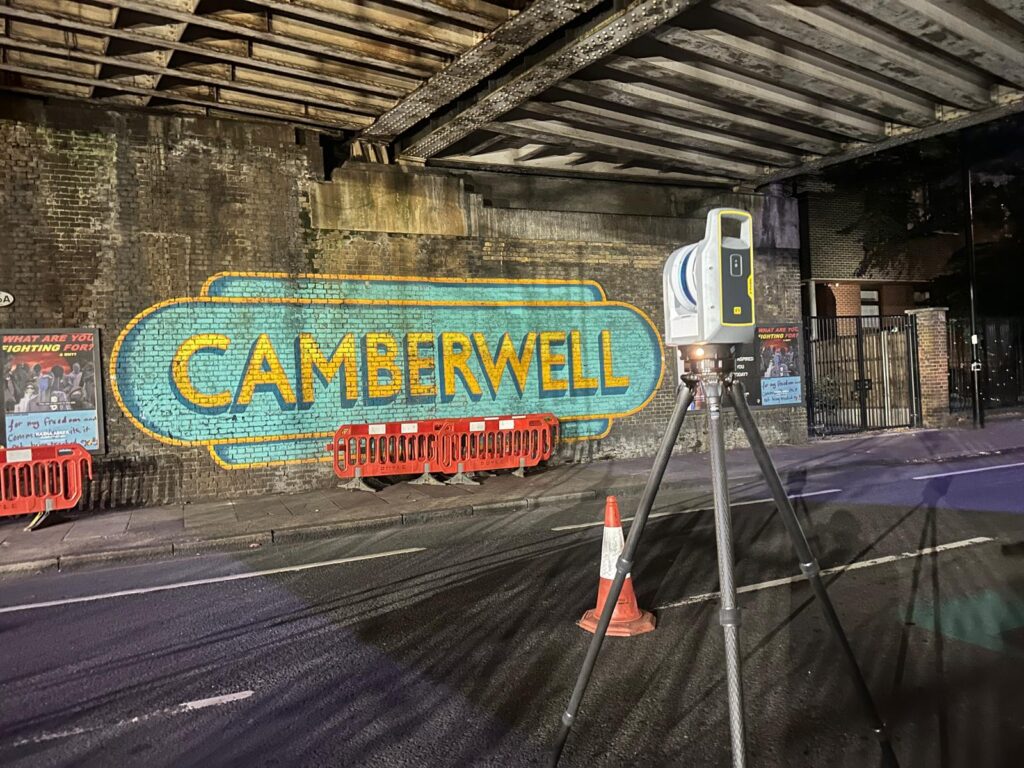
Working in tandem with Bidston Surveys and their Trimble X7 on Camberwell Railway Bridge




Working in tandem with Bidston Surveys and their Trimble X7 on Camberwell Railway Bridge
Download a formatted PDF of the story here
PF Geomatics is a London-based specialist in high-accuracy surveying and site engineering services, owned by its Managing Director, Paulo Fernandes (TCInstCES). Working across London and the South East, the company has built a strong reputation for delivering precise data to contractors, steel fabricators and rail infrastructure teams and prides itself on a ‘right first time’ ethos in an industry where mistakes are expensive and possessions are limited and difficult to secure.
Central to this reputation is the Trimble X9 3D Laser Scanner, purchased from KOREC just over a year ago. The new X9 enables PF Geomatics to capture exceptionally detailed point clouds of rail bridges and tunnels which they then convert into accurate Revit models. These models allow the design team at McNealy Brown (specialist steelwork fabricators and installers) to design and manufacture strengthening plates and new components far faster, with minimal clashes and greater confidence.
For the repair and maintenance of London’s railway bridges and tunnels, many of which were built over a century ago, there is a strong demand for survey work that delivers millimetre-level detail of rivets, plates and flanges, along with comprehensive overall structural information.
Traditional total station surveys only capture selected points, leaving steel fabricators and designers working with incomplete information. Road and rail possessions mean survey teams have to work under tight time constraints, a challenge compounded by passing vehicles, low light, restricted access and the repetitive geometry inside tunnels.
In these conditions, PF Geomatics works to deliver complete, high-resolution data that will enable their clients to design and fabricate components without clashes, delays or costly rework.
After seeing the Trimble X9 demonstrated by the KOREC team, Paulo invested in the scanner along with Trimble Business Center (TBC) processing software. His decision was based on several key areas in which the X9 delivered gains with high relevance to his tunnel and bridge projects:
Camberwell Railway Bridge: Closed to motor traffic for several years due to safety concerns, Camberwell Grove Bridge is a Victorian structure built around 150 years ago over railway lines.
Working on a contract for McNealy Brown (recognised for its collaborative rail delivery and ability to perform within tight possession windows) the project required Paulo to capture every structural detail with absolute accuracy. The data was needed to support the design and fabrication of new parts and components for upcoming bridge strengthening works.
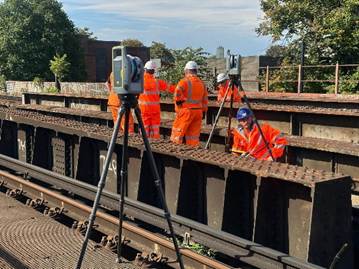
During a full night-time possession survey, he used the Trimble X9 to capture highly detailed scans across the structure’s top and underside, including every flange, gap, and rivet line. To achieve the client’s required level of detail, the scanner was mounted on an elevated tripod. This setup helped counter strong winds and maintain stability while scanning the bridge’s awkward and restricted areas.
Paulo regularly collaborates with survey specialists Bidston Surveys on major projects. For this scheme, after the initial night-time possession, Bidston Draughting Director Jack Bidston worked alongside him using a Trimble X7 laser scanner. The two datasets were successfully combined in Trimble Business Center and Trimble Real Works.
The survey delivered high-accuracy 3D models (Revit and 3D DWG), which are now being used to fabricate new bridge strengthening components ahead of the repair works.
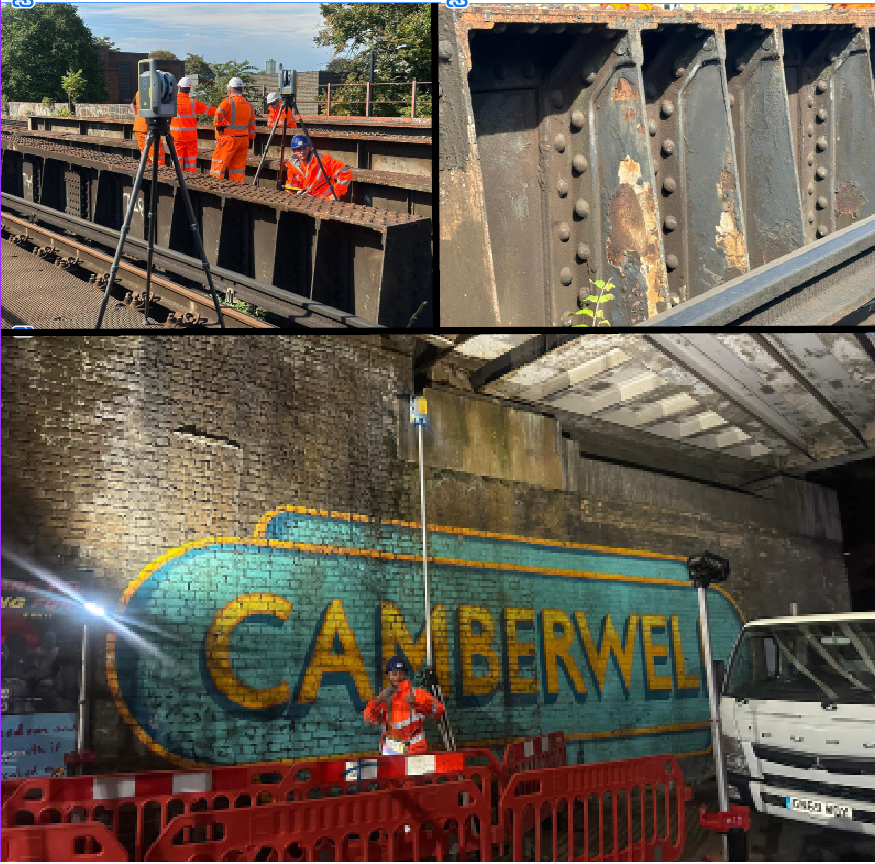
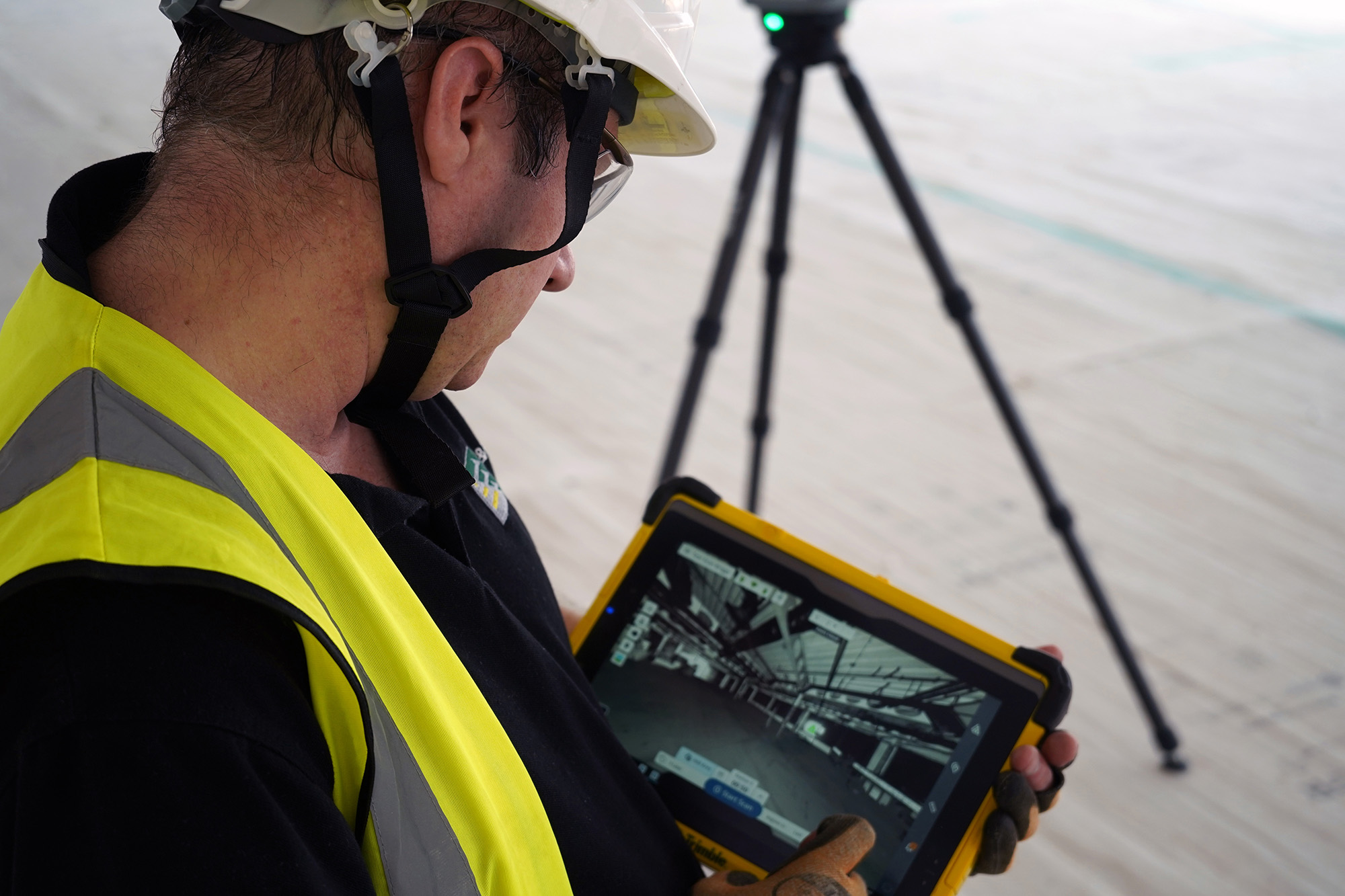
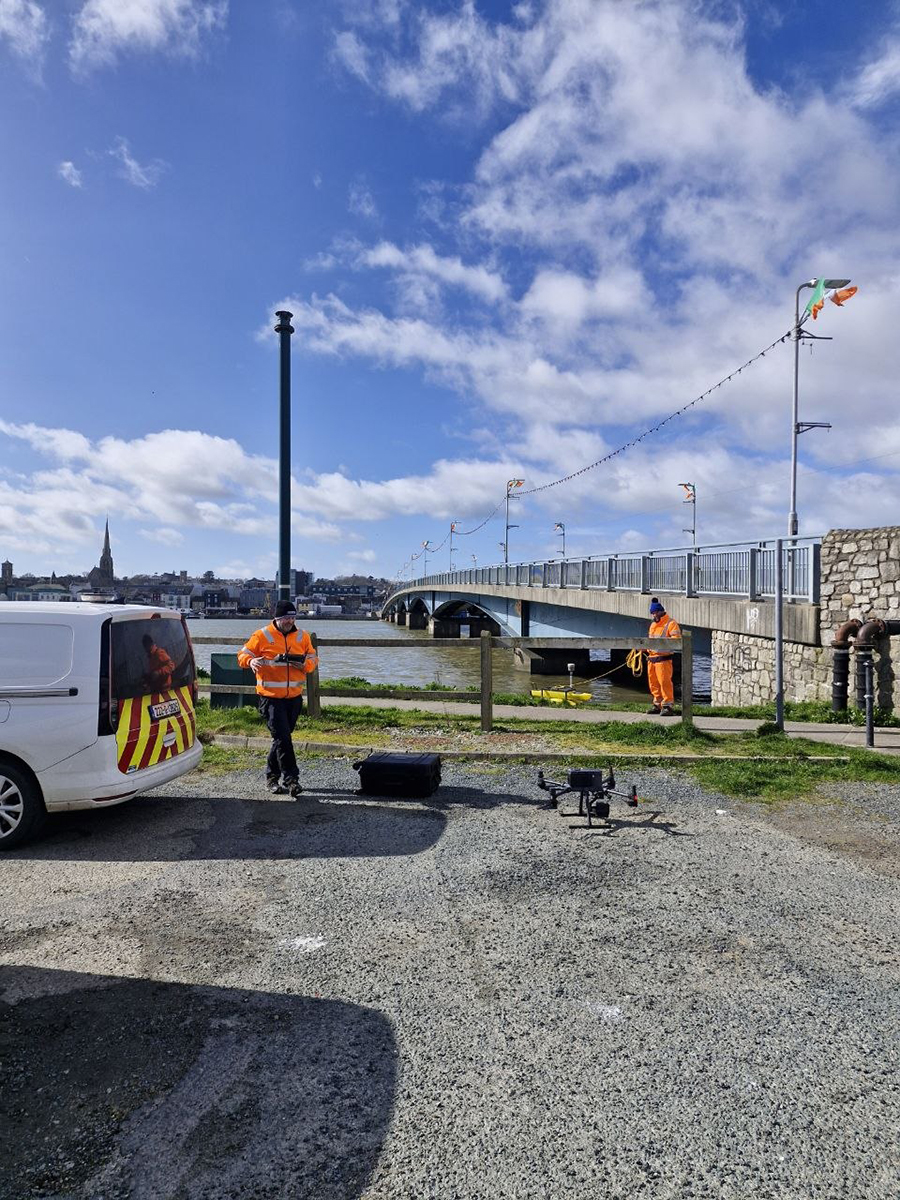
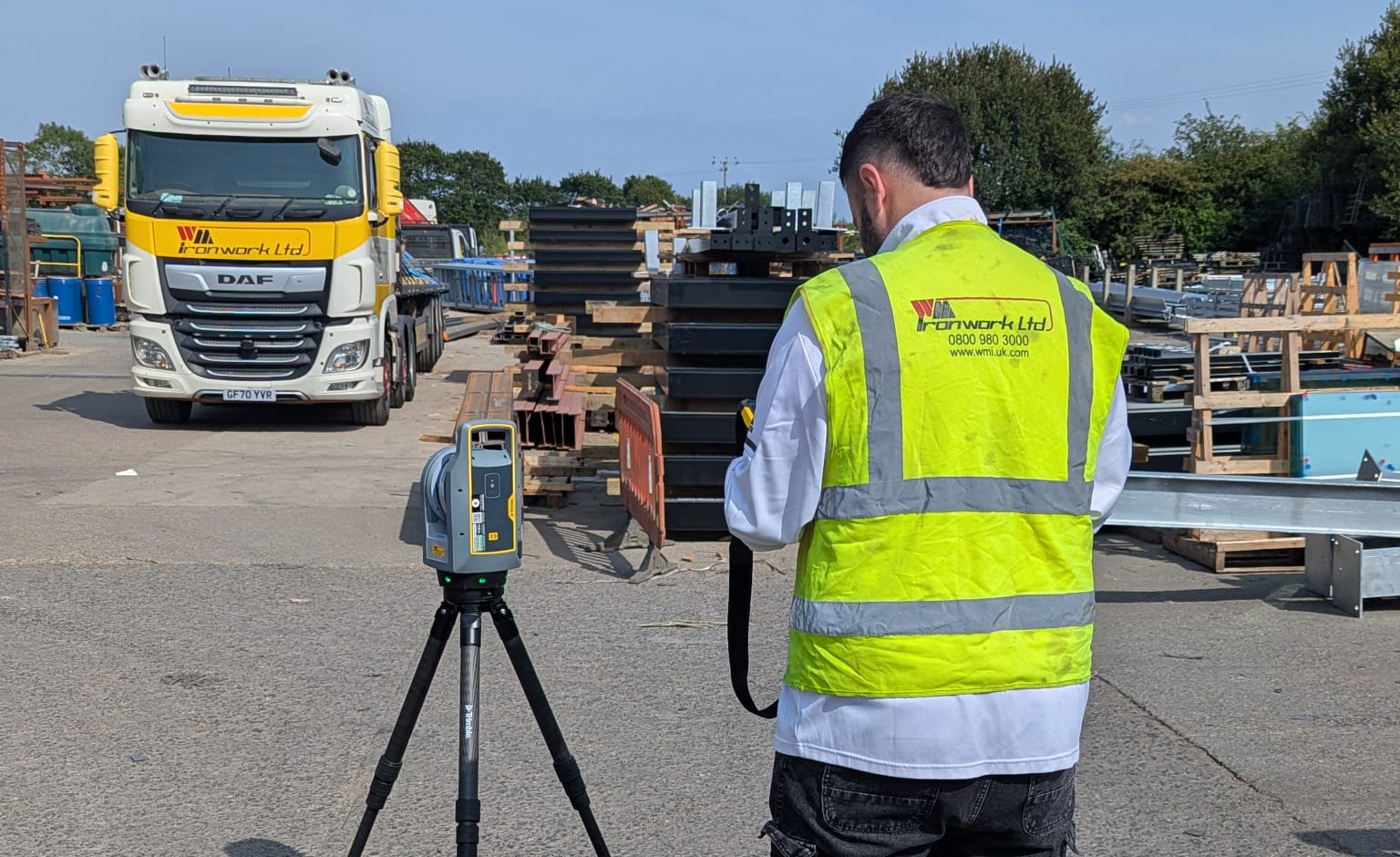
From top left: Working in tandem with Bidston Surveys and their Trimble X7 on Camberwell Railway Bridge / Every detail was captured / The scanner was mounted on an elevated tripod
Lambeth Road Bridge:
Lambeth Road Bridge is a two-span structure carrying four Waterloo–Weymouth (Bournemouth Main Line) tracks and four Waterloo–Reading (Windsor Lines) tracks over Carlisle Lane.
Working alongside VolkerFitzpatrick, McNealy Brown has been delivering structural repairs to increase the bridge’s load carrying capacity to accommodate RA8 loading at line speed. The works include main girder web repairs, stiffener strengthening, trough repairs and the installation of new ballast retention on the Bournemouth Main Line.
The repairs have been undertaken both beneath the bridge under traffic management and on the railway during planned possessions.
To improve efficiency, PF Geomatics was contracted to deliver high-precision 3D laser scanning to digitally template the main girder and trough repairs, eliminating the need for traditional on-site templating. The survey data enabled fabrication drawings to be produced directly from the digital model, significantly reducing survey time, improving dimensional accuracy and allowing repair steelwork to be fabricated off site ahead of planned possessions.
On this project, the X9’s on-site registration was particularly useful, reassuring Paulo that all the data had been captured and that scans from the top of the bridge could be successfully tied to the underside scans for a complete Revit model. Additionally, the X9 ‘pause scan’ function was used to good effect when encountering ‘local noise’.
Tunnelling work: Working in tunnels is extremely demanding for surveyors and an area that PF Geomatics specialises in. The uniform surfaces, repetitive features and ever-changing site conditions make it one of the toughest environments for 3D scanning. However, on a recent Blackwall Tunnel project working with R&M Steel Fabrications, the X9 has enabled Paulo and his team to meet these challenges through the development of a streamlined, highly efficient process.
The workflow starts with establishing strong control. PF Geomatics sets up prisms every 100–200 metres, taking multiple sets of angles. Then they deploy plenty of black and white targets throughout the tunnel to connect one scan to the next, delivering a single, point cloud rather than a series of isolated, localised scans. This connected approach makes a huge difference to the client. On bridge and tunnel panel projects, for example, they need accurate sizes and clear identification of each panel. By delivering one complete, registered scan, PF Geomatics makes it easy for the client to identify and pick out their spray-marked panels.
If registration starts to struggle due to the ‘sameness’ of the tunnel, Paulo simply rotates the X9 to break the link and connects one black and white target to the next.
Tunnels are extremely busy places during possessions. For example, Paulo was recently faced with a van working on gutter clearance and was able to use the X9’s pause function to halt the scan and then resume without losing registration – an important feature when having to be productive under pressure.
In particular, the PF Geomatics workflow has been a game changer for their client McNeally Brown. What used to take weeks of manual templating, using Perspex sheets and then office draughting, can now be delivered in one or two shifts. The X9 scan picks up all the vital detail required to build an accurate Revit model, allowing McNeally Brown to begin production of new components almost immediately.
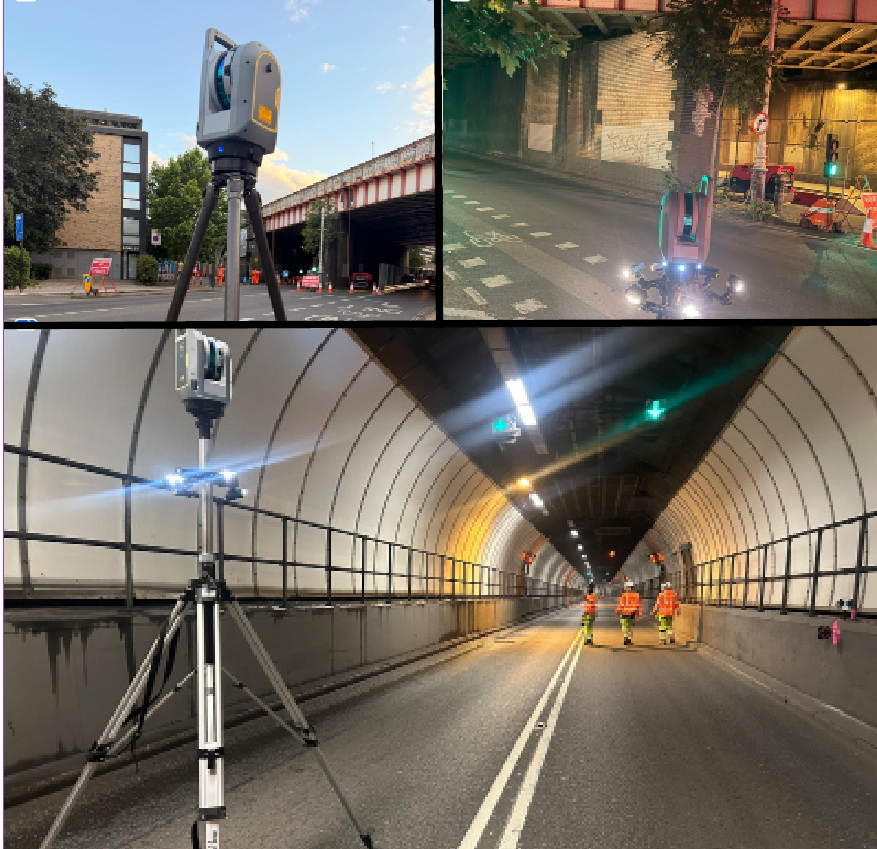
From top left: The X9 at Lambeth Bridge and by night / The X9 in the Blackwall Tunnel – perfect for providing survey detail for steel fabricators
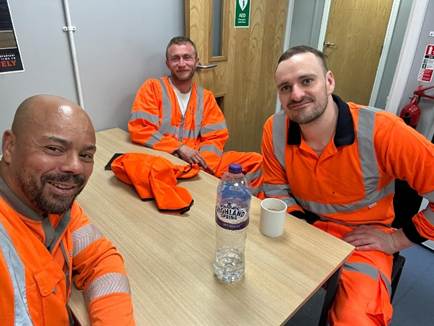
From left to right, Paulo Fernandes, Jack Bidston and Leo Halsey
The addition of a Trimble X9 and TBC software to the PF Geomatics survey portfolio enables Paulo to turn complex environments into clear, actionable models that bring tangible benefits to his clients. He concludes:
“The onsite registration is brilliant – you know straight away if you’re right or wrong. The image quality is mind-blowing for providing survey detail for steel fabricators. In rail work you don’t have time to mess about, and the X9 lets me crack on and deliver the detail they need. My clients have great confidence in the end deliverable and even those new to laser scanning are convinced after seeing the clarity of the X9’s imagery.
“I’m extremely busy and possessions are a very pressurised environment to work in so it’s good to know that the KOREC support team is so responsive. They’ve been brilliant. Even on weekends or out of hours, I can get hold of someone and they always sort it.”