Trimble Forensics Reveal: How Investigators Analyse and Reconstruct Scenes
Find out how Trimble Forensics Reveal is used to process scan data, analyse evidence, reconstruct sequences of events, and produce court-ready reports and animations.




Find out how Trimble Forensics Reveal is used to process scan data, analyse evidence, reconstruct sequences of events, and produce court-ready reports and animations.
Once a scene has been captured in the field, the real analytical work begins. Trimble Forensics Reveal is the office software where that captured data becomes measurable evidence, a reconstructed sequence of events, and ultimately a report a case can be built on.
This guide is the companion to our article on Trimble Forensics Capture, picking up the workflow where field capture ends. It is the fifth article in KOREC’s forensics guides series which starts with a guide on What Equipment Is Used in Forensic Scene Documentation?
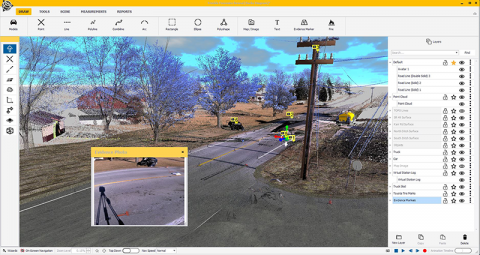
Trimble Forensics Reveal is where scan and survey data captured at a scene is turned into something a case can actually use: measurements, reconstructions, and reports. It sits at the centre of the Trimble forensics workflow, between field capture and courtroom presentation.
Data captured with Trimble Forensics Capture transfers directly into Trimble RealWorks Forensics and Trimble Forensics Reveal, already georeferenced from the field, which means the investigator opening the file in the office is working with positioned, ready-to-use data rather than raw points that still need locating.
Where a scene involved multiple scan positions, Trimble RealWorks Forensics registers them into a single combined point cloud and allows the investigator to check coverage and quality before relying on the data for analysis in Trimble Forensics Reveal. Catching a gap or registration issue at this stage, rather than partway through a reconstruction, saves considerable rework later.
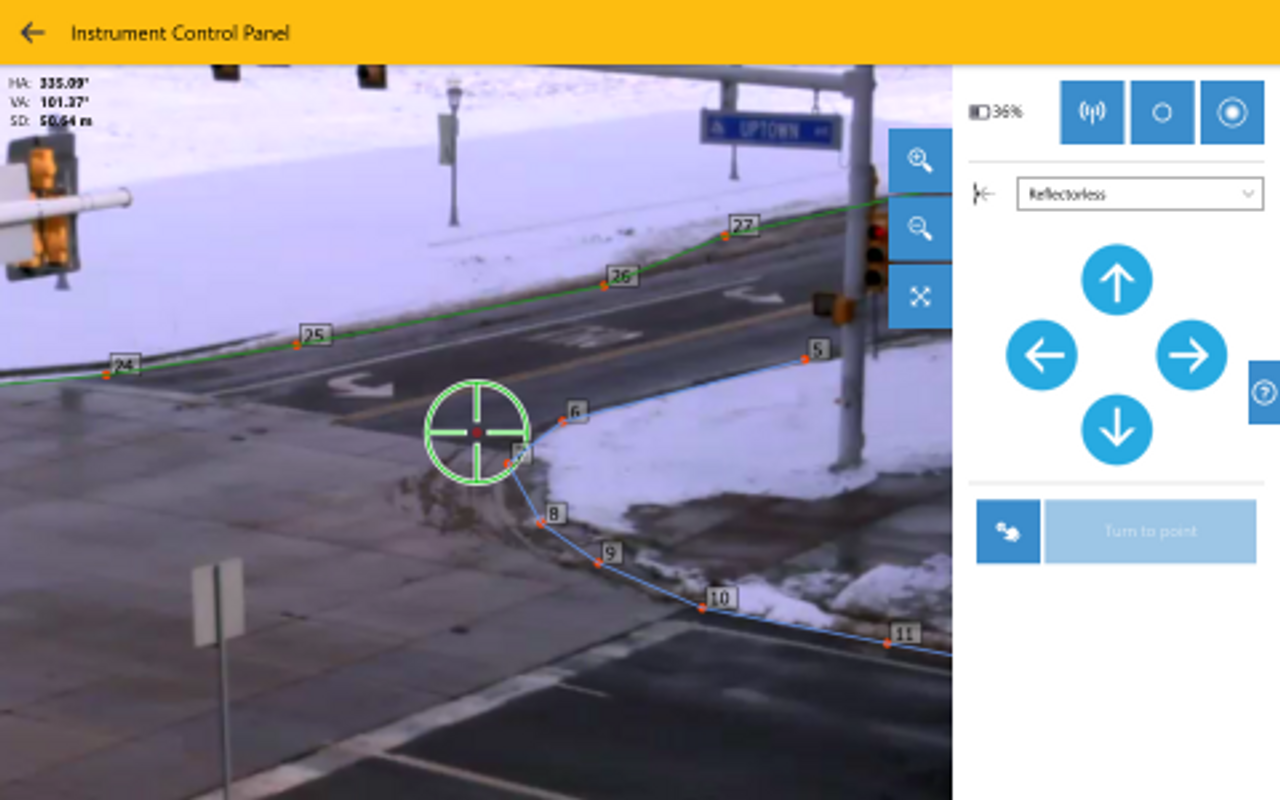
Trimble Forensics Reveal brings GNSS, scan, and total station data into the same project, so an investigator working on a single case is not switching between separate tools depending on which instrument originally captured each piece of data. Trimble Forensics Reveal is also compatible with Trimble RealWorks data, which is useful where a scene has been processed through that environment first.
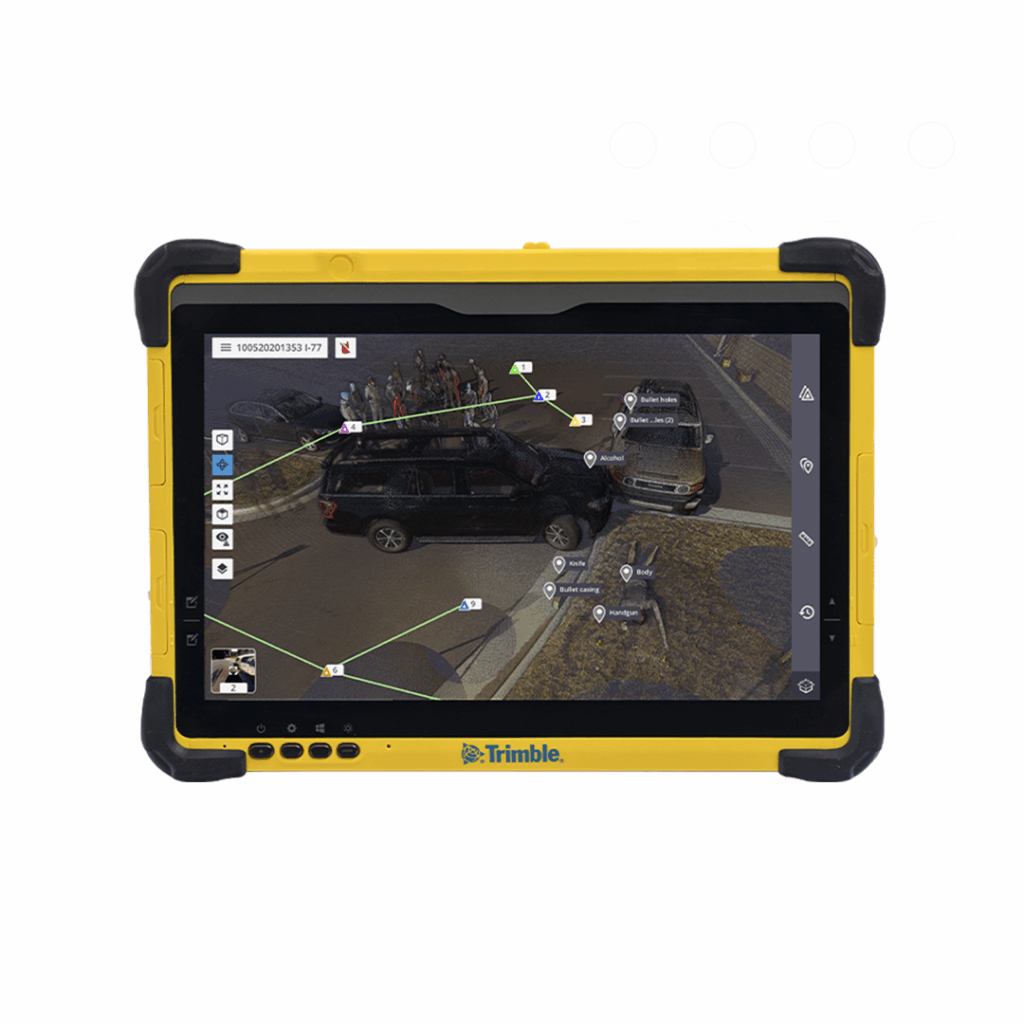
Trajectory analysis uses the measured geometry of a scene, such as the position of an entry point and a related surface, to establish the path an object travelled. This kind of analysis depends entirely on having an accurate, complete record of the scene to measure from, which is precisely what a properly captured point cloud provides.
In collision investigation, skid mark length and position, together with vehicle final resting positions, feed directly into speed and impact analysis. Measuring these directly from the point cloud, rather than from notes taken on the day, means an investigator can revisit the measurement at any point and verify it against the original data.
Individual evidence points, whether identified at the scene or noticed only later during analysis, can be measured directly from the point cloud with the same precision as if the investigator were back at the scene with a tape measure. This is one of the most valuable practical capabilities the software provides.
Because the point cloud is a complete, permanent record, a measurement an investigation did not know it needed on the day can still be taken weeks or months later. This removes much of the pressure to anticipate every possible question while still on site, since the data itself preserves the answer.
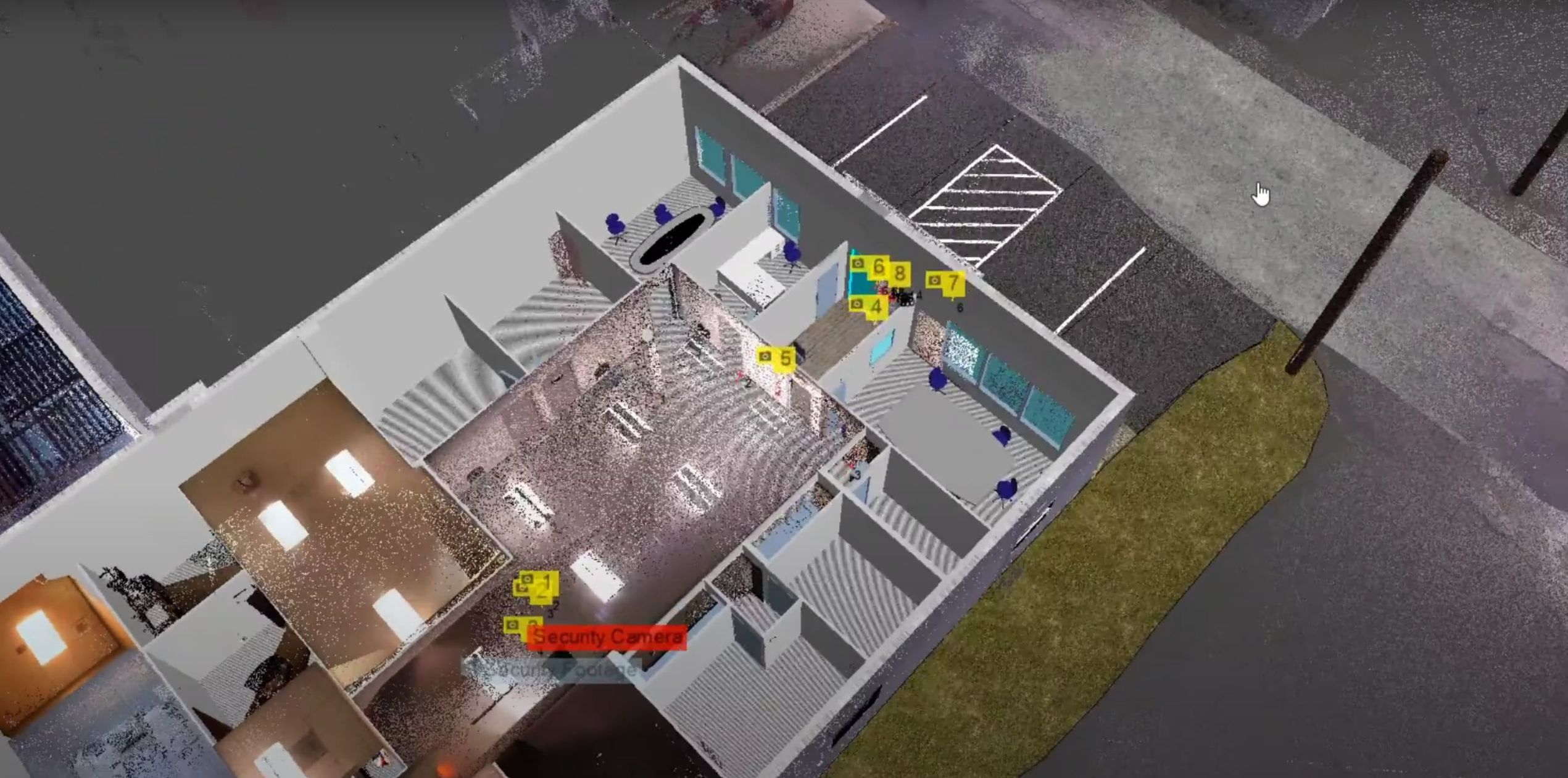
Trimble Forensics Reveal builds a 3D reconstruction of the scene from the registered scan data, giving investigators and legal teams a model they can examine from any angle rather than relying on a fixed set of photographs or sketches.
Beyond a static reconstruction, the software supports recreating a sequence of events, such as the movement of vehicles or individuals through the scene, anchored to the measured geometry. This turns a static record into something closer to an explanation of what happened, which is often what a court or jury actually needs to understand.
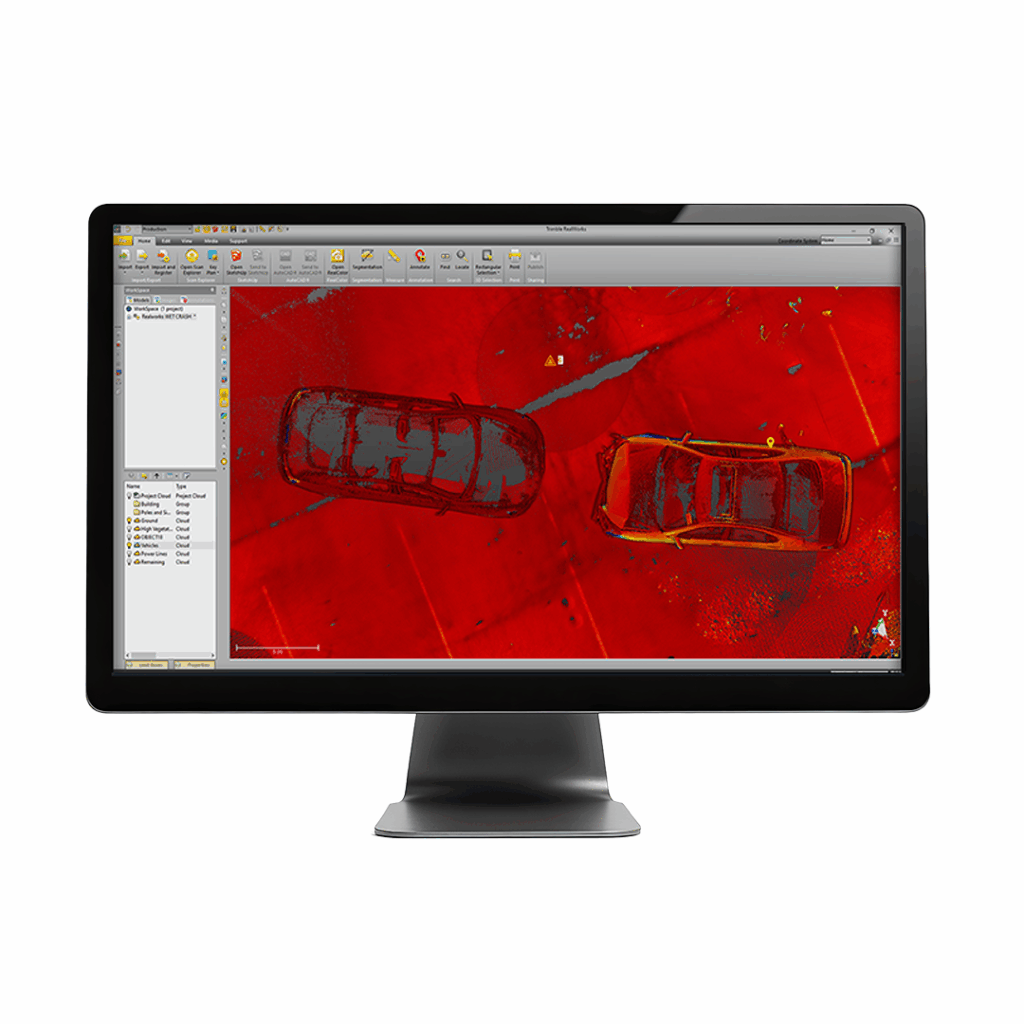
Trimble Forensics Reveal generates reports that document the analysis carried out and the measurements relied upon, giving investigators and legal teams a clear written record alongside the visual reconstruction.
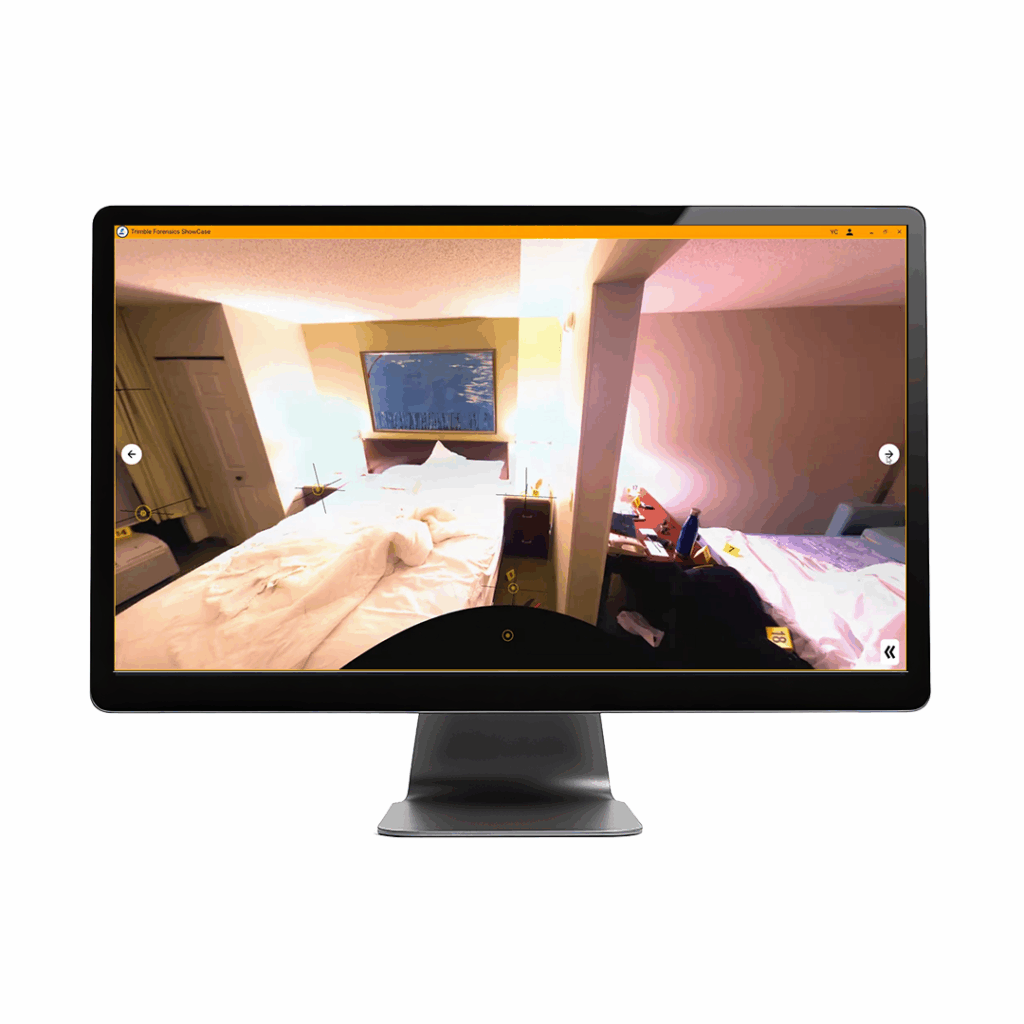
Once analysis and reconstruction are complete, the results export into Trimble Forensics ShowCase for courtroom presentation, continuing the same connected workflow rather than requiring the case to be rebuilt in separate presentation software. Our guide on forensic mapping software covers this full chain from capture to courtroom.
Trimble Forensics Reveal is the most technically demanding product in the Trimble forensics workflow, reflecting the depth of analysis it supports. KOREC provides dedicated training to help investigators build confidence with the software’s full capability rather than only its most basic functions.
Trimble Forensics Reveal accepts data captured directly through Trimble Forensics Capture, and is also compatible with common point cloud formats like E57 and LAS data, giving teams flexibility in how a scene was originally processed.
Processing time depends heavily on scene complexity and the depth of analysis required, from a straightforward registration and measurement task through to a full reconstruction with recreated sequences of events. A forensic services manager planning case timelines should factor this variability in rather than assuming every scene takes the same amount of office time.
Yes. KOREC provides training on Trimble Forensics Reveal, reflecting that it is the most technically demanding product in the workflow and the one investigators benefit most from building confidence with over time.
KOREC can advise you on how to implement Trimble Forensics Reveal into your operations. Speak to our friendly experts today to get the right technology to solve your project challenges.